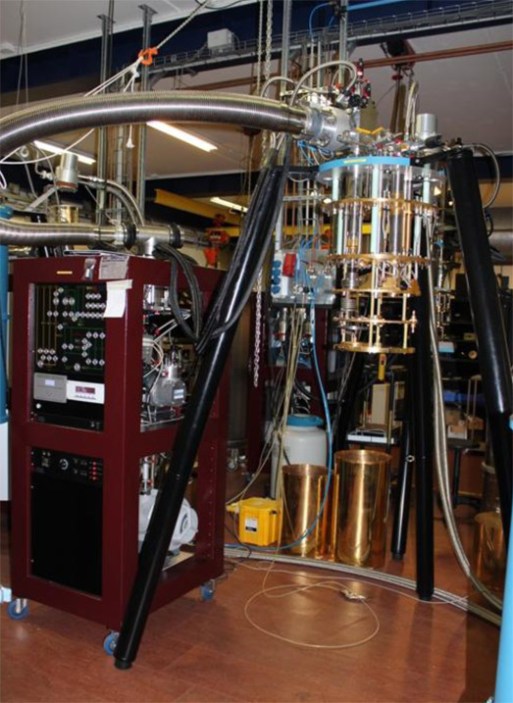
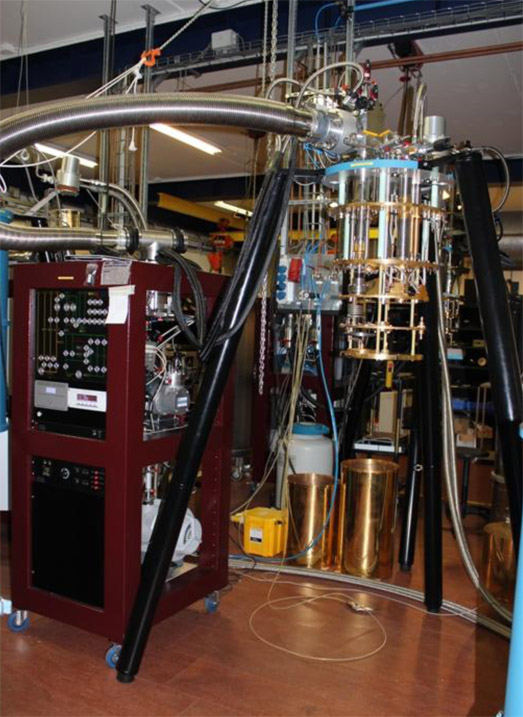
With the help of Oxford Instruments and Levy group the Triton dilution fridge has been successfully cooled down. In this video you can see the test of the magnet as the field is swept through zero at a rate of few millitesla per second.
Author: sergeyfrolov
Bardeen, Gutenberg and the digital age
Two weeks ago I went back to Urbana, the place where I did my PhD, after 7 years of absence. It was good to be back, it felt like being at home. I met many new bright people, and people that I know and love for a long time. One of them is Celia Elliot who is the department’s keeper, at least when it comes to the spirit and the rich culture of Physics at Illinois. She showed me a box full of old strange stamps, like these:
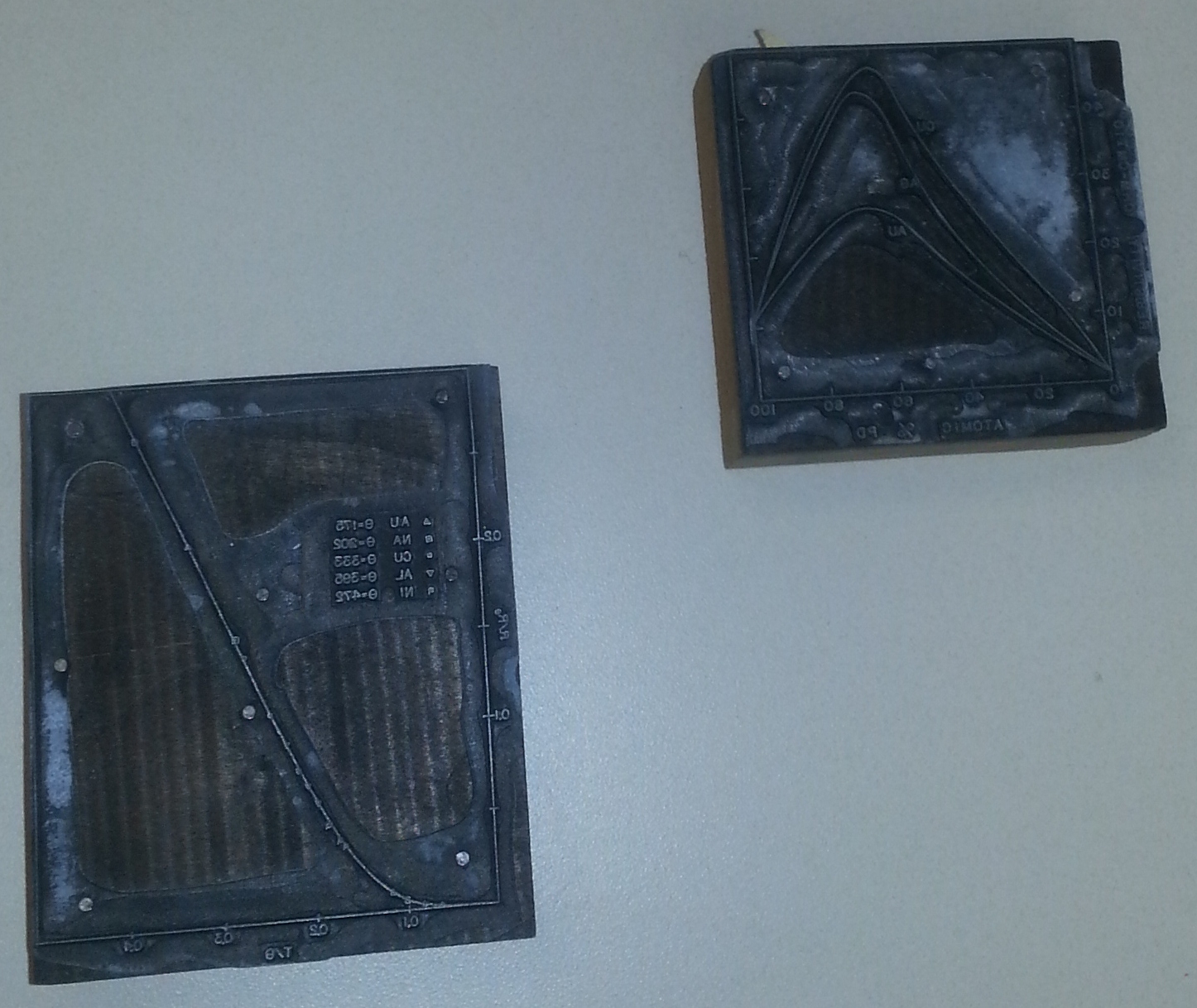
They are graphs from somebody’s paper, flipped backwards. The story was that Professor Gordon Baym had this box in the trunk of his car for years, and one day he decided that Celia should have it. The side of the box said ‘1940’. Armed with that clue, Celia found the paper that these figures belonged to:
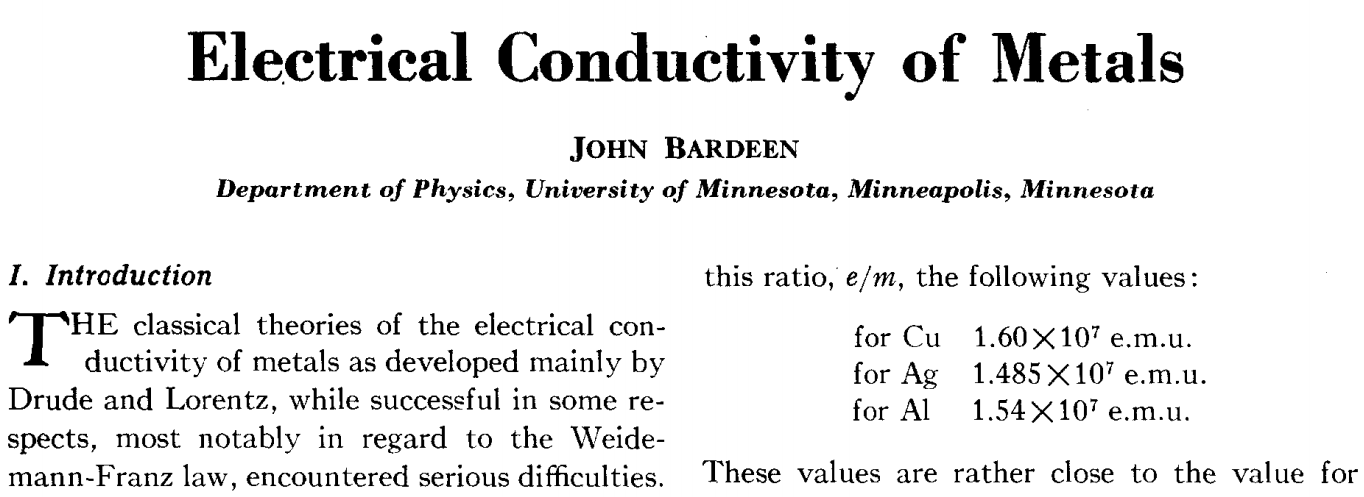
In the picture above you see Figures 1 and 20 from Bardeen’s paper. The drawings were prepared by an artist, then etched into these plates, and used to print the journal pages – in a way similar to Gutenberg’s printing press. “How silly and hard was the life of a scientist back then” was my first thought. But wait a minute – are we now doing anything profoundly different from what Bardeen had to do 70 years ago? We are taking a picture of our data and sending it to a journal, where they put it into a .pdf file. So the .eps format replaced the etched plates, and paper is replaced with a computer screen.
But the data, live raw scientific data, is not a picture – it is a bunch of numbers. We have everything at our fingertips to start sharing the bits and bytes of our data, for our colleagues to fit, analyze, and play with. We just need to start doing it.
Leiden delivery
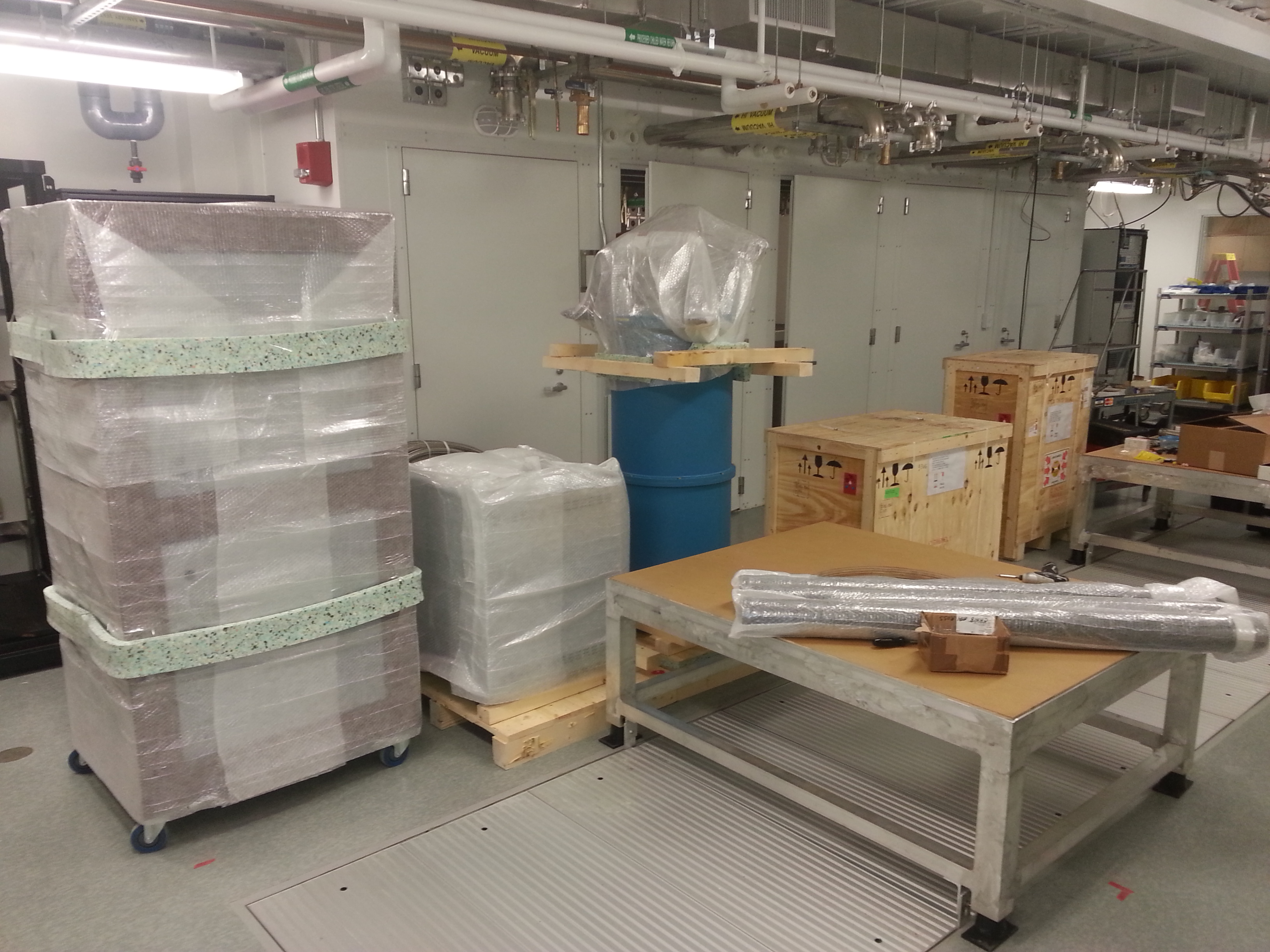
ALso last week we received a much awaited delivery from Leiden – our own first fridge. Now sitting safely and neatly in the lab waiting for the installation.

The delivery had a few intense moments. Risking life in traffic. Thankfully Pittsburgh drivers are very polite when it comes to ‘Extremely fragile scientific equipment’.
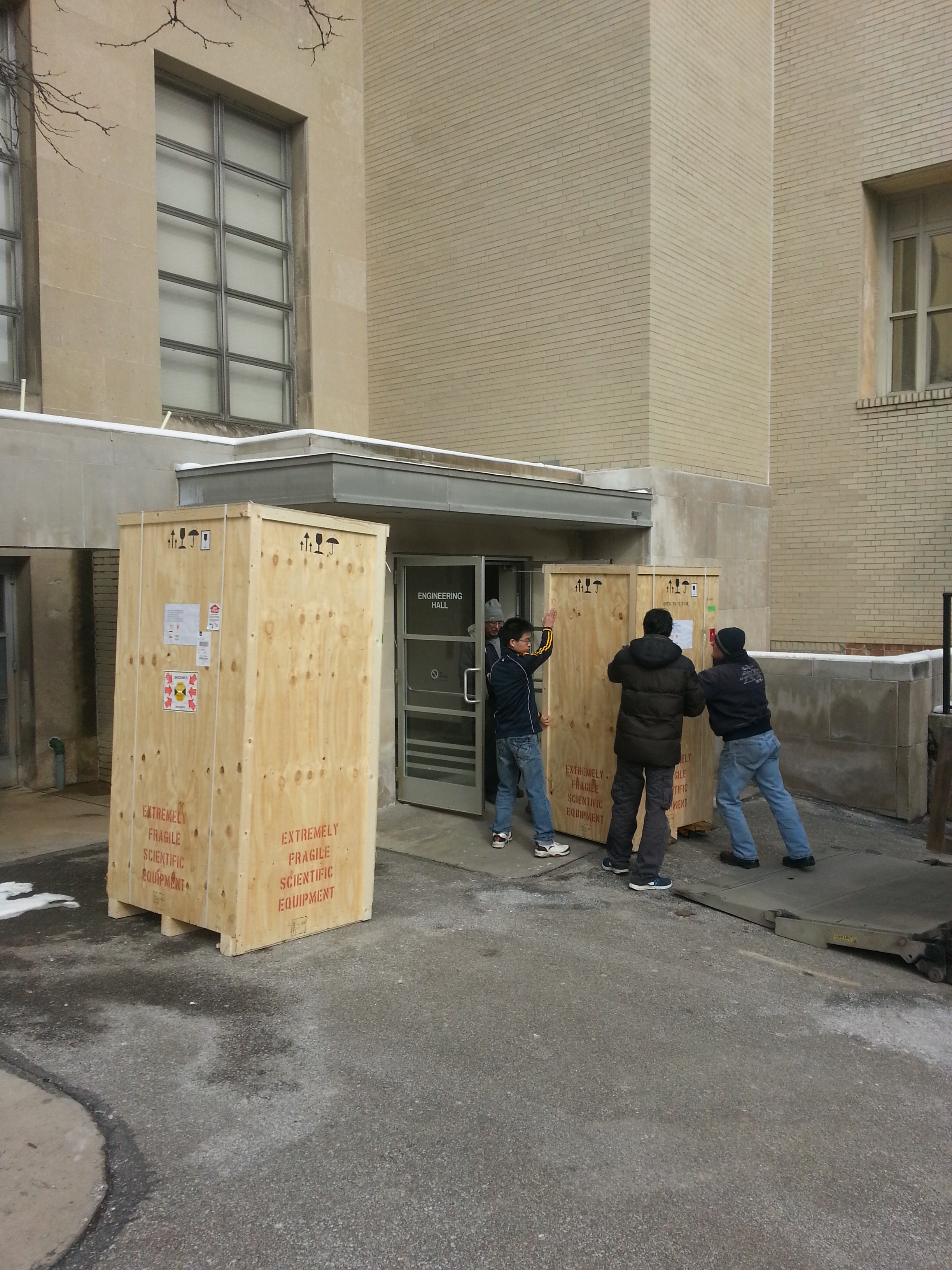
Not every box fit through the doors. Our lab is separated from the outside world by a rabbit-hole type corridor. This is maybe good for Alice in Wonderland, but this is one thing I’d change if I could.
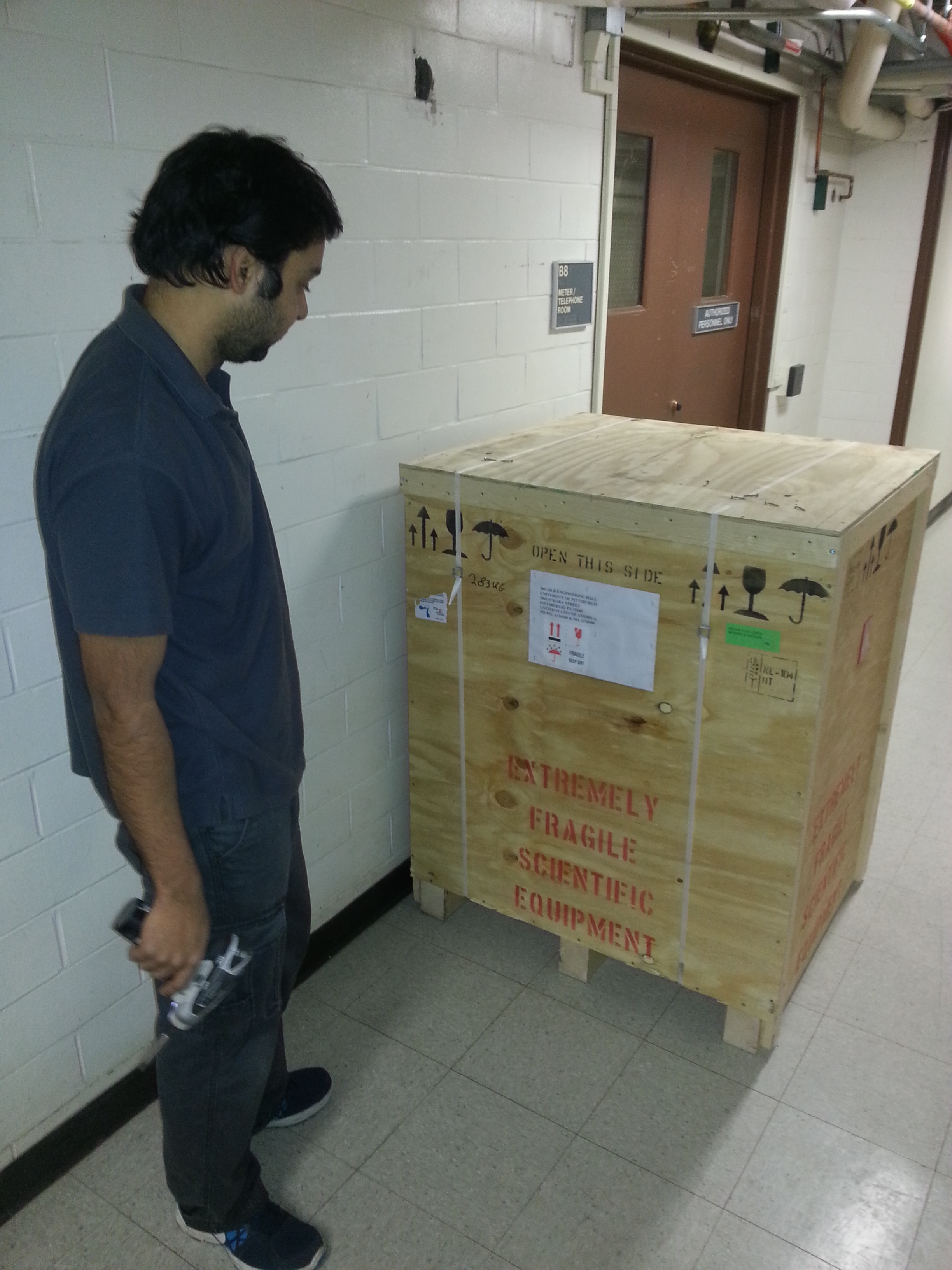
“I am going to count till three, and if you don’t come out I am gonna start drilling”.
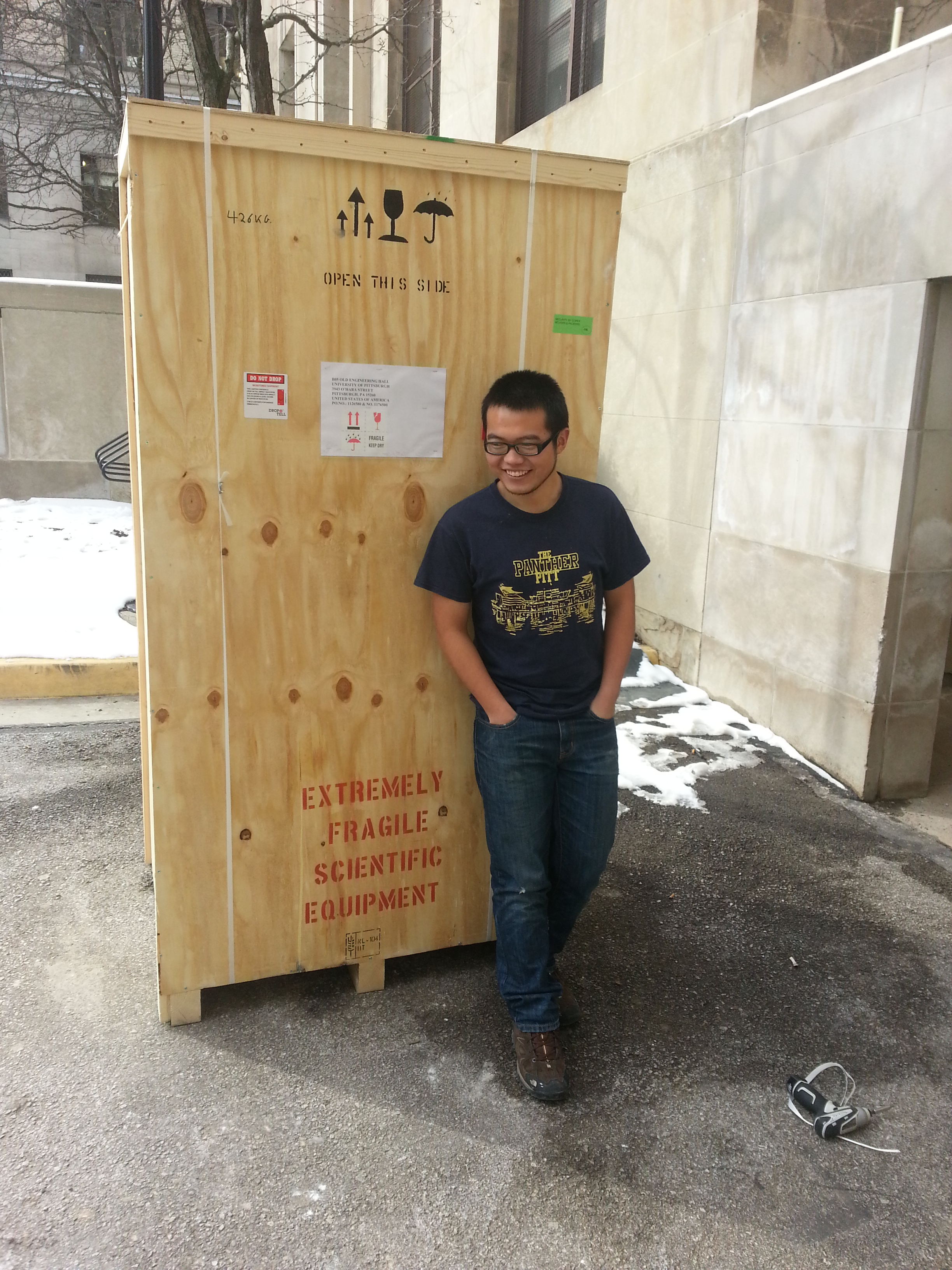
One brave student was abandoned outside for a good half hour. We literally forgot about him. He did not leave his important post protecting the box.
Frolov group
Last week I went out with the group. We celebrated Chinese New Year. And what better place to do it than a local French restaurant?
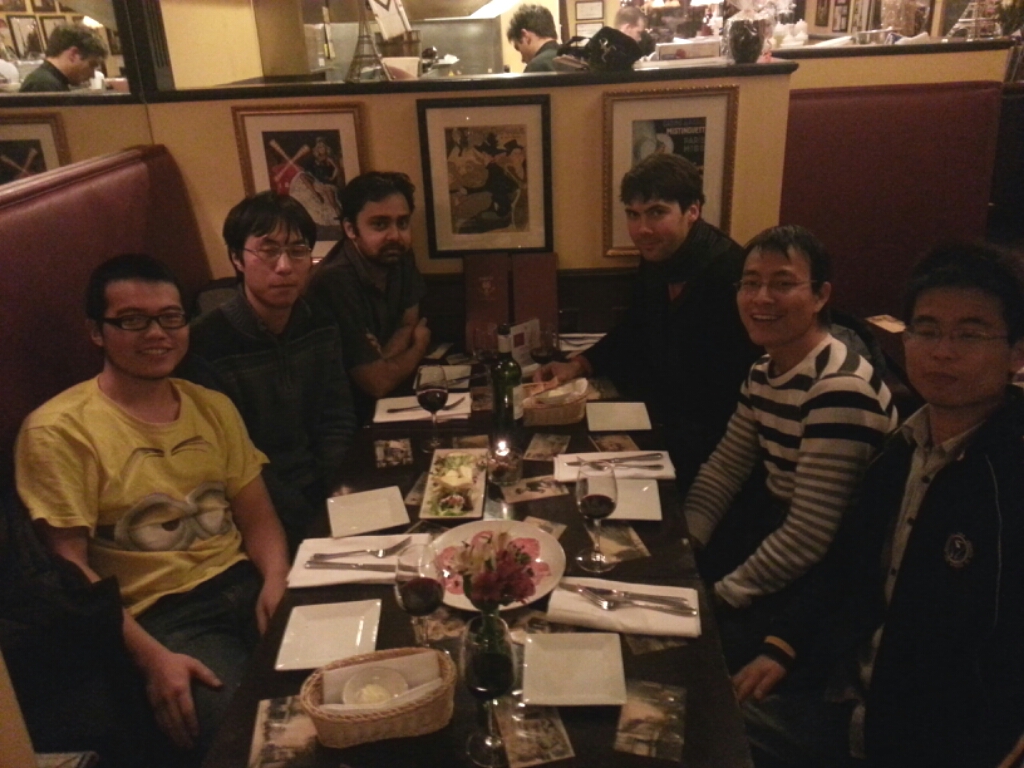
The lab is very lively now, everyone is busy with fridge installation, nanowire positioning, sample design, eating, sleeping… Yesterday the first item broke down, which is a good indication that work is being done.
In parallel, I am very lucky to be able to teach a Special Topics course this semester. I chose ‘Quantum Transport’. I hope it will benefit my group and a couple other groups in Pittsburgh. Helps us get on the same page in terms of background for research. The lectures are recorded by CIDDE, and I post them on youtube: https://sergeyfrolov.wordpress.com/teaching/
Last semester was lab building, this one will be group building.
Coffee
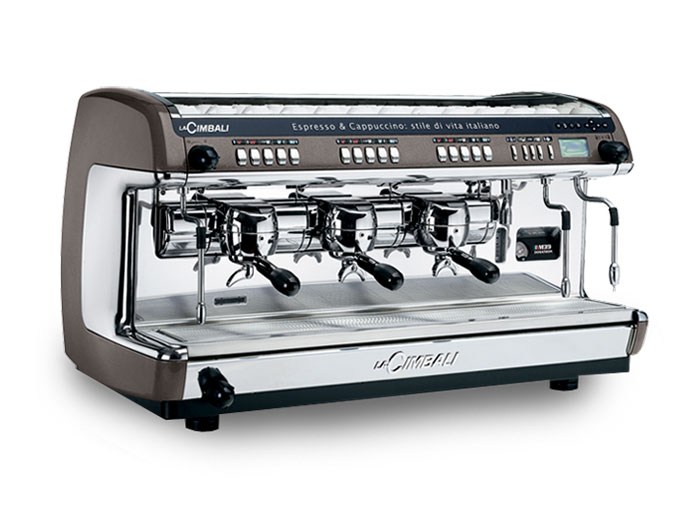
This nice coffee machine was donated to us by Levy group today. Yay! Now we are awaiting gifts from other groups.
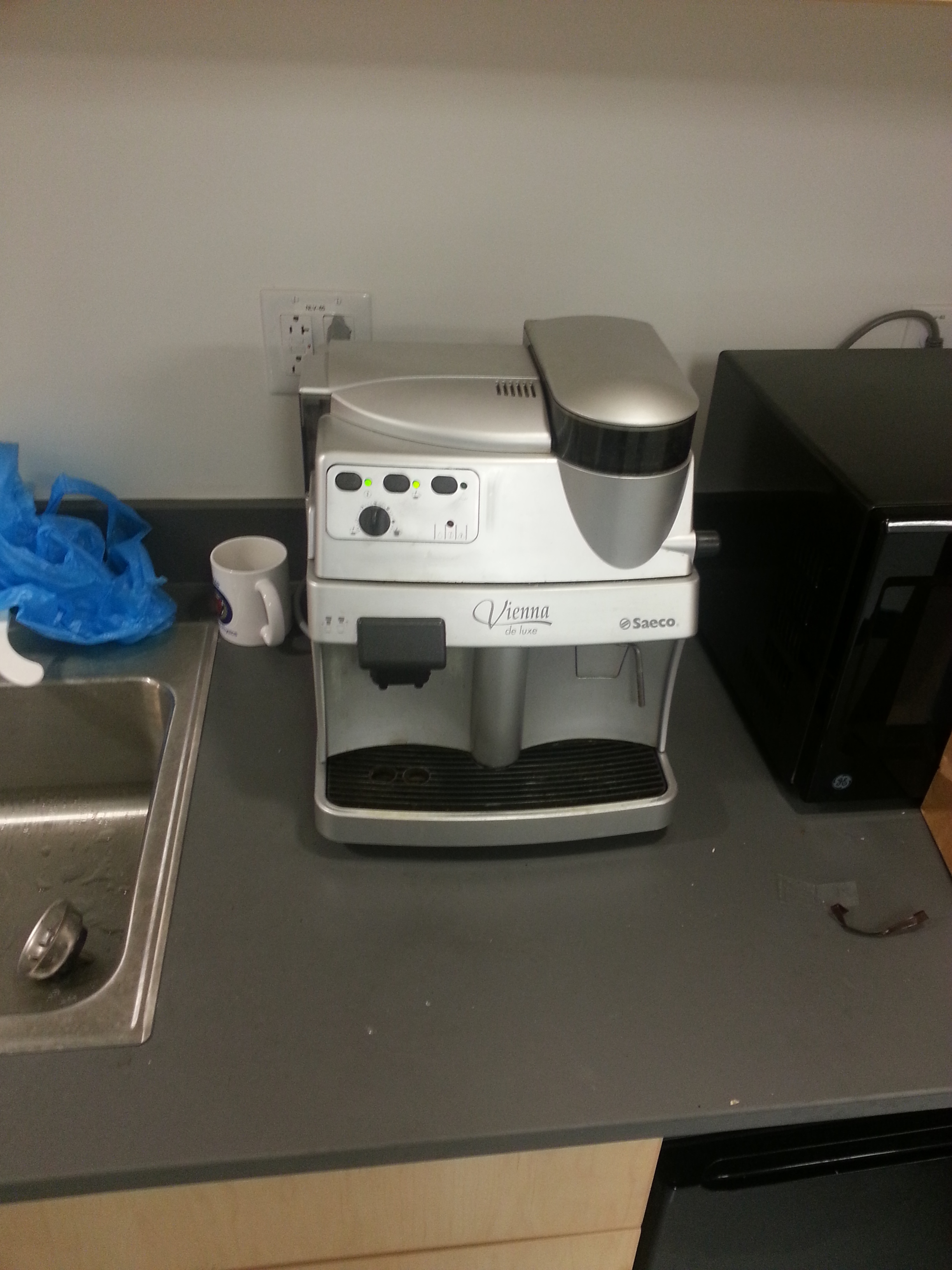
This setup can be viewed as temporary arrangement to get us through the tough period of setting up the lab, and as support on the way to our final goal:
In other kitchen news, several days ago I bought dried majoram (origanum majorana). For cooking. But when I wanted to use it I could not find it in my house… Until I looked inside the fridge! This must be a powerful habit I developed to always put majorana in the fridge.
And we have a fridge!
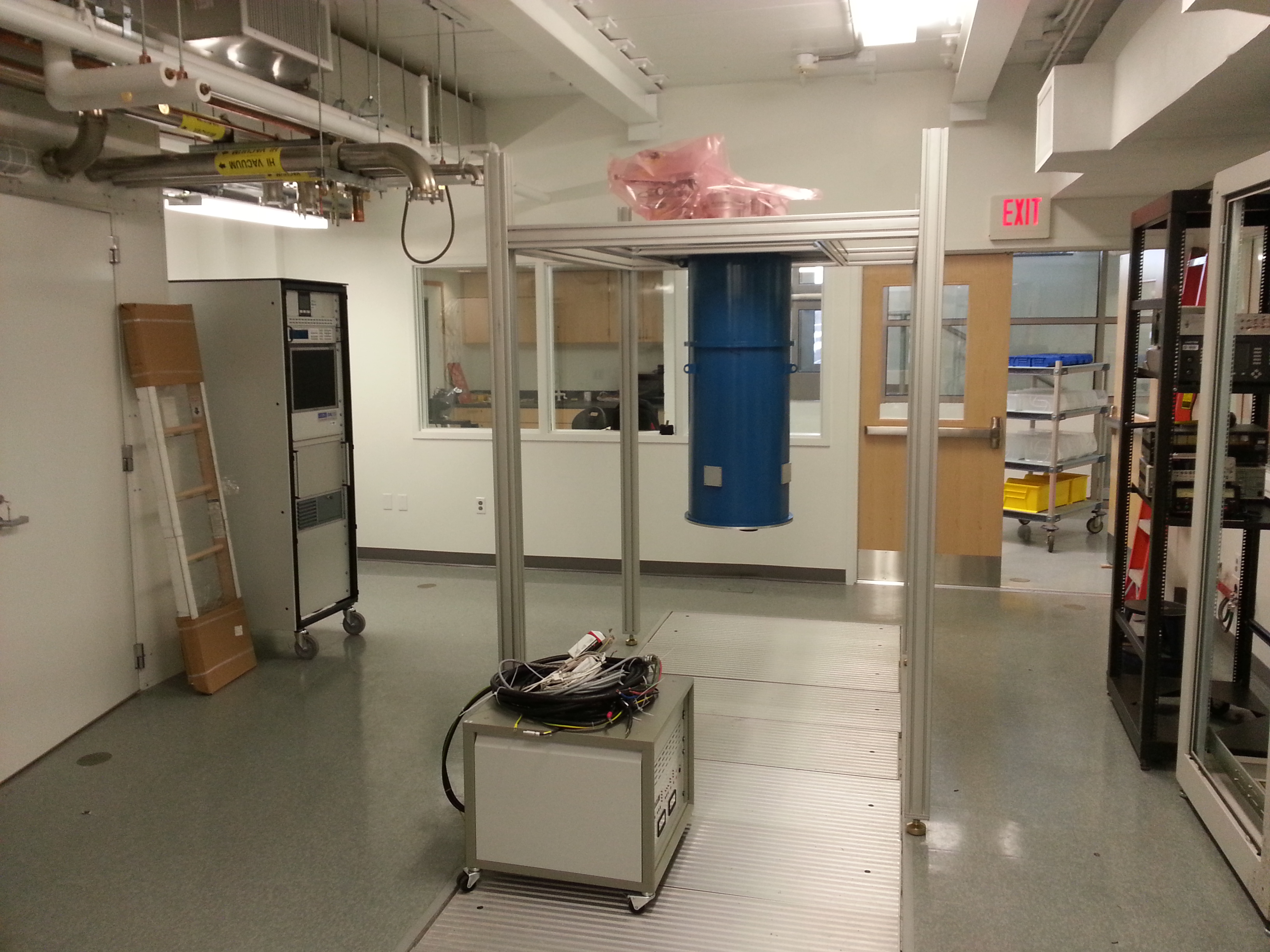
This Oxford Instruments cryo-free dilution system is a campus facility. But we have adopted it since the University has set up our lab space so nicely just for this kind of equipment. Coincidentally, the first fridge from Leiden has been shipped today after thorough testing, and work on the second Leiden system is well under way.
Nanowire positioner
We make devices out of semiconductor nanowires which are filamentary crystals that grow like a forest on flat substrates. One challenge that we face is to cut down the forest, isolate a single nanowire and build it into a multilayer structure of a transistor-like device. For years we used to rely on a ‘random’ method: grab thousands of wires and spread them on a chip where we wish to fabricate a transistor. But now we have this neat setup:
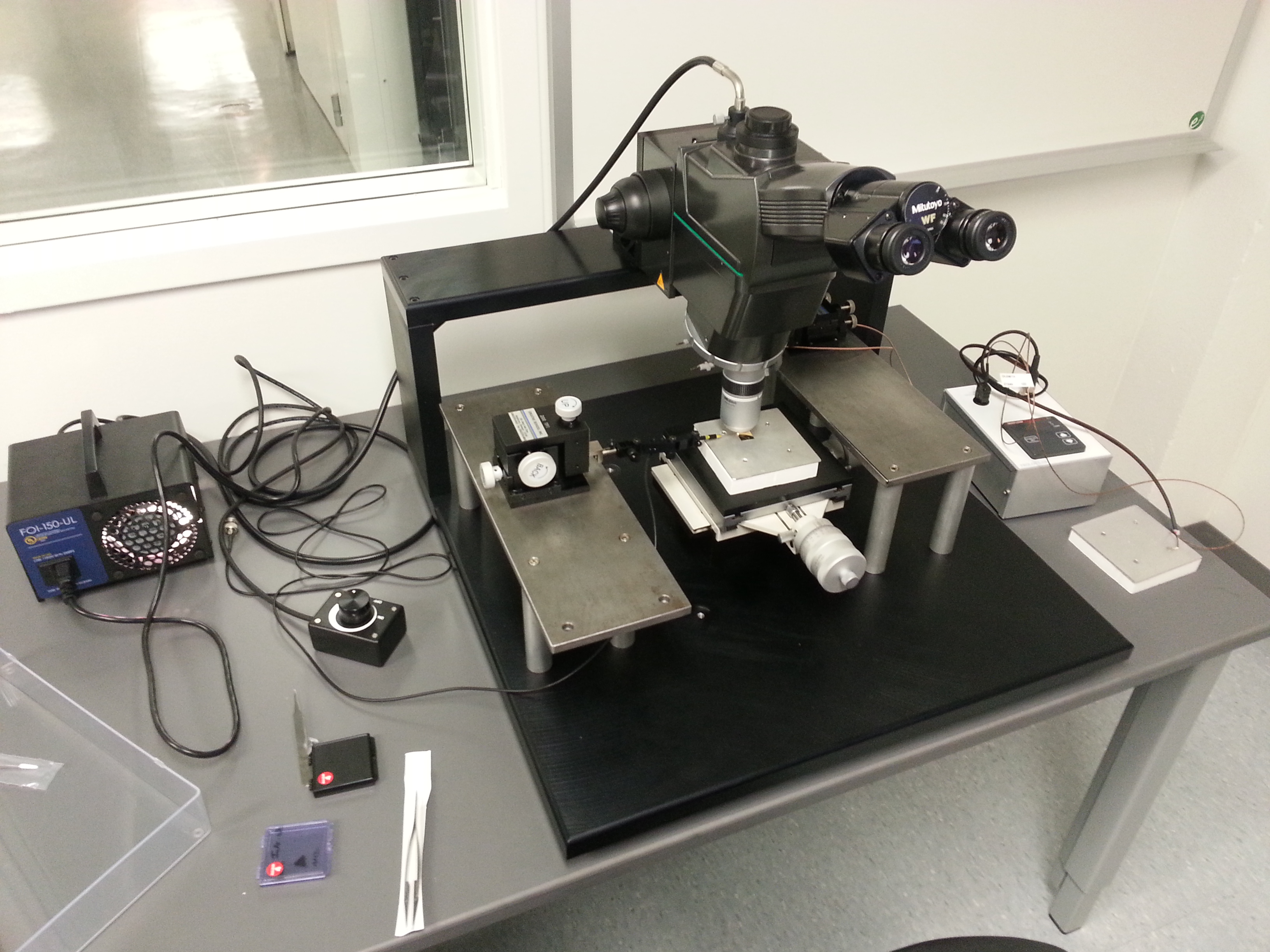
It is an optical microscope just powerful enough to barely make out a single nanowire. Next to it is a micromanipulator featuring three grey knobs for moving in X-Y and Z. In this setup we are able to break off a single nanowire from the forest, carry it over to another chip and place it in a desired location.

Here is an example where my student picked up a couple of nanowires (this sometimes can happen) and dropped them in between markers that will help us find back the location later. The idea of this setup came to me from Aachen, where students in the group of Prof. Morgenstern showed me a similar setup. I am greatful to them, as it makes our life much easier. They have published a very nice paper reviewing this instrument.
Helium-3
Isotope He-3 is a very rare and interesting substance. For example, it becomes a fermionic superfluid when cooled below a few milliKelvin. Along with its slightly heavier brother He-4, it is one of the two quantum liquids, meaning it remains liquid (in theory) down to absolute zero temperature. By circulating it in a closed loop one can produce cryogenic temperatures below 1 degree Kelvin, where all other substances turn solid. So most low temperature experiments rely on He-3.
Here are two stories about He-3, one of them mostly true, the other mostly false. I will not tell you which is which. But I will tell you that one of them is a plot of a recent movie.
Story #1. United States government stockpiled all He-3 available on the planet. After the generals find out that He-3 can be used to detect radioactive isotopes, a plan emerges to build a wall around the U.S. borders with designated gates equipped with neutron detectors that run on He-3. As a first stage of the program, all He-3 is made unavailable and declared a national security resource. Research in low tempearture physics, medical imaging and fusion comes to the brink of a halt. A black market emerges with overpriced He-3 from shady sources like Russia and possibly Canada. Students who loose He-3 in their labs are never seen again.
Story #2. In 1945 Nazis manage to send a space ship to the dark side of the Moon. The primary mission was to harvest He-3, abundant on the Moon, which they were going to use for world domination. They have established a base and built a refinery. They also built a space fleet capable of destroying Earth. Now all they need to launch an invasion is an iPad to navigate the ship.

concept/design by Jussi Lehtiniemi/Iron Sky
It is cold!
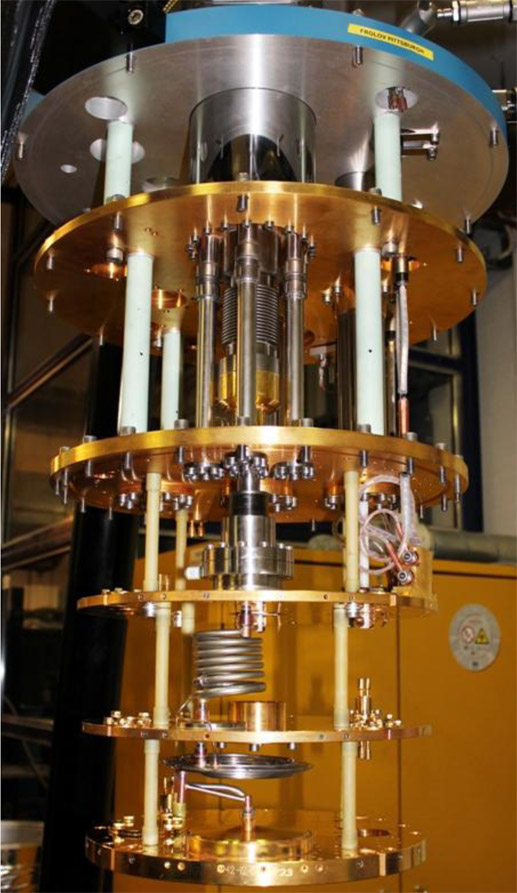
Oppan Leggett style
A skit from the Annual Physical Revue at Urbana-Champaign. The tradition lives on!
How to style-up your lab
Every lab needs a little bit of color, in our case represented by this fabulous and sturdy toolbox:

And for the meeting area, we got this multi-touch screen, which works also as an electronic whiteboard with memory.
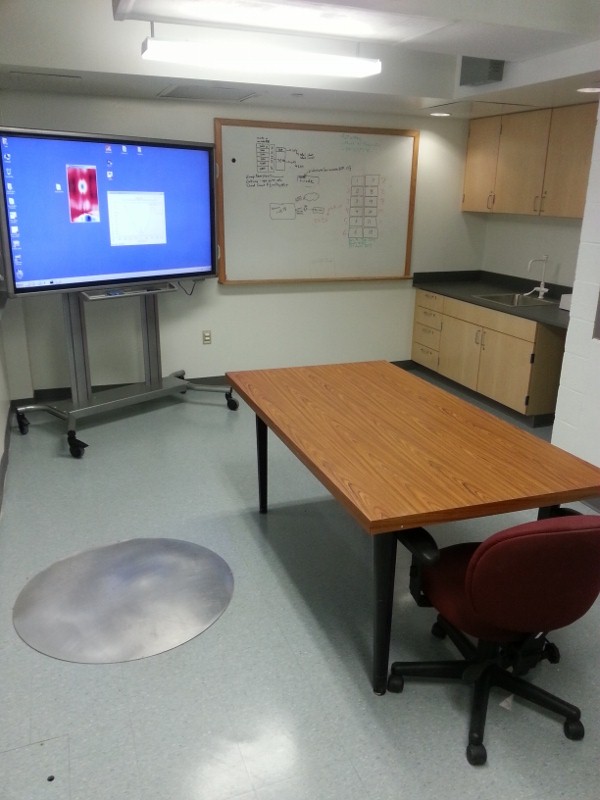
It has already proven to be useful for spontaneous discussions, lab tours, etc. And in the future it will be great for group meetings, data browsing… Importantly, it comes fully ready for the Quantum Internet, which apparently Verizon is already offering.
First news from the cleanroom
Our scientific process entirely depends on being able to fabricate nanoscale devices using cleanroom techniques such as lithography and thin film evaporation. At Pitt we are lucky to have a modern nanofabrication facility as part of Petersen Institute of NanoScience and Engineering (PINSE).
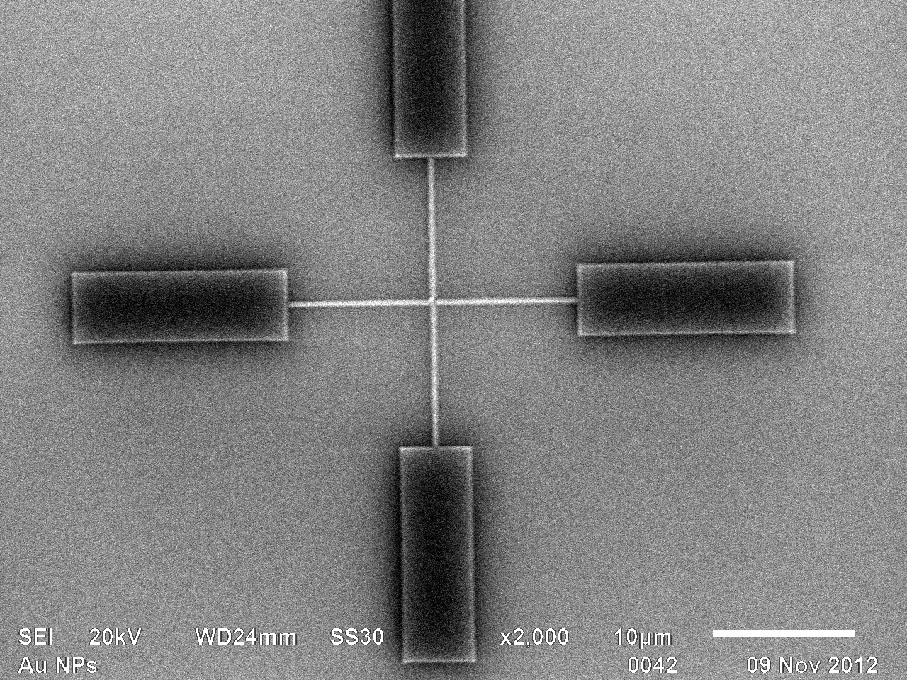
I am proud to report the first electron beam lithography results. In this scanning electron microscope image we show the alignment markers which set the coordinate system for synchronizing multiple layers of device fabrication. More to come! Image by Zhaoen Su.
Fridge update
Meanwhile in Leiden the Gas Handling System of our first fridge has been assembled. The red frame also doubles as a ‘dump’ for helium-3, the precious quantum liquid that makes cooling below one degree Kelvin possible.
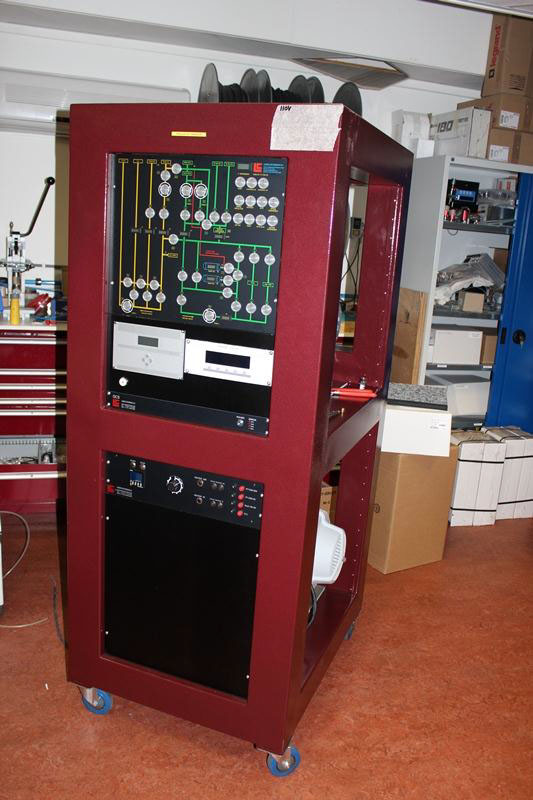
The fridge has been moved from the first floor of the factory to the ground floor, where fridges are ultimately tested. The importance of this event cannot be understated.
NIST Lab Tour
Our Department of Physics and Astronomy here at Pitt has received a substantial grant from the National Institute of Standards and Technology, with the aim of converting unused rooms and closets into modern laboratory space. This project has been a success, and my own lab is one example of a truly magic transformation. This week we showed off the new labs to the public. I had between 50 and 100 visitors of all walks of life: such as the Director of NIST, a U.S. Undersecretary of Commerce, a Pitt alumnus (which all turned out to be the same person).
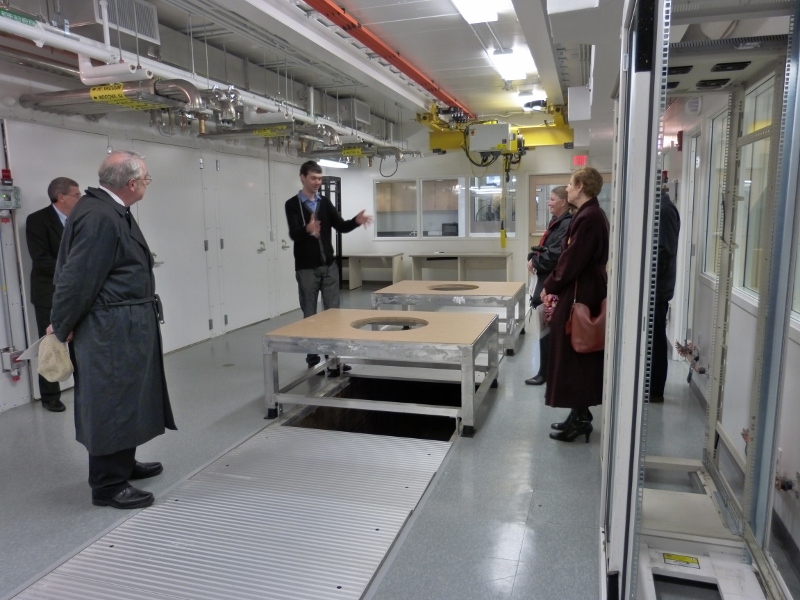
One side effect of having a brand-new lab is that it is still pretty empty. In this photo I am asking my visitors to imagine a dilution fridge sitting at its table. I propose that they think about a Ferrari, but one that can reach very-very-very low temperatures.
Photo by Regina Schulte-Ladbeck.
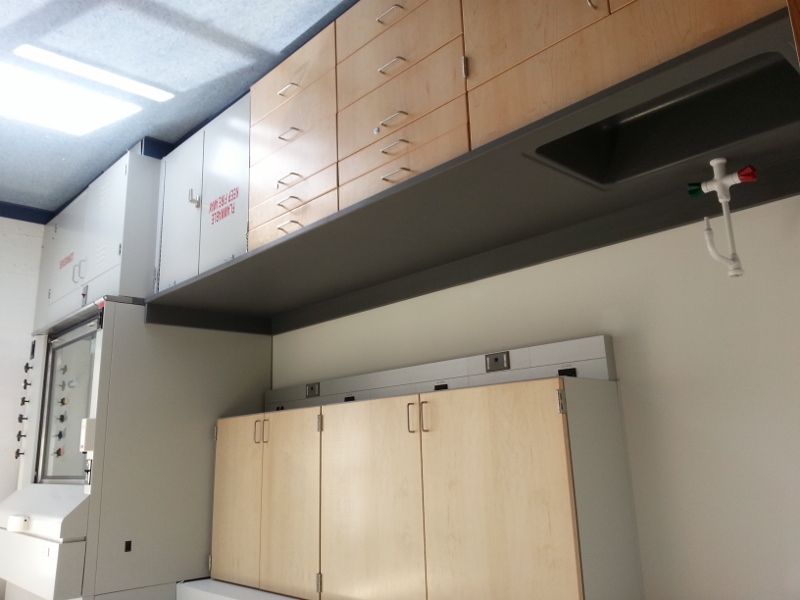
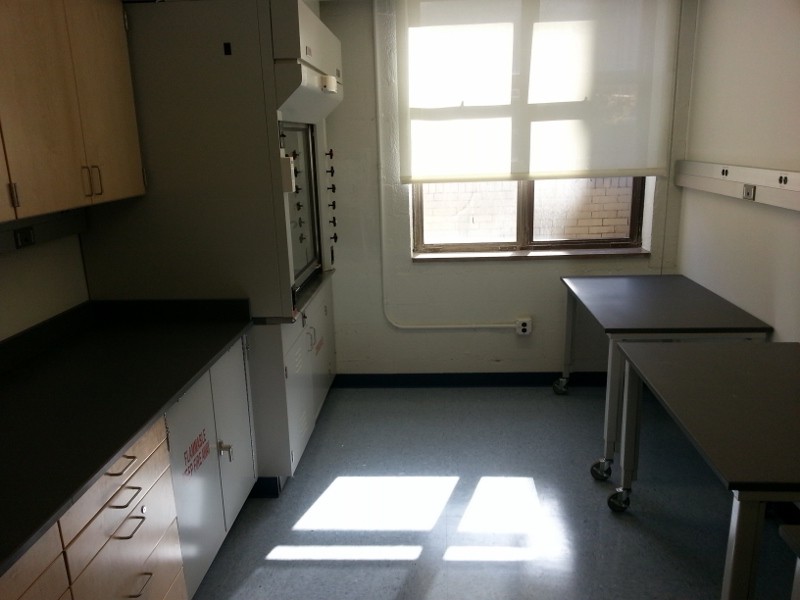
Chemical room
Our new chemical room is almost ready. This is perfect timing since we are about to set up a nanowire contact cleaning process.
Fridge update
Meanwhile in Leiden they have installed the pulse tube on our first fridge. This is a major component that allows the fridge to operate without consuming liquid helium, in the dry mode. The pulse tube cools the system down to a few Kelvin by running helium in a closed loop. This makes a dilution fridge more like a fridge in your kitchen, a plug-in electrical appliance.
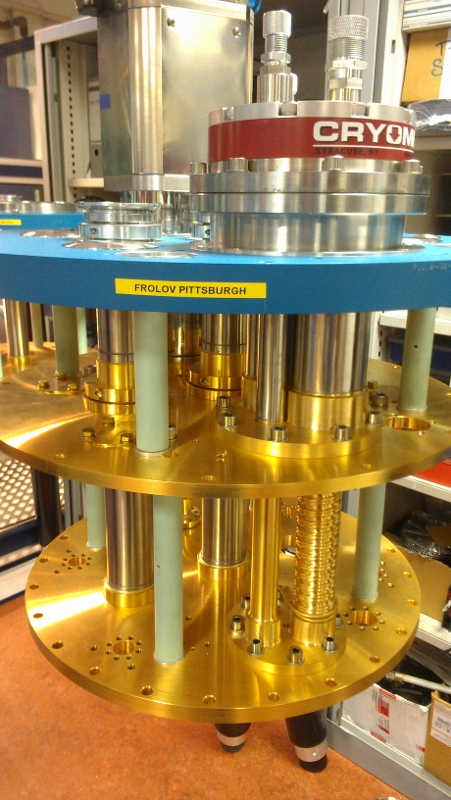
Photo by Jeremy Levy.
Lab manual
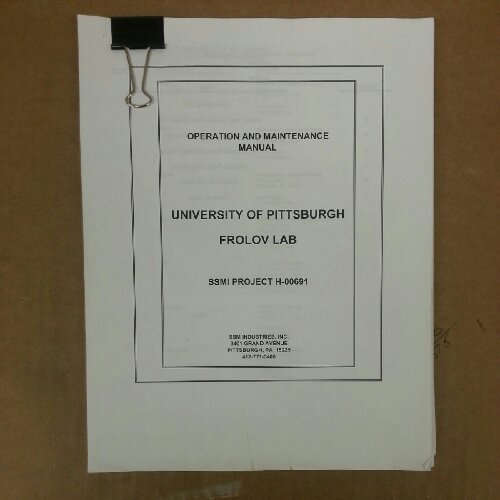
A secret that only professors know is that every lab comes with a manual. It tells you what to do day-by-day to get tenured, publish in Nature and host Saturday Night Live. Today I was supposed to pick the color of my tools cabinet.
How to braid non-abelian particles
In Pittsburgh
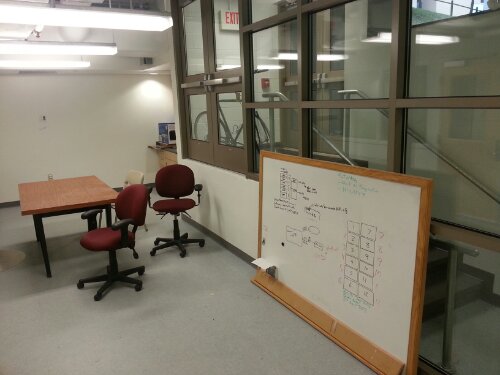
The first pictures I took myself in the lab. It is the end of my first work week at Pitt, some things have been set in motion. We have a conference table, chairs, microwave, minifridge (for food), a vintage whiteboard and a bicycle.
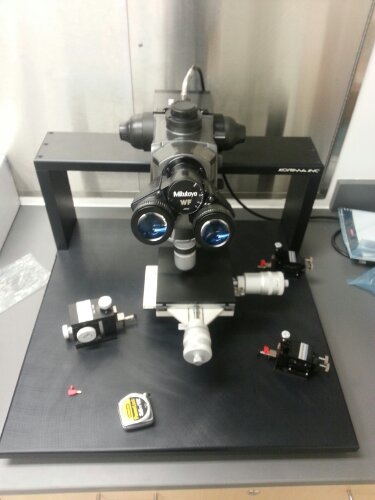
And we have a microscope which will be used for micropositioning of nanowires and as an electrical probe station.
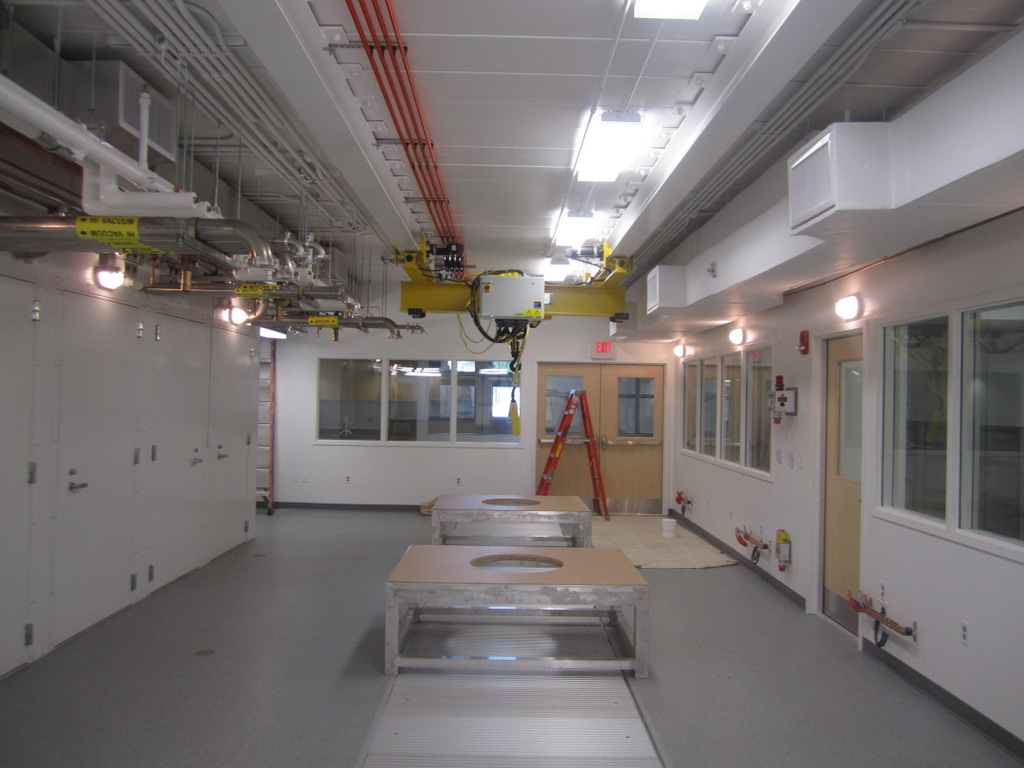
Lab construction complete
Thanks to Wilson Architects, Mascaro Construction and the Pitt team. Great job!
I will arrive to Pittsburgh in 1 week, and we will begin assembling equipment and making samples.
 spin and coffee
You must be logged in to post a comment.