One of the fridges in my lab got a Twitter account:
The other fridges don’t dig it yet.
Sergey Frolov, Academic Community Member
One of the fridges in my lab got a Twitter account:
The other fridges don’t dig it yet.
This sequence of sharp peaks is a hallmark of single electron transport: in between the peaks current is shut down because electrons cannot overcome the capacitive energy associated with placing a single electron on a conducting island. At the peak the current flows again because the cost of having N and N+1 electrons on the island is equal.
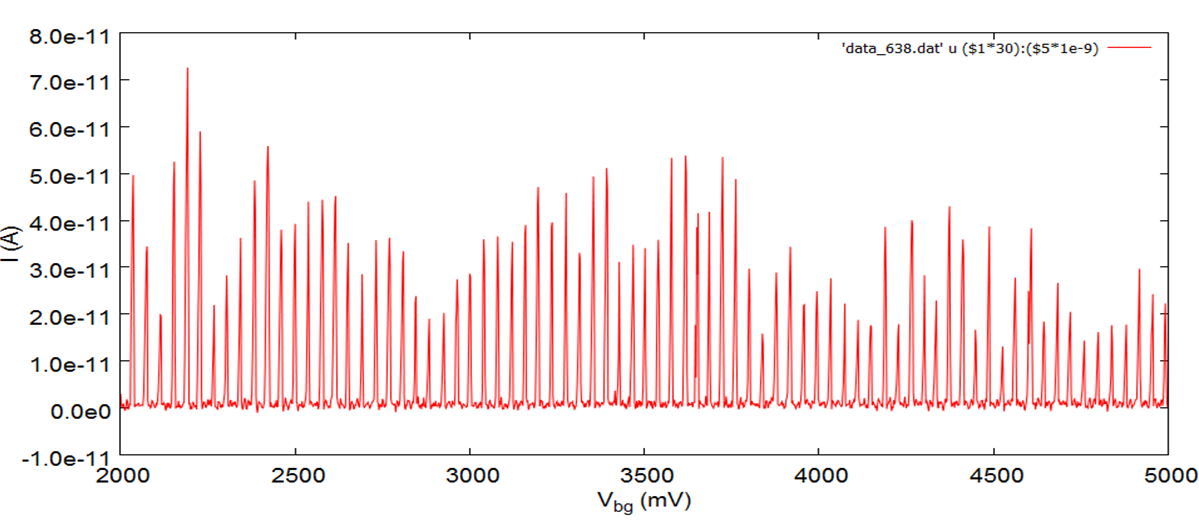
In this case this so-called Coulomb blockade was obtained in a nanowire device contacted by two electrodes and tuned by an electrostatic gate, for which purpose the silicon substrate was used. This is one of the first low temperature measurements performed in our new lab in Pittsburgh.
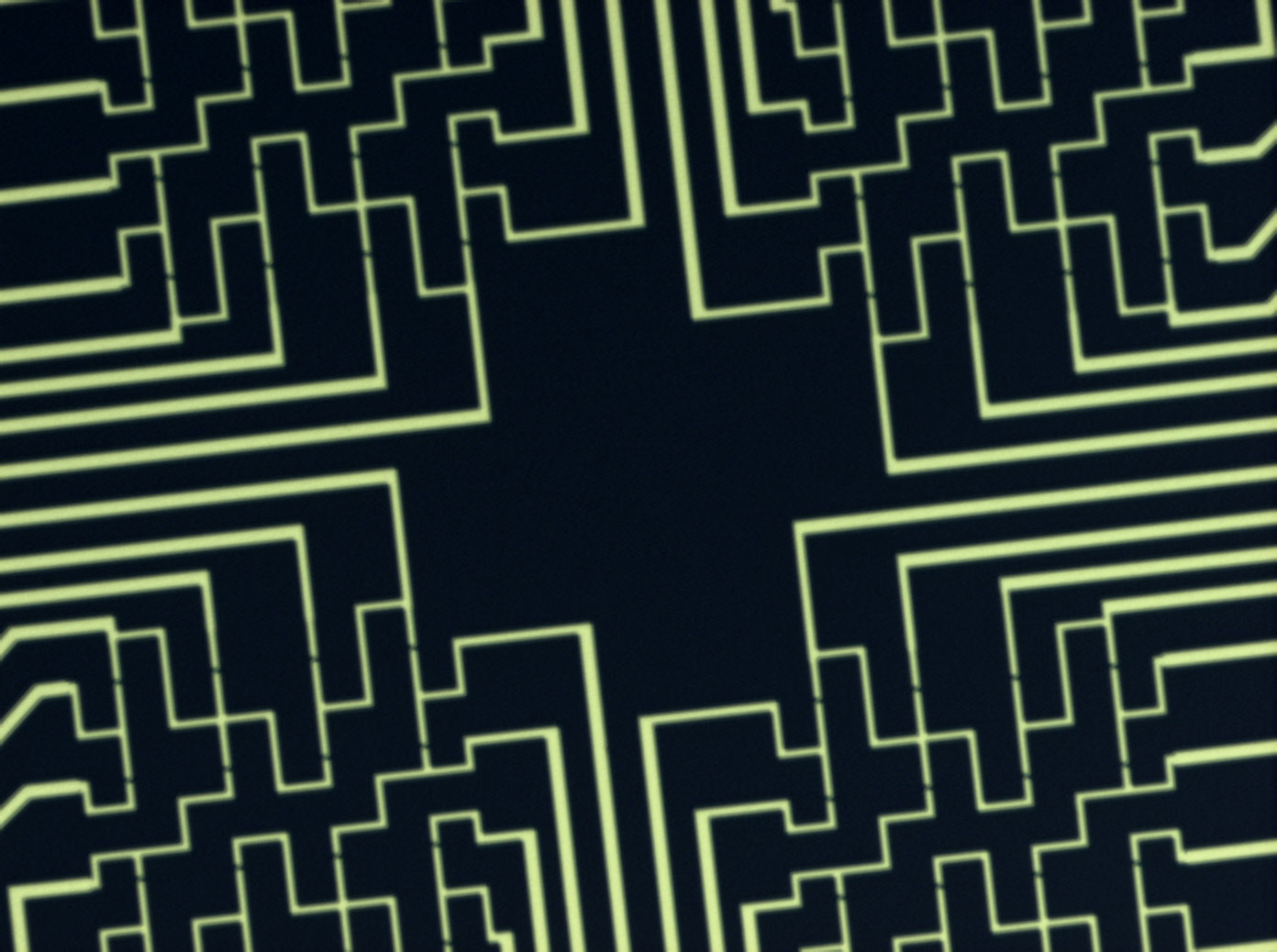
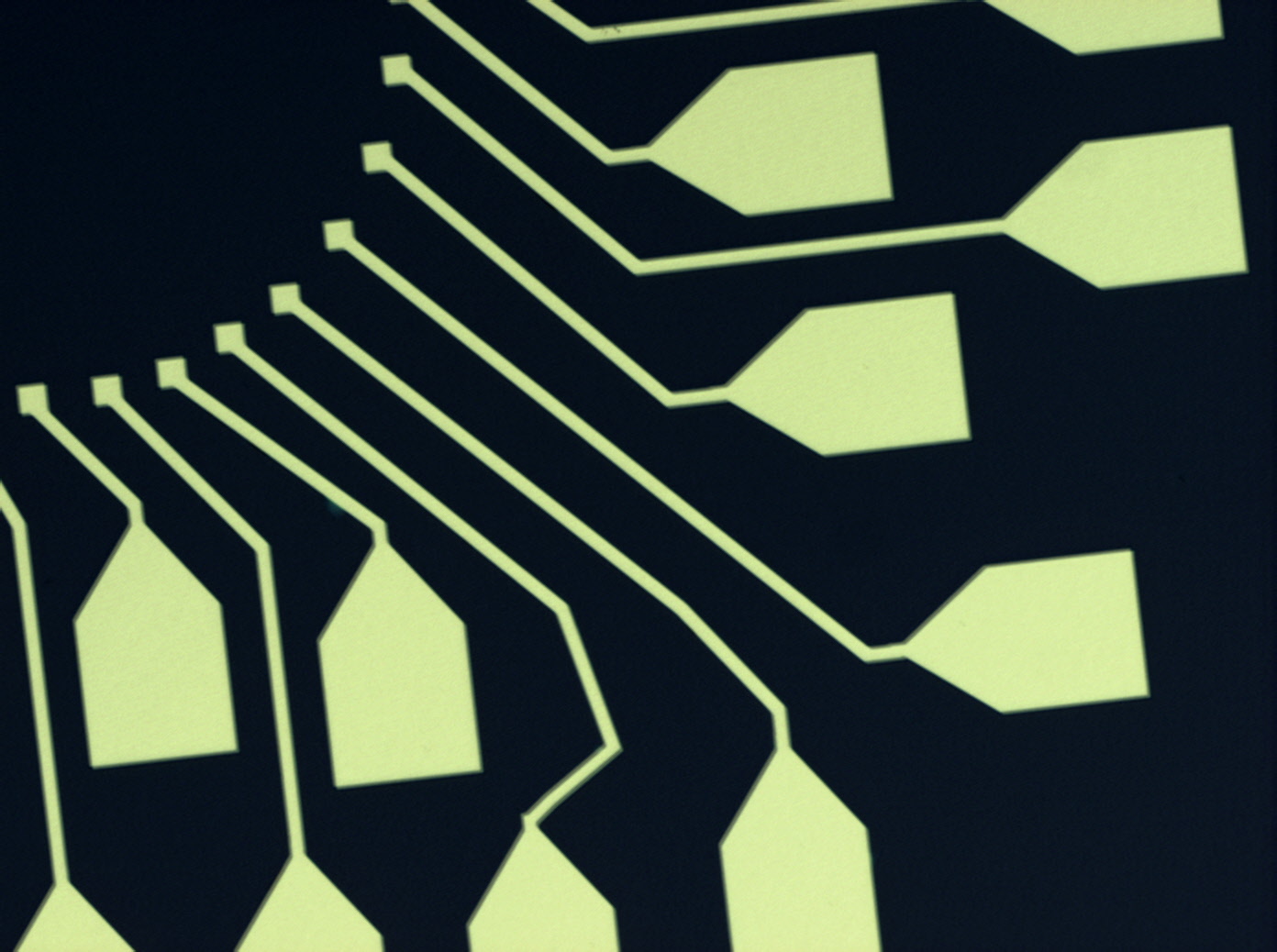
These pictures show gold patterns defined by exposing photoresist with light, a step similar to photography, and then evaporating gold. They will be used for making contacts to nanowires.
In Pittsburgh we are so fancy, we use róse to cool our equipment. As can be seen in the below vine:
Due to a chilled water system leak the hallway outside the lab filled with magnificent pink water last week, it has a chemical added to prevent equipment corrosion. It made me appreciate the ramp that leads to my lab which stopped this water from getting inside. Now every time I have to push something heavy up the ramp I will think about this pink lake.
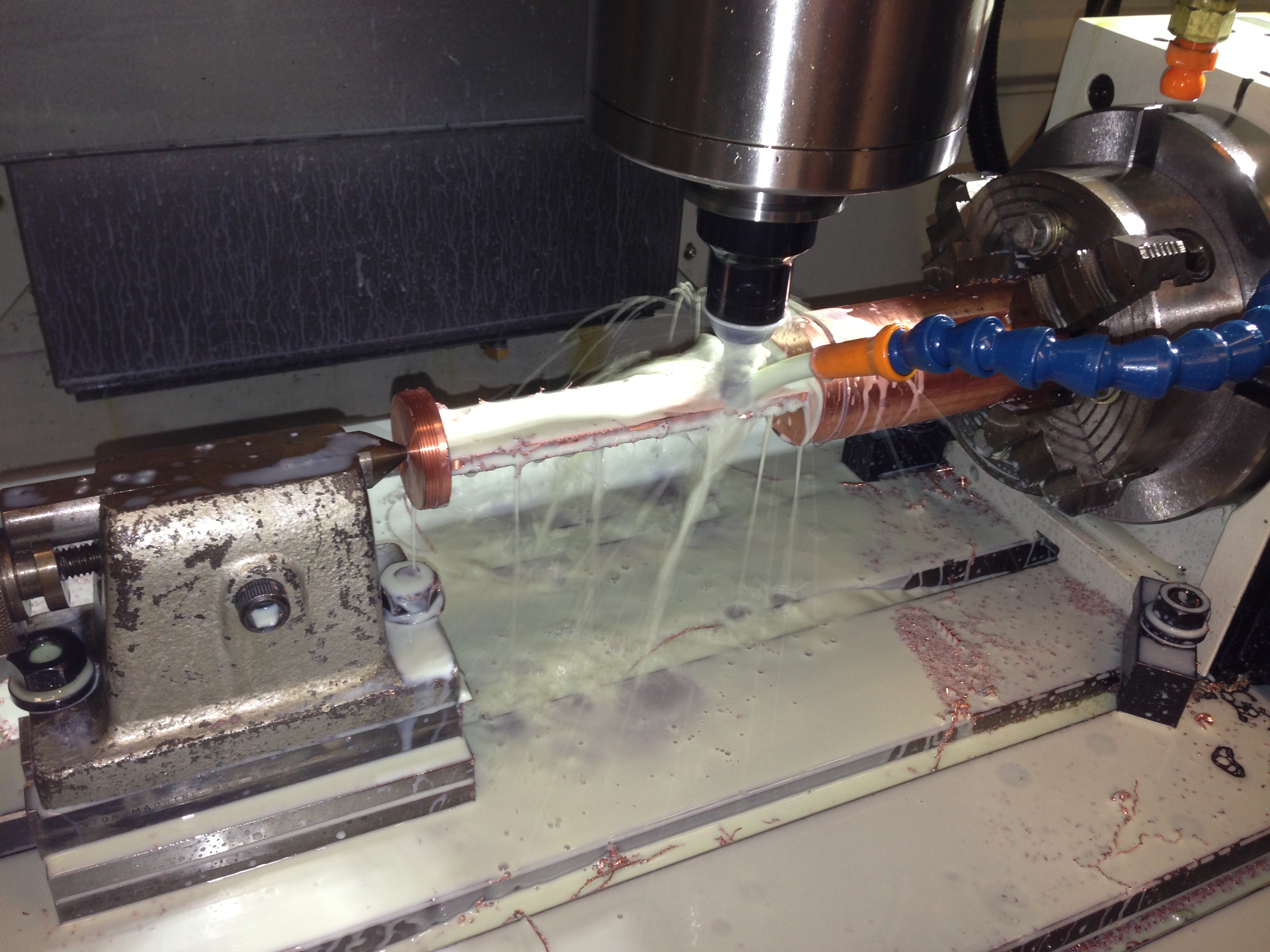
Inspired by the 1964 James Bond classic, we have built the Coldfinger. It is a crafted piece of copper that mounts at the coldest point of a dilution fridge. This is where the sample lives. It has an elongated shape because it needs to enter into the bore of a superconducting magnet, which is typically 2 or 3 inches in diameter.
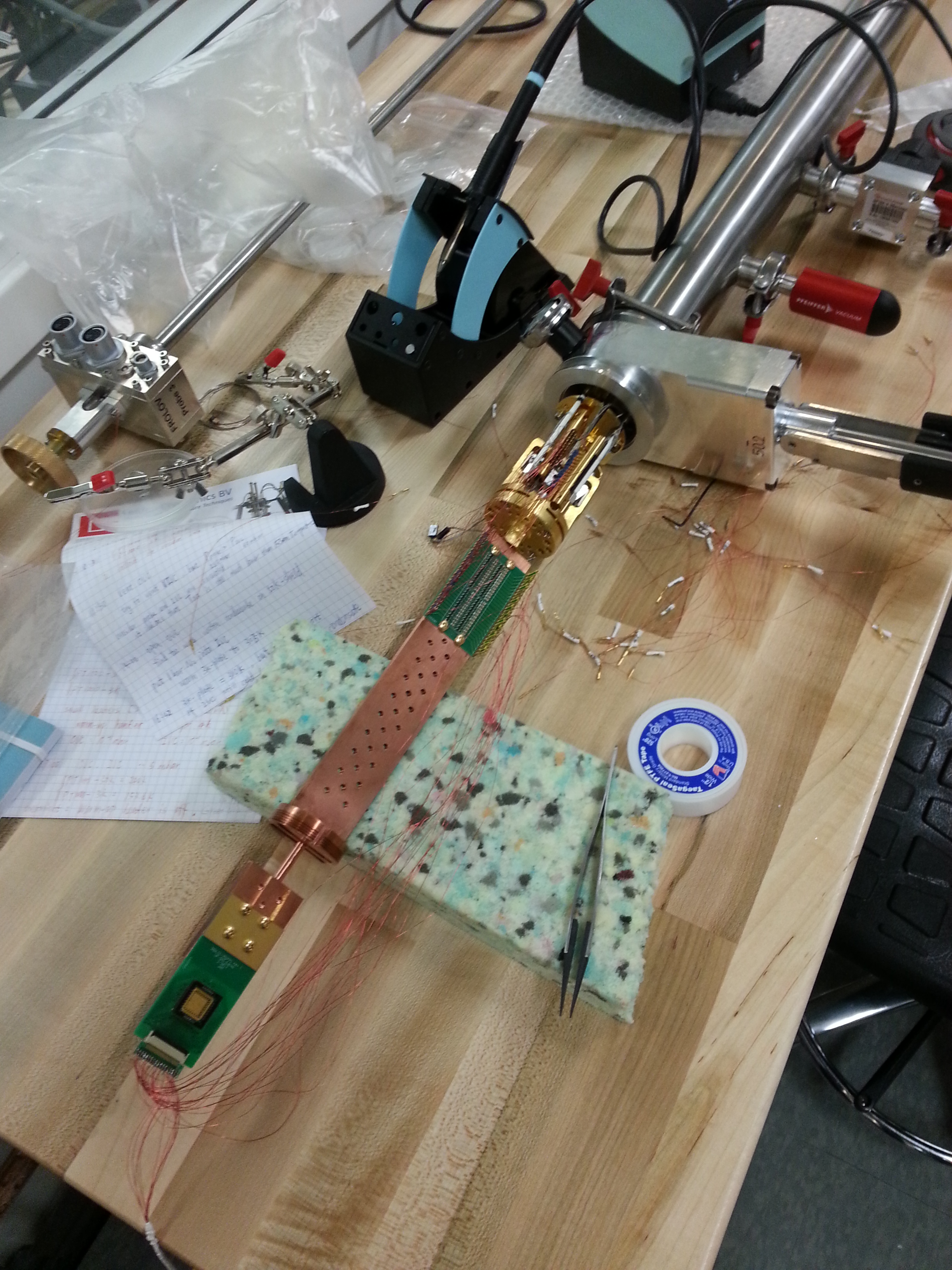
The Coldfinger has PCB-based filters to cool down electrons that come from room temperature in order to explore our devices.
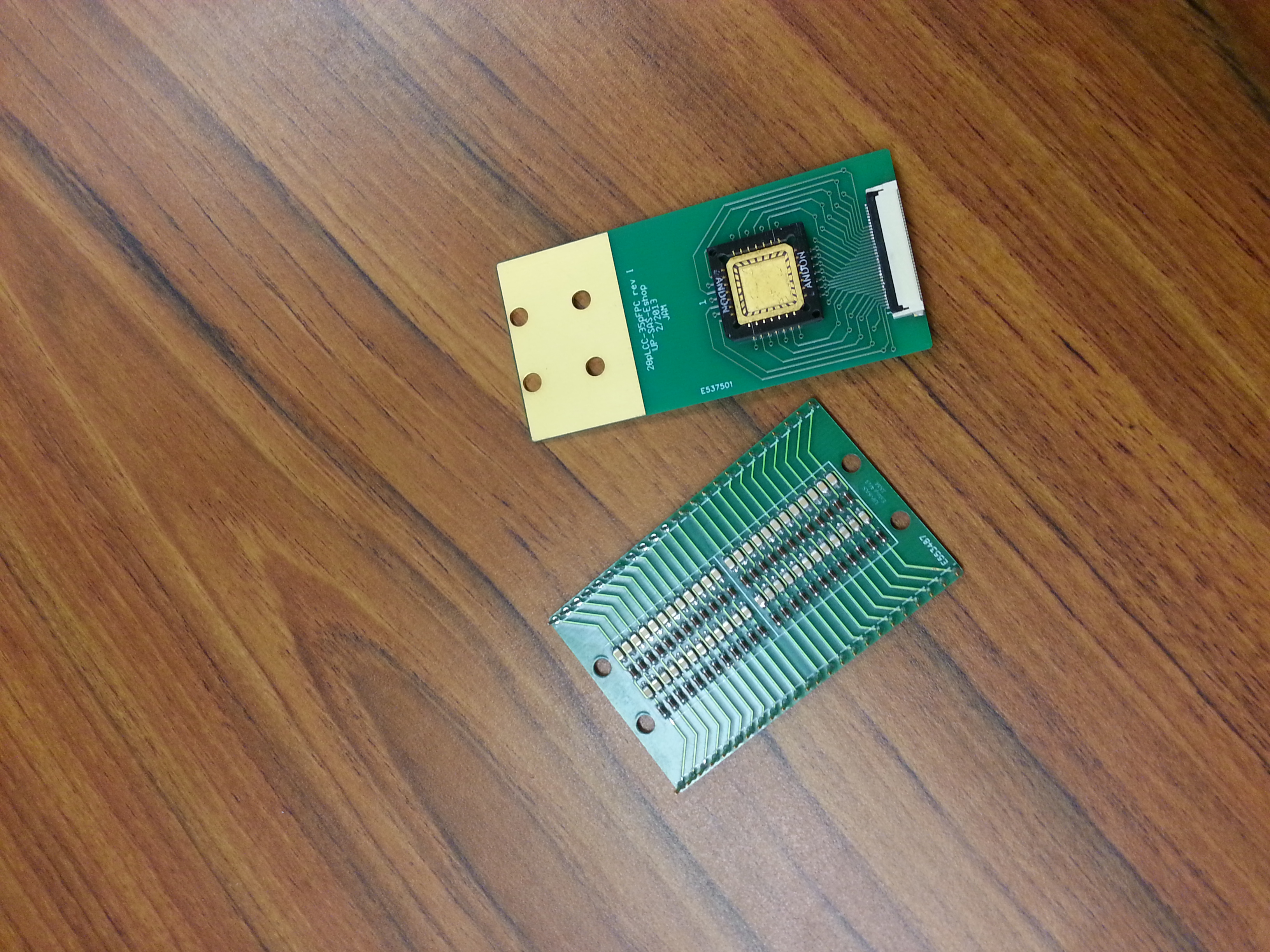
The Coldfinger was produced by our excellent machine shop and electronic shop at Pitt.
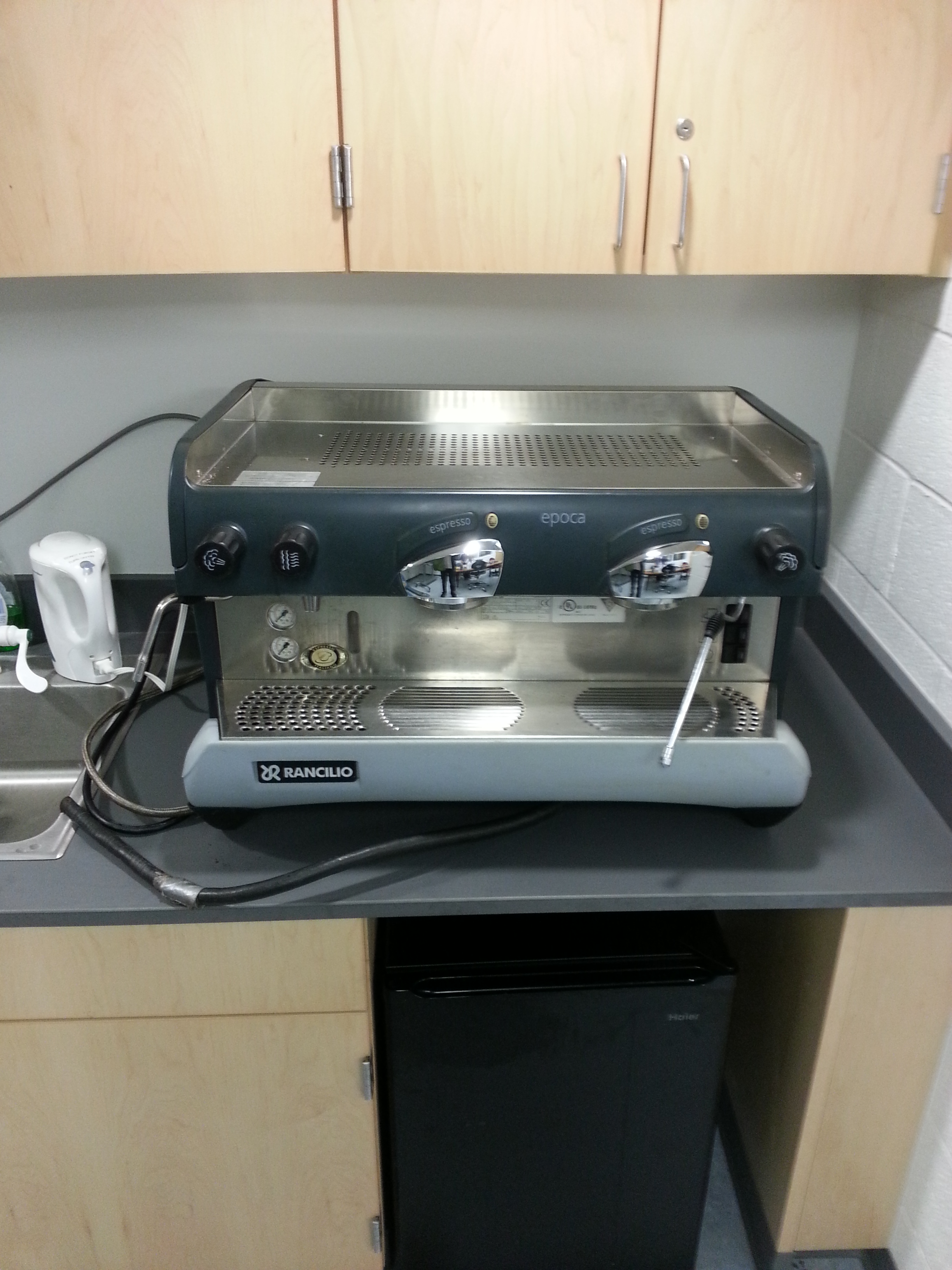
We had to drive to Ohio to get this espresso machine that needed a new home. Still not sure if it will go into our newly renovated Condensed Matter discussion room in Allen Hall, or stay in the lab. In the latter case a theorist infestation is a hazard, though it provides for nice conversations.
Following the method developed by Morgenstern group in Aachen, we are not positioning nanowires by picking them up from the chip where they group and depositing them on a chip where we build devices.
Discovered over 100 years ago, it still works. Certain materials loose resistance when cooled below their critical temperature. One of these, a niobium-titanium-nitride alloy, is now available in Pittsburgh. It is an important material for Majorana fermion research, but also for single photon detectors, superconducting qubits… Almost on the first try we got the critical superconducting temperature of 11K, which is not the highest for this material, but will work for us in the short term. The film was produced in the AJA sputtering machine from a couple of posts below.
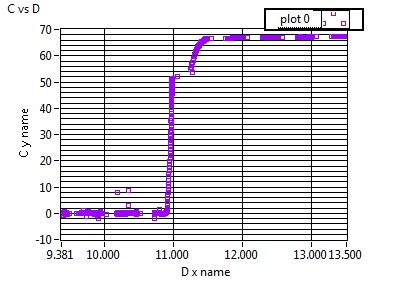
(Resistance vs. temperature plot in the ‘as is’ form)
Nine months later, the lab is full, and everything seems to work, apart from minor issues:
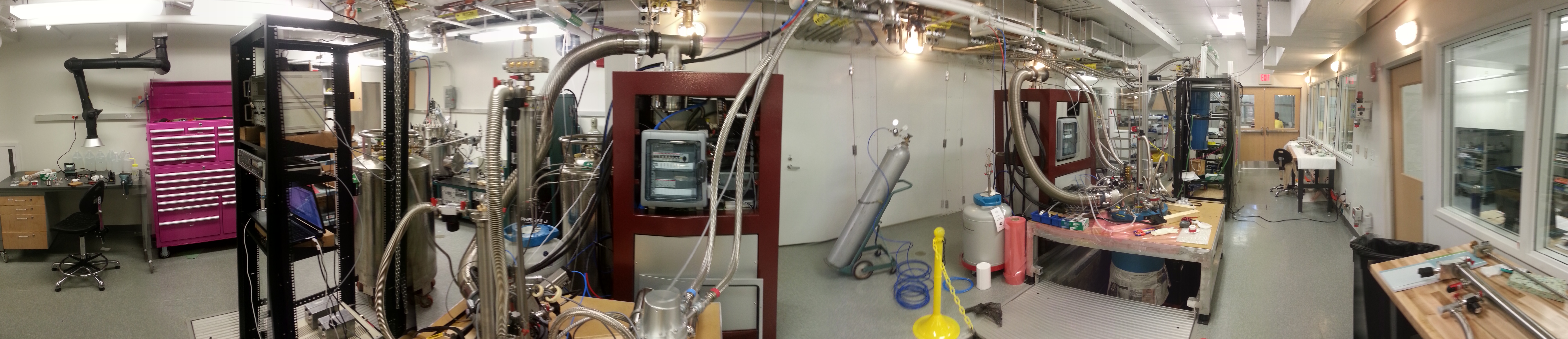
In this panorama you see a sputtering machine, three dilution fridges and of course the pink box.
Finally I understand what my collaborators from Neel Institute are working on:
Article: http://arxiv.org/abs/1107.4759
Btw, isn’t he the guy from the Daily Show?..
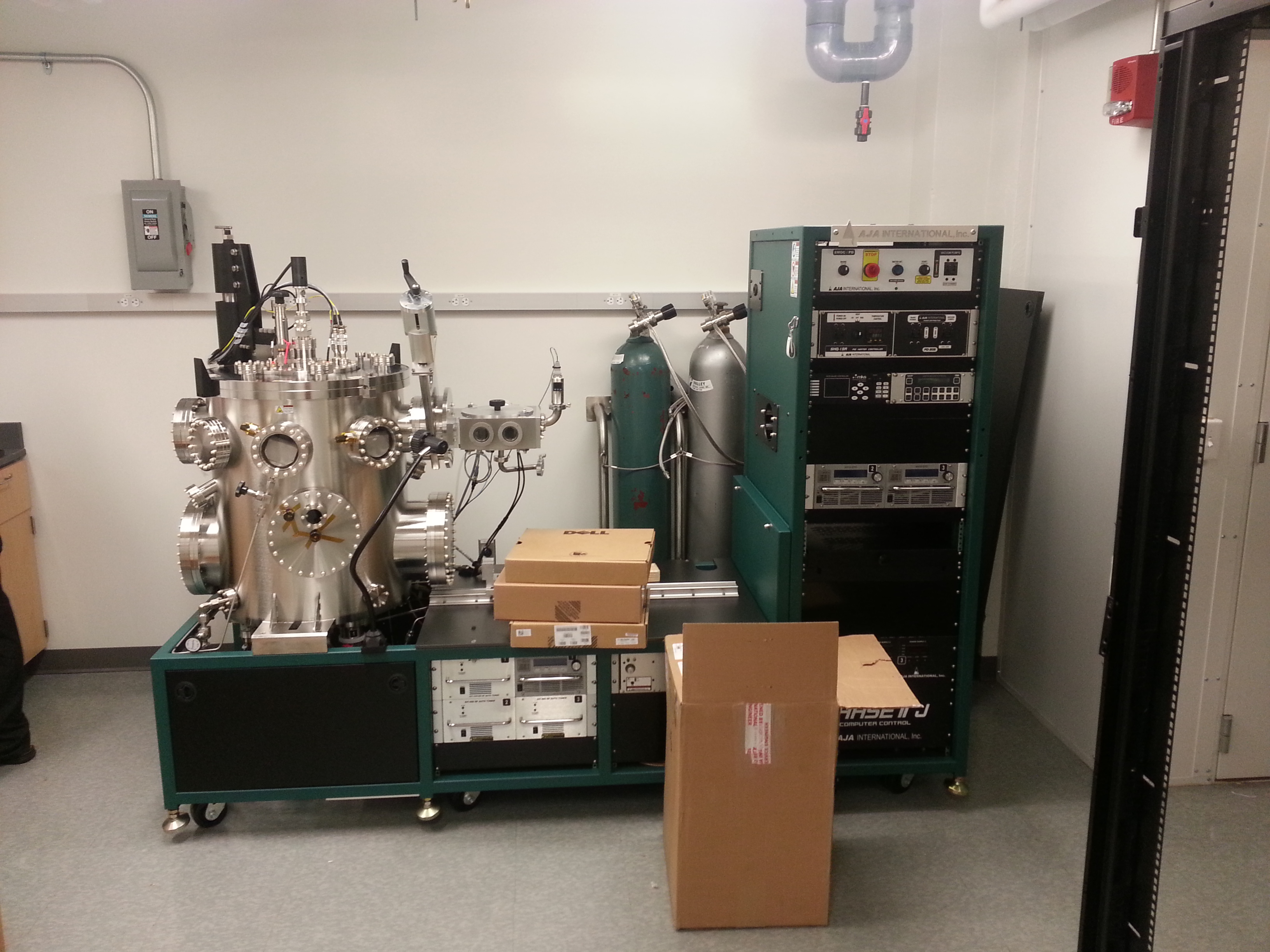
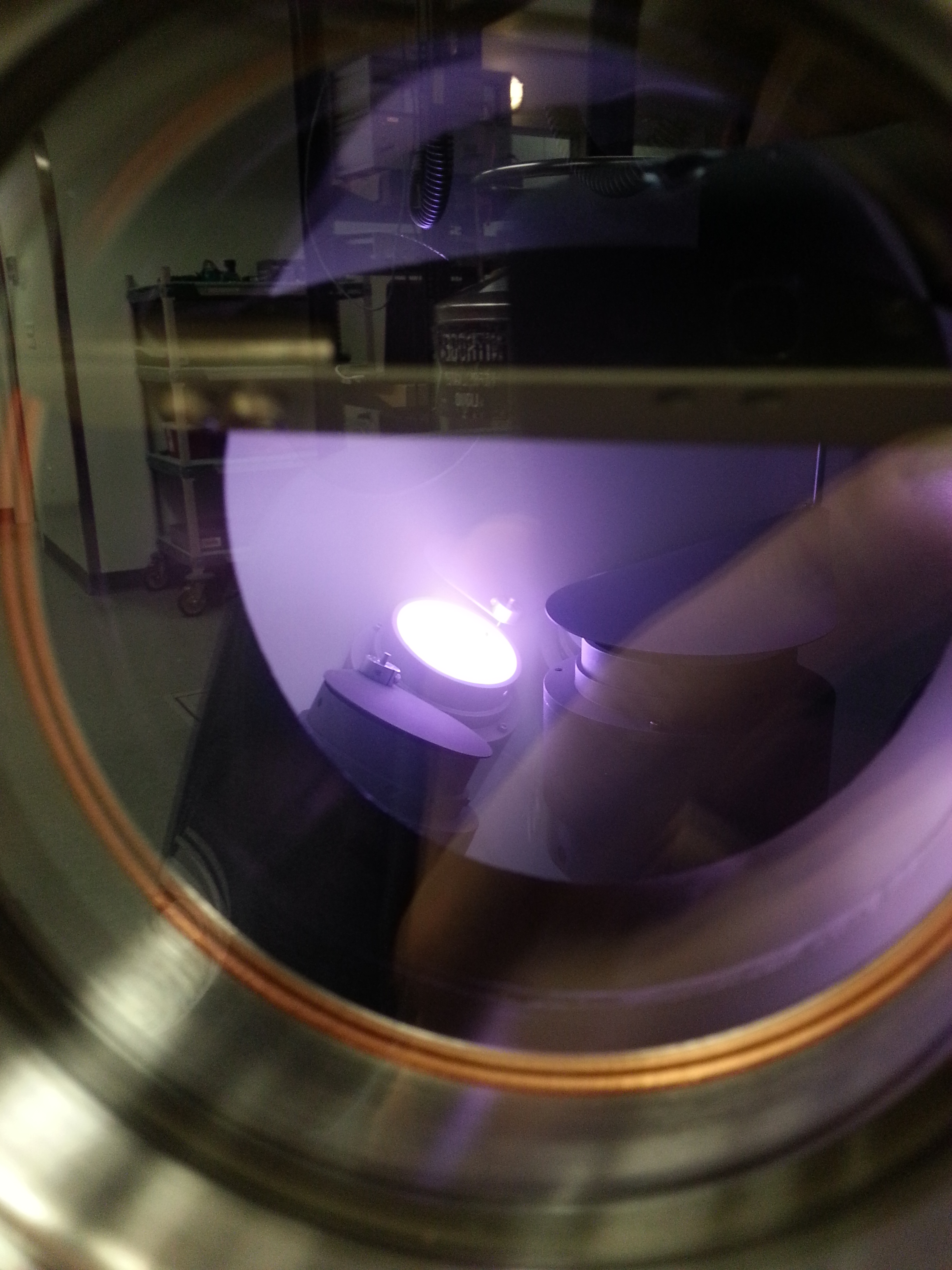
This is a sputtering machine. It is a high vacuum system inside of which argon plasma kicks atoms out of a target, after which the target atoms land onto a sample creating high quality thin films of metals or dielectrics.
This is the plasma:
The machine was made for us by AJA International in Massachusetts. It is a Pitt facility, but it is temporarily located in my lab since it is demanding as a flower (needs water and power), and there was no other place for it on campus.
The button has been pushed, and our two dilution fridges from Leiden Cryogenics are cooling down. Today they both reach 3 K and we start the condensation of He3/He4 mixture which is the first phase of the final cooldown to the base temperature of ~7 mK.
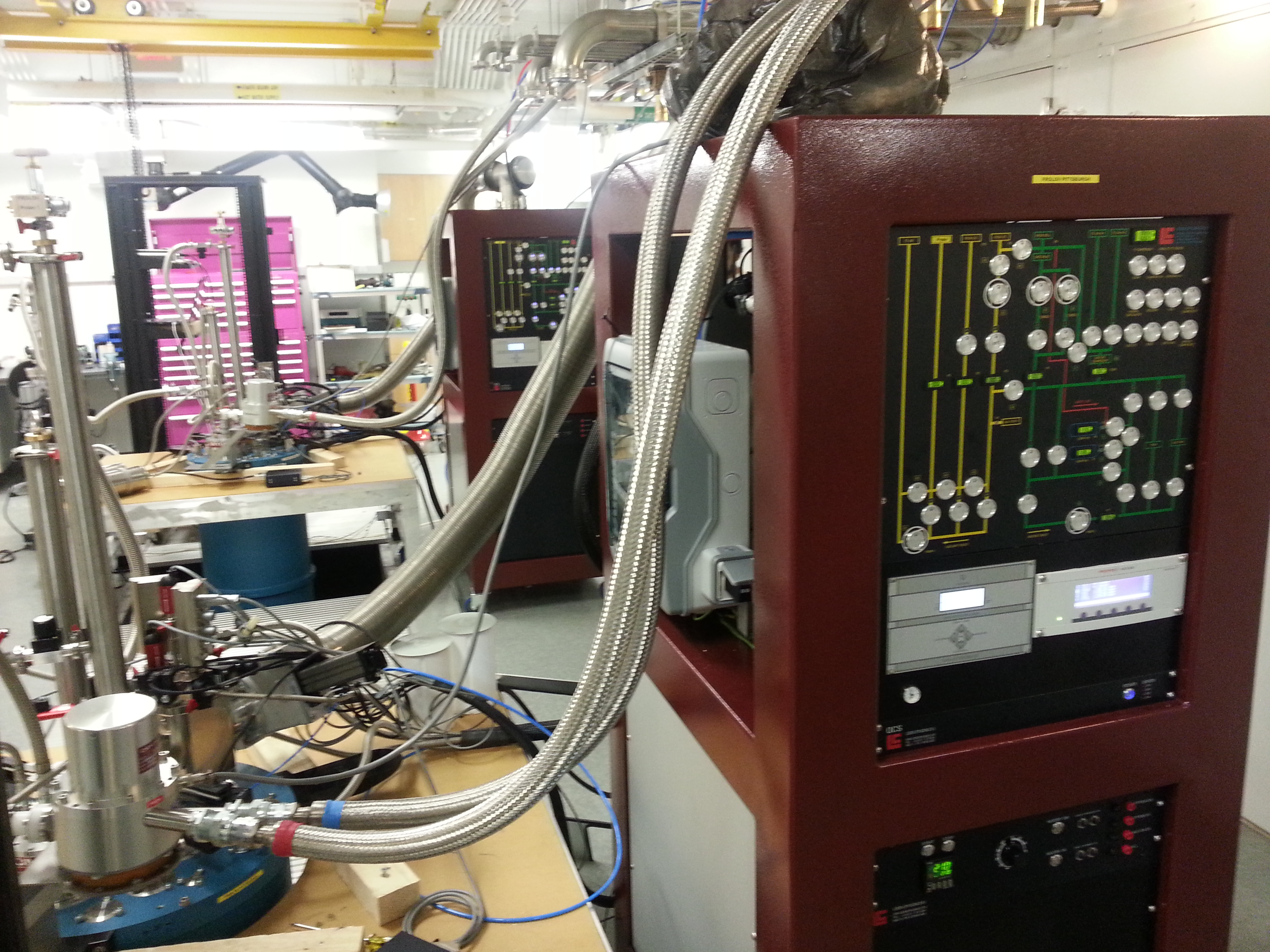
You can also here the pulse tubes humming, though from where I sit in the meeting room I almost don’t hear them, just see the fridges through the glass window.
This picture shows a semiconductor nanowire grown in Eindhoven that we contacted with gold leads. Because all of our measurements are “transport”, i.e. sending a current through a nanostructure, these contacts are absolutely necessary for us to go forward.
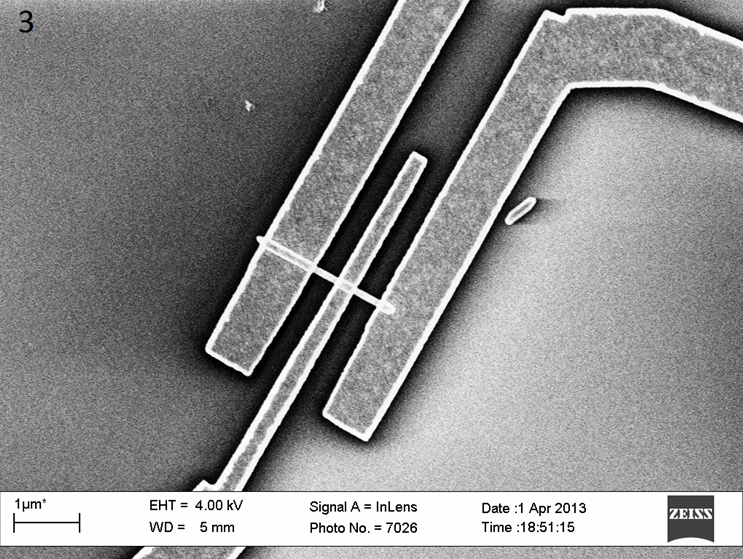
To make this sample, we spread nanowires on the surface of a silicon chip, then took pictures of them using an electron microscope. Based on the pictures we designed gold contacts are wrote them over the wire using electron beam lithography. The device in the picture was the first where we managed to send a current through a nanowire. A small step for mankind, a great step for a new lab.
This Spring semester I taught my first course, on the subject that is dear to my heart – Quantum Transport. I had fifteen students, counting also my entire group. All lectures are available on youtube, I hope they can help future group members and people from other labs.
https://sergeyfrolov.wordpress.com/teaching/
A lot of the material was donated to me by colleagues in the field, for that I am greatful. However, the course was designed to my taste, with an emphasis on new experiments. I sacrificed a traditional historical approach and completely ditched all of the disordered stuff from the decades past. It has been fun to teach.
This is Allen Hall, a building of very interesting history, and home to our Department of Physics and Astronomy at Pitt.
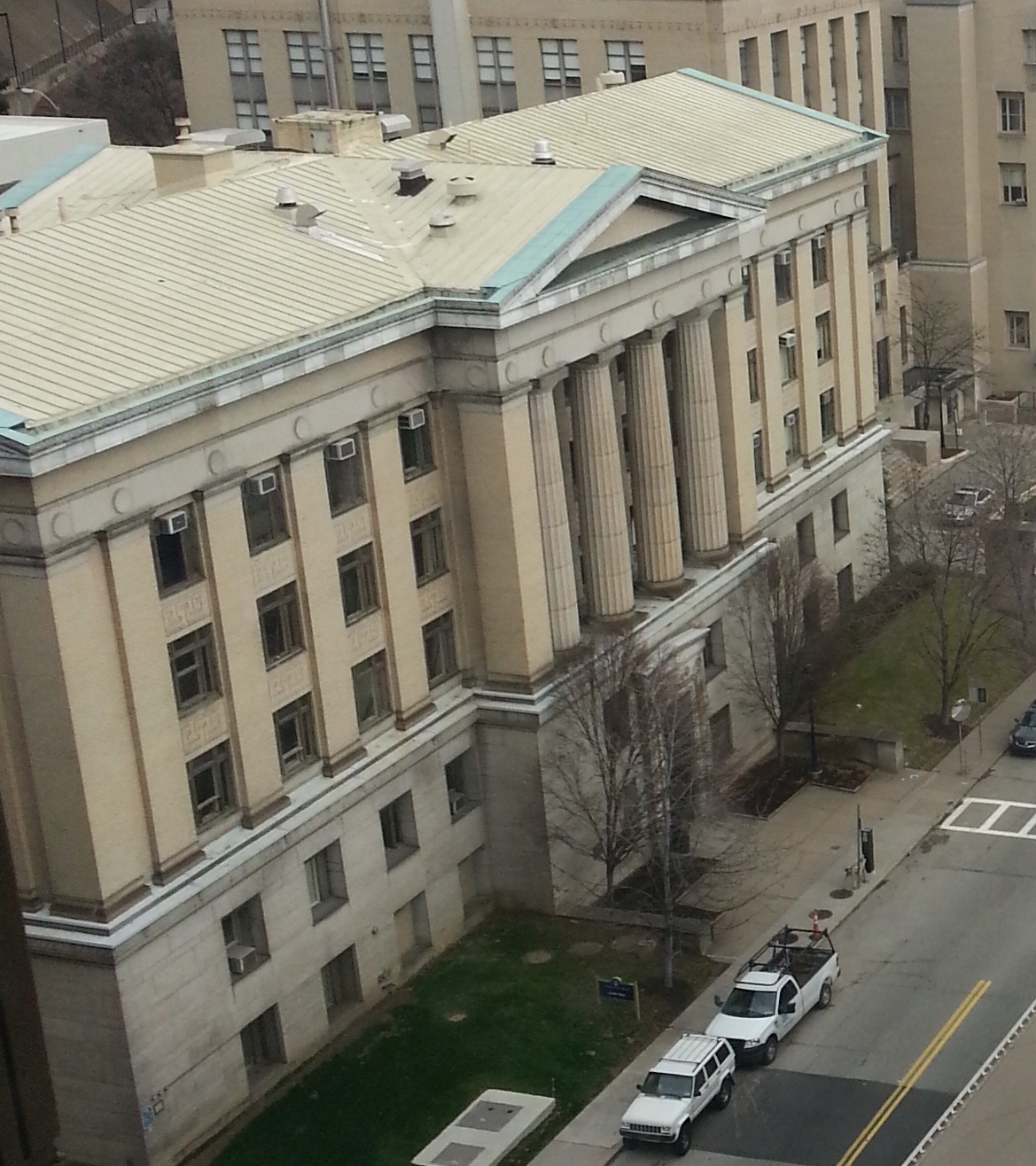
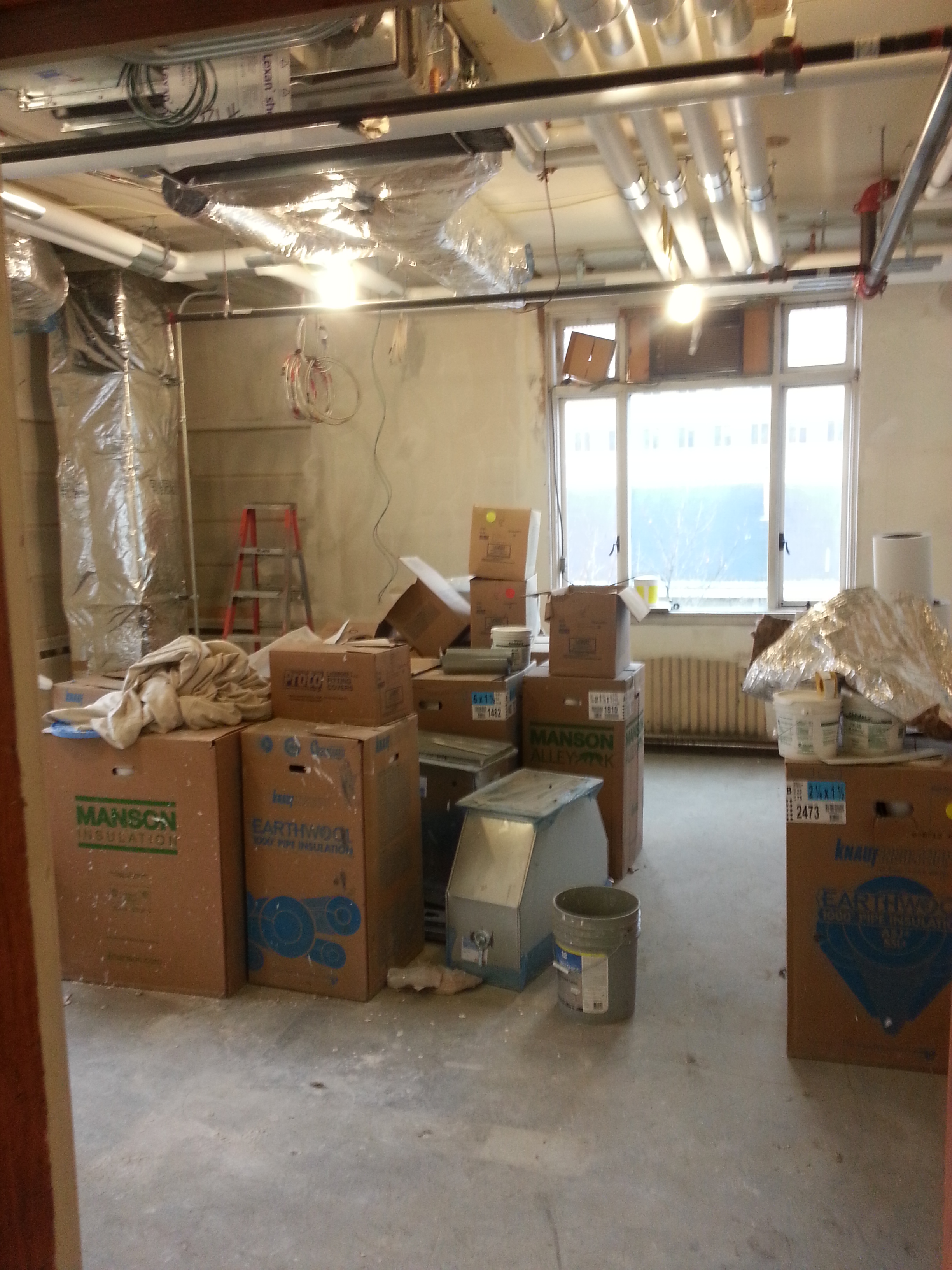
But now and till September we are not living there, as it is undergoing a major upgrade on the inside. This is the second phase of physics renovation: our labs have already been finalized but they are located all over the mid-campus complex of buildings. In the renovated Allen Hall, the condensed matter group will occupy the entire 2nd floor (3rd from the ground). There will be offices there for faculty, students and postdocs, a new seminar room… Here is how it looks now:
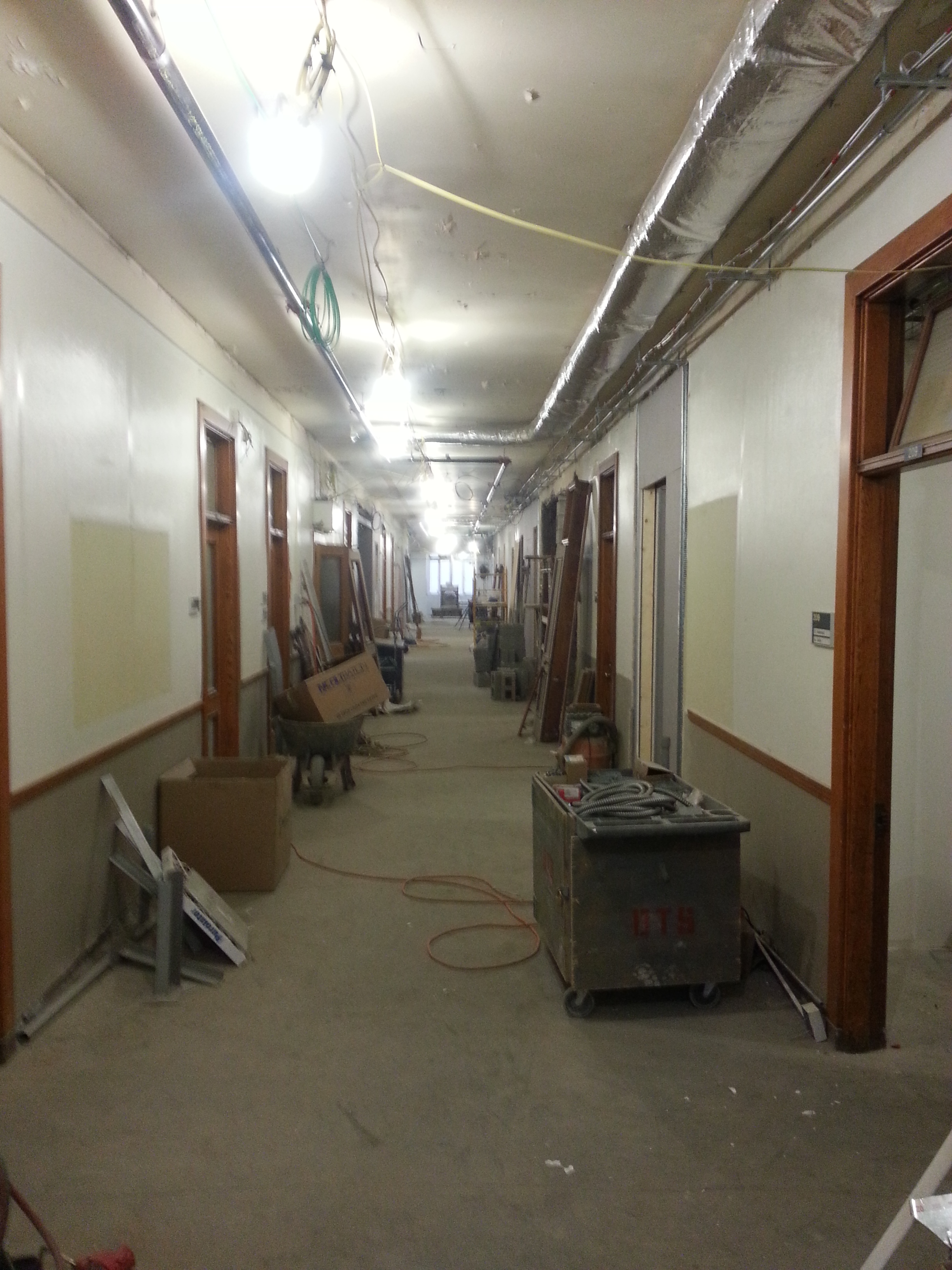
This area will be our lounge, I mean discussion area, for which I am now trying to find a commercial grade espresso machine.
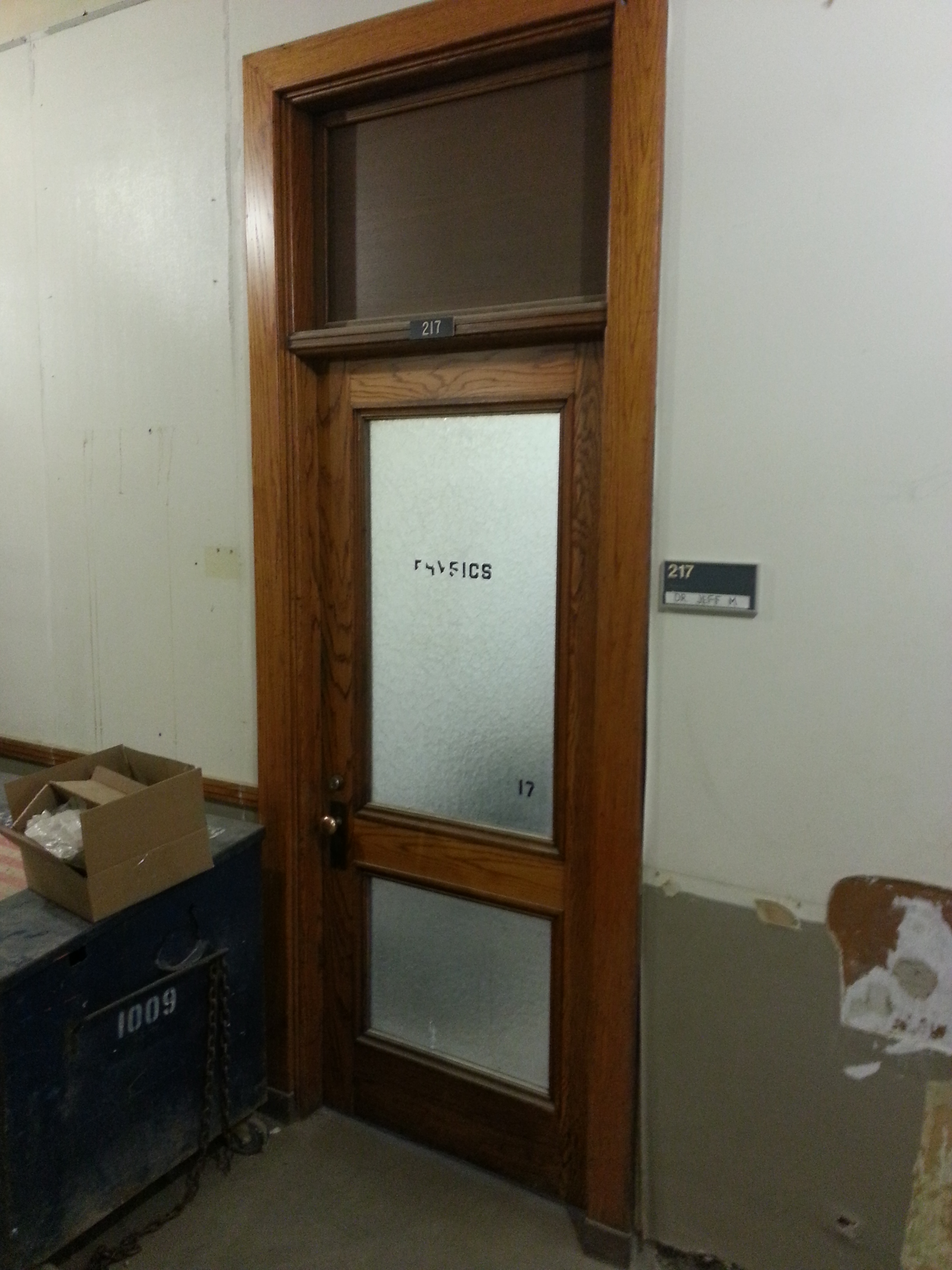
And my own office will be behind this door:
P.S. This post should calm down those who joined the blog early on and were thinking that it will be entirely devoted to half-finished construction projects. Stop sending me your nasty complaints!
We have an outstanding machine shop at Pitt. I am very impressed with the skill and creativity of the staff, and with how efficiently and timely they handle jobs.
Here is a picture taken some time ago of the cold finger for our diltuion fridge taking shape (photo by Dharam Patil):
Also important, the University supports the shop, we only pay for materials.
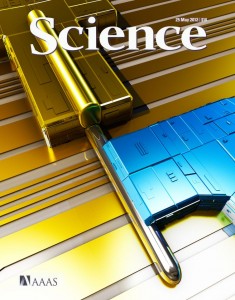
This is a very recent development, but I have decided to give everyone heads up. During a discussion last week we have uncovered a serious concern with our last year’s Science paper, that is likely to invalidate our conclusions regarding the observations of the signatures of Majorana fermions. There will most certainly be a retraction submitted to Science. Turns out, during our experiments we have overlooked a widely known reason for the observation of a zero-bias peak, which can be mistaken for Majorana. This same explanation will for sure apply for five other experiments that report zero-bias peaks. And the 200 theory papers that were published since will need to revise their optimistic statements. (Actually I am quite surprised that nobody pointed this out to us earlier).
The non-Majorana explanation, as reported by Uspensky in 1973 is Continue reading “Majorana update”
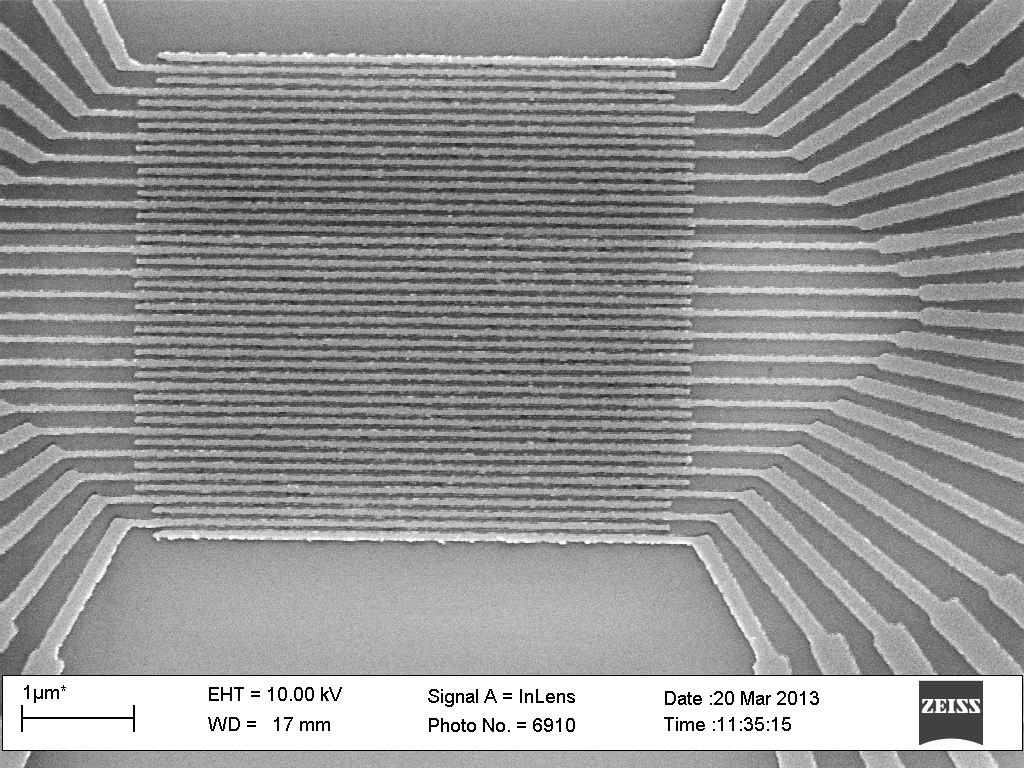
We are getting our nanofabrication under control. Making dense arrays of thin gates is not so easy, but our electron beam lithography machine can do it.
University of Pittsburgh has assembled an impressive and a fairly young cluster of researchers working on the fundamentals and applications of quantum mechanics. Pitt Quantum Initiative is a framework for increasing interactions within the cluster and for communicating with colleagues worldwide. In about a month we will have our first event to which we have invited a number of distinguished speakers.

Everyone is welcome to join! http://pqi.pitt.edu/events . I can already see this poster becoming a rare vintage item.
When I first entered my finished lab back in September I was brought to awe by the amazing piece of engineering stuck to the ceiling. It was a crane, that had a giant hook and moved in all three dimensions of space with a push of a button.
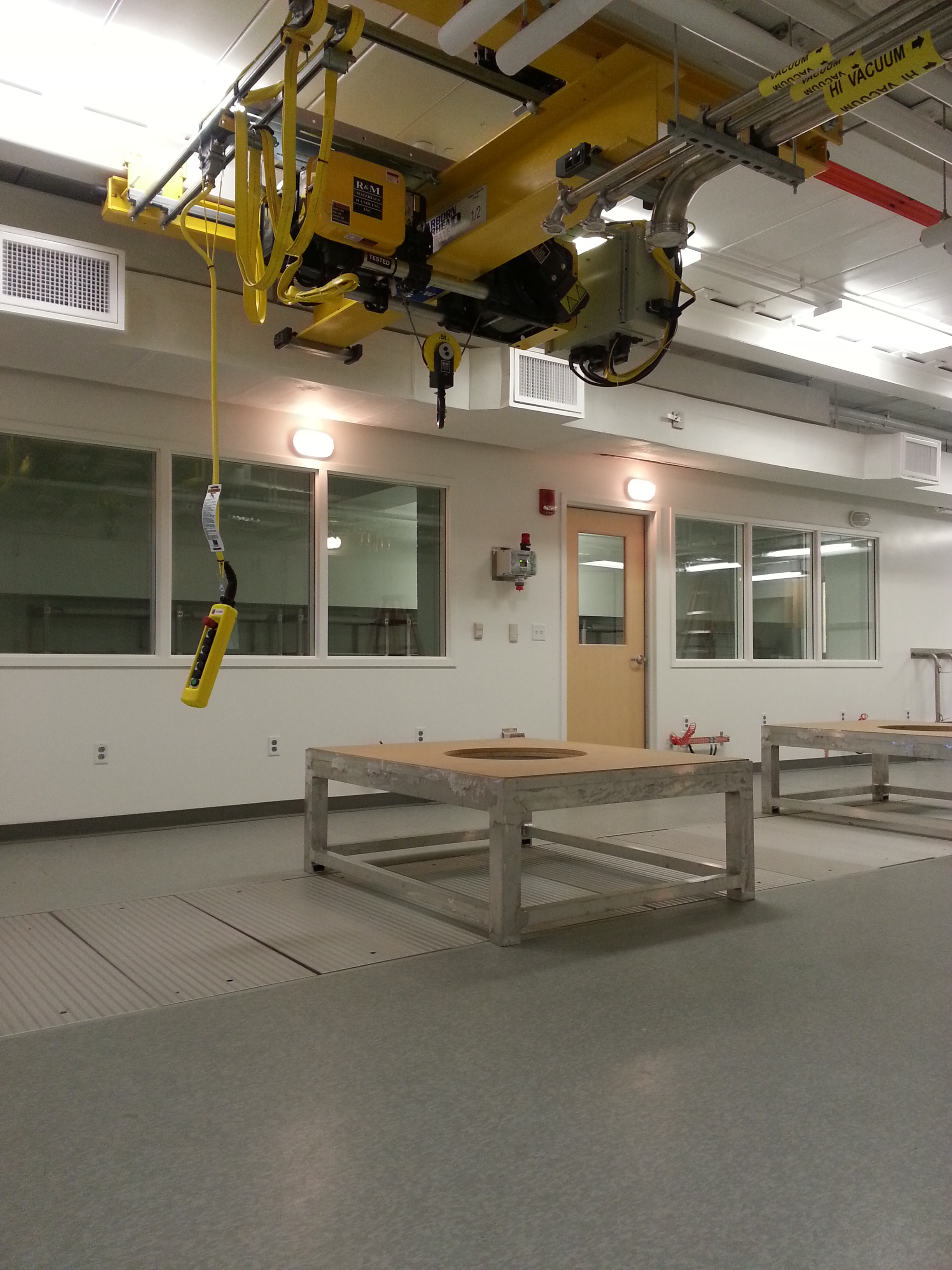
Despite its aesthetics, it was not quite right for the space. The thing was, the highest it could lift stuff was about half way between the floor and the ceiling, and it took so much space that if we moved it from one end to the other it would knock off equipment in its way. So unfortunately that wonderful beast had to go… Well this week we got a replacement – Crane 2.0 – a leaner, meaner younger brother with the same load capacity:
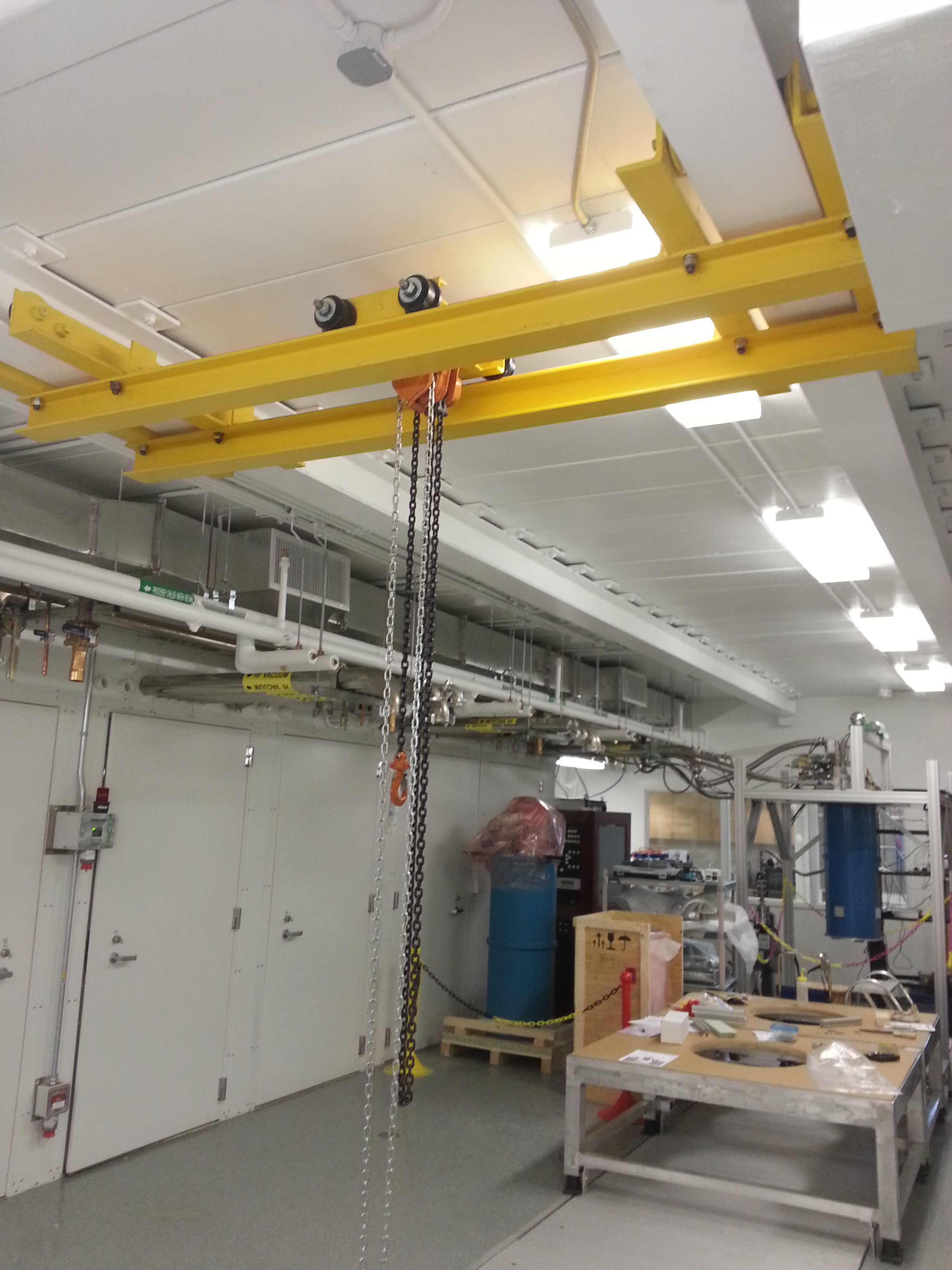
It is not electric, but it does conserve the most precious commodity we have in that lab – the vertical space. Thanks to everyone for a job well done. As for the old crane, I heard it went to a crane farm in northern Pennsylvania to play with his crane-friends. By the way it had enough cable to lower something down into the Earth’s mantle. Maybe we should have tried fracking with it…
 spin and coffee
You must be logged in to post a comment.