Today in Leiden. Work on the first of the two fridges has started. They are aiming for mid-Fall delivery.

Sergey Frolov, Academic Community Member
Today in Leiden. Work on the first of the two fridges has started. They are aiming for mid-Fall delivery.
Science is hard. Sometimes science is just hard enough that you can feel the answer a few feet away, but you cannot reach it. For three years we were struggling to understand beautiful and complex behavior of quantum dots in which nuclear spins influence the electron spins. The kind of data we were staring at is shown below:
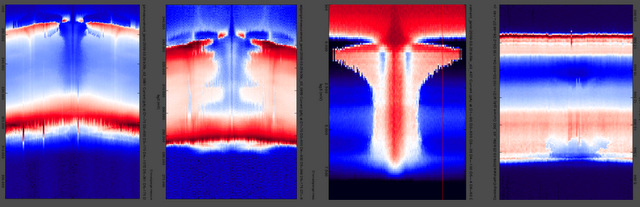
Months and years were going by, and no progress could be made. Until last month we saw this on the cover of Nature Nanotechnology:
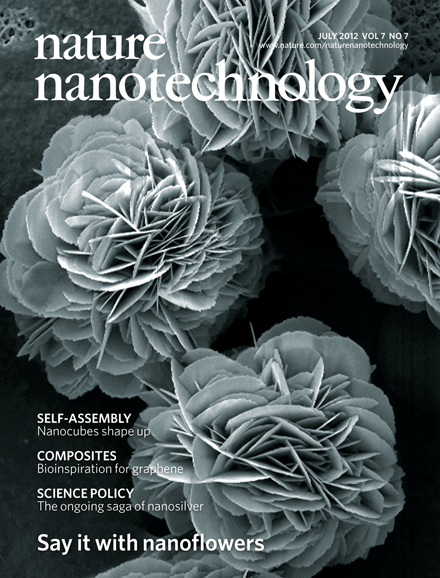
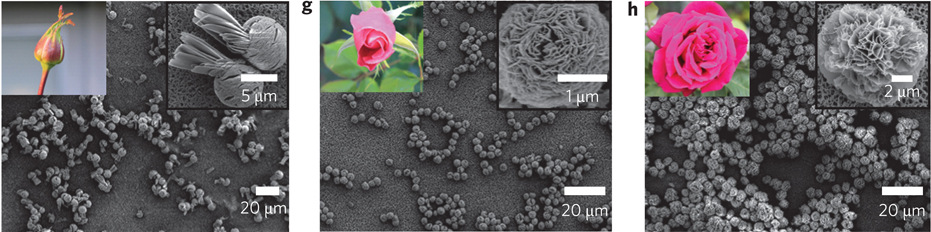
These amazing nanostructures are nanoflowers. We first thought that this was nanocabbage, but after reading the paper we had to concur. The authors carefully compared their structures with images of roses and made the stunning similarity abundantly obvious.
Now, what does this have to do with nuclear spins in quantum dots? Well, after looking at nanoflowers we finally had our Eureka moment! We applied the same data analysis technique, and everything became clear:
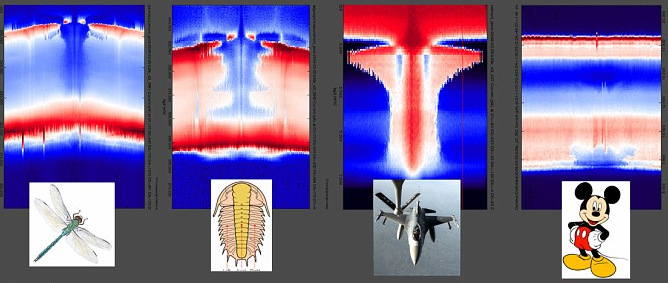
Our results were originally intended for a topical journal, but given their revolutionary character, we will definitely go for something more front-and-center.

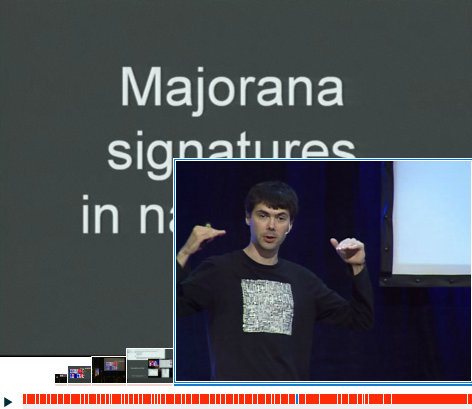
My talk at the International Conference on the Physics of Semiconductors is now online. Thanks to the ETH team for a great meeting!
Everything is very shiny now!
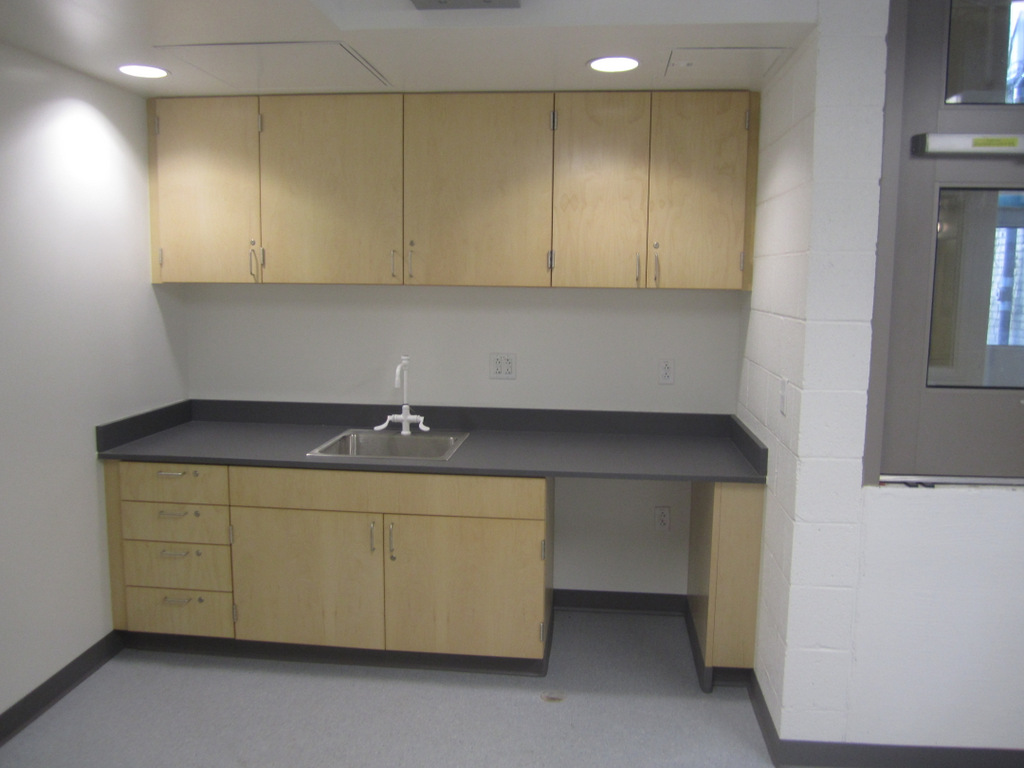
Kitchenette. Think espresso machine.
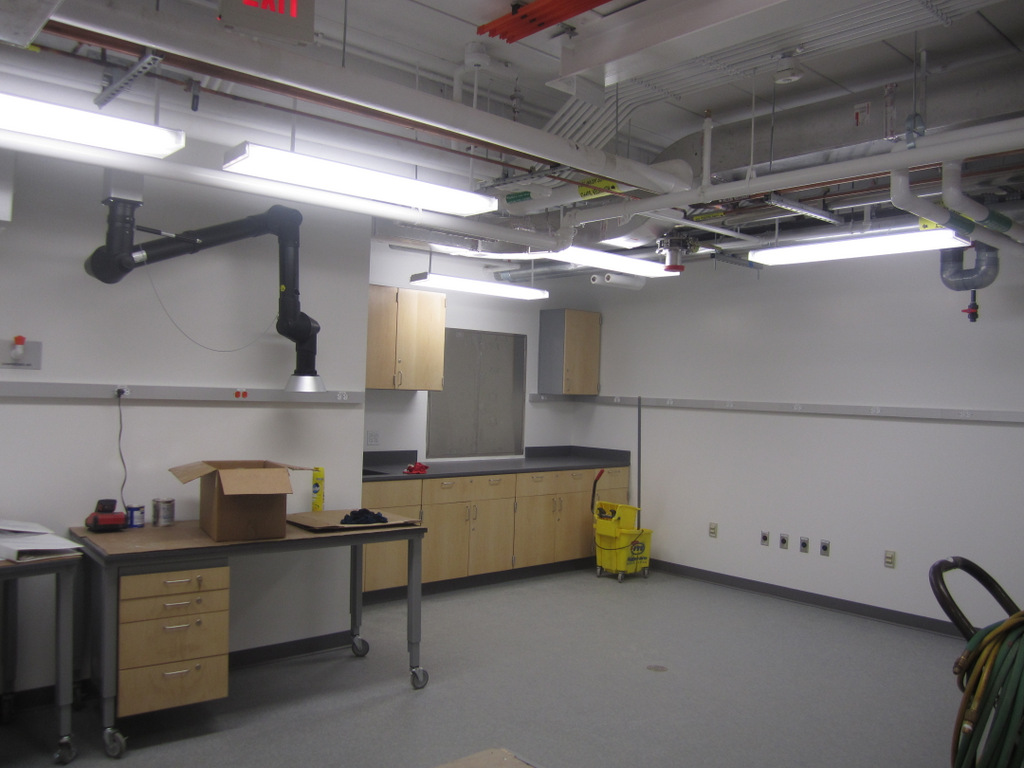
Work benches at the far corner.
Control room:
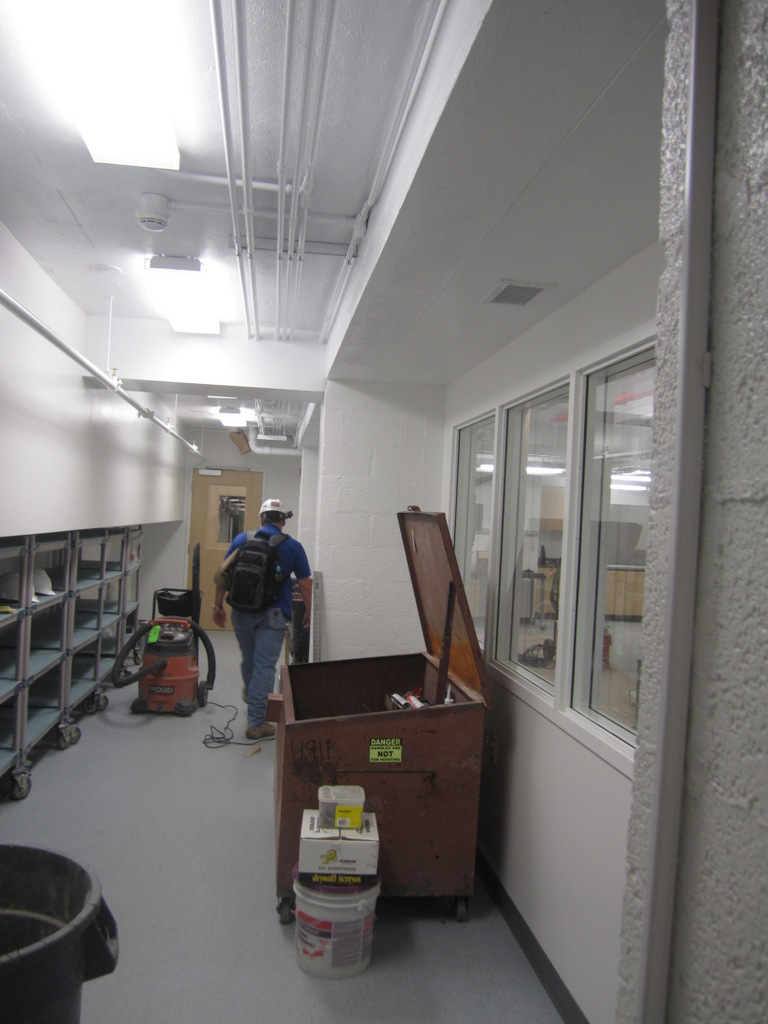
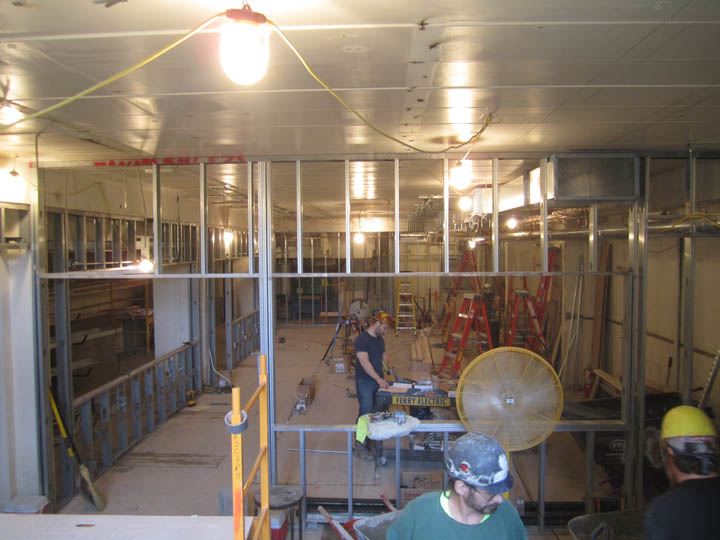
The lab construction is ahead of schedule and very far along. Great job Mascaro, Wilson Architects and the Pitt management team!
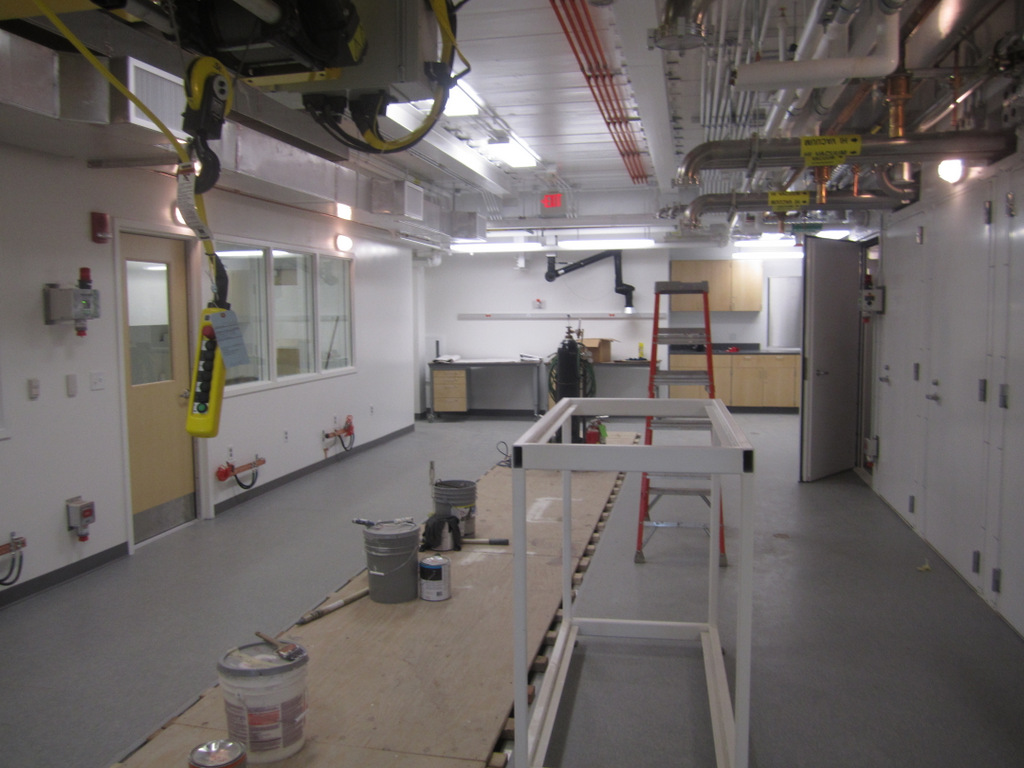
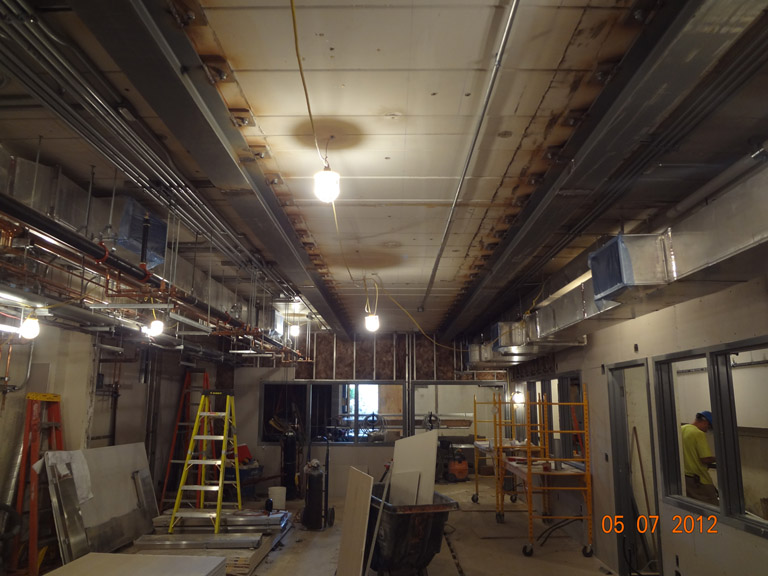
Fridge room. The trench is covered by wood, eventually will be aluminum grids. At the ceiling you can see two rails for a crane.

Pump room. Acoustically isolated doors and pump lines coming out at the top.
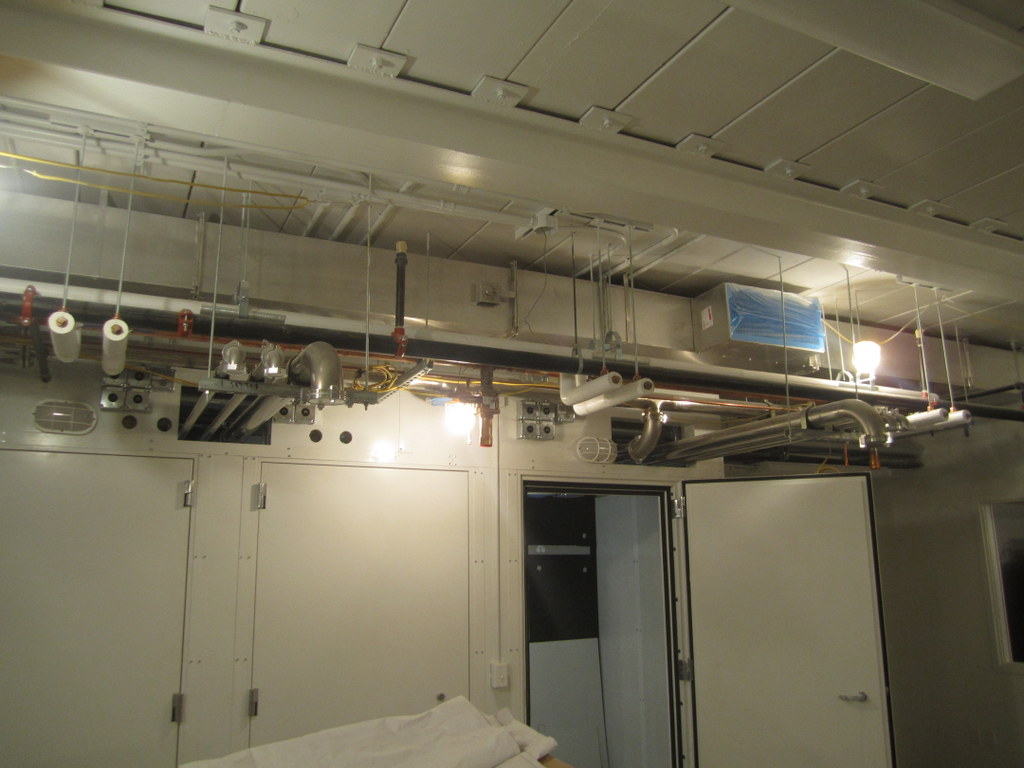
Control corridor. This is where the data acquisition computers will be.

Impressive pipework!
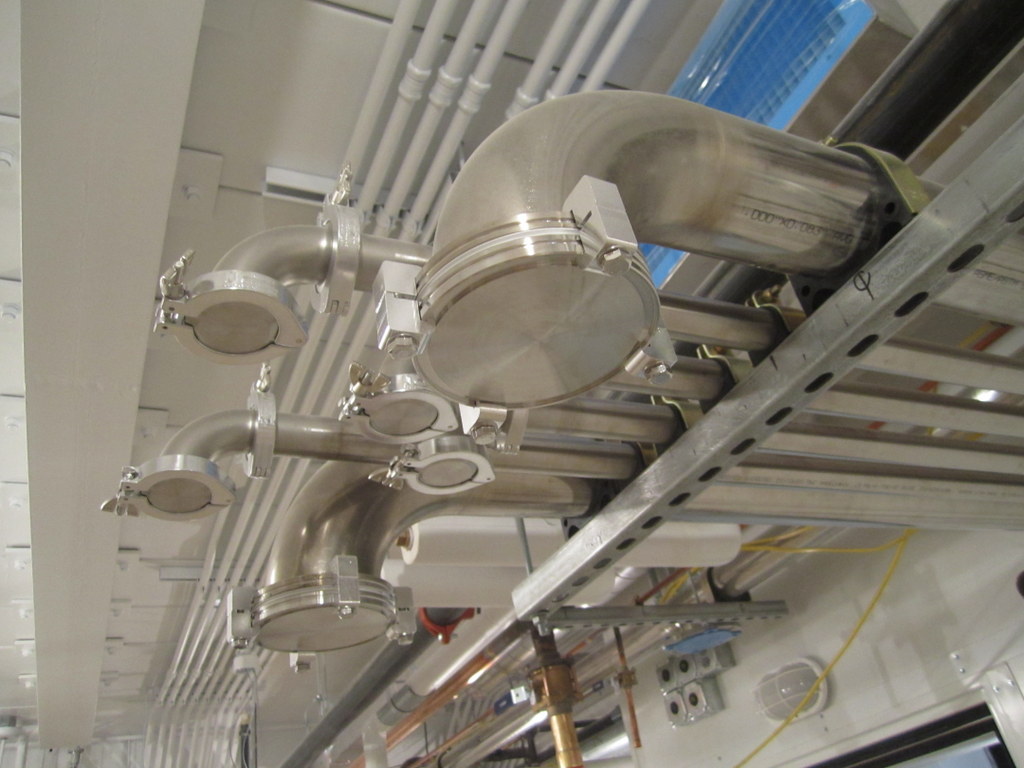
They are now working on installing the floors. Anti-static flooring will be used around the fridges to protect devices from blowing up.
…And CONGRATULATIONS to our friends in the particle physics world on their success with the most complicated experiment on Earth! I was at CERN two weeks ago, and saw that they were very excited. They kept their mouth shut but I could see it in their eyes that the big news were coming.
Anyhow, could have turned out a lot worse in the beautiful Alps…
Our Quantum Transport (QT) group in Delft has almost completely switched to QTLab, a python-based environment for taking data. QTLab is developed by our own Reinier Heeres and Pieter de Groot, during their PhD in QT. It is easy to use and it is very flexible, and reliable. It is straightforward to implement complicated scans, e.g. sweeping several DACs simultaneously at different rates while stepping a magnet.
QTLab allows users to write simple scripts that execute parameter scans on various instruments and interrogate data taking devices. A batch of scripts can be set up such that the computer takes one scan after another. In fact, we always set up a sequence for the night and come in the morning with a cup of coffee to see a collection of fresh scans.
The program is powerful and comes with drivers for many of the instruments common in our field – voltmeters, lockins, magnet supplies, microwave sources etc. Drivers for new instruments are easy to write and are constantly added to the database. All instruments that you want QTLab to control should be loaded into QTLab. Then it generates a set of commands to talk to each instrument. It also logs all the instrument settings for each scan.
QTLab also has a graphic user interface (GUI) which can plot the data live and helps keep track of the instrument settings. I strongly recommend QTLab as a powerful replacement for less flexible commercial systems.
I now have the drawings of my two fridges, designed by Arlette at Leiden Cryogenics. One fridge will have a solenoid magnet, and the other – a 2-axis vector magnet. One challenge was to keep the field centers (where magnetic field is maximum) in both fridges the same distance from the top. This is needed to be able to load samples into either of the fridges using the same probe, while the fridges are cold. After some negotiations with magnet manufacturers we worked it out!
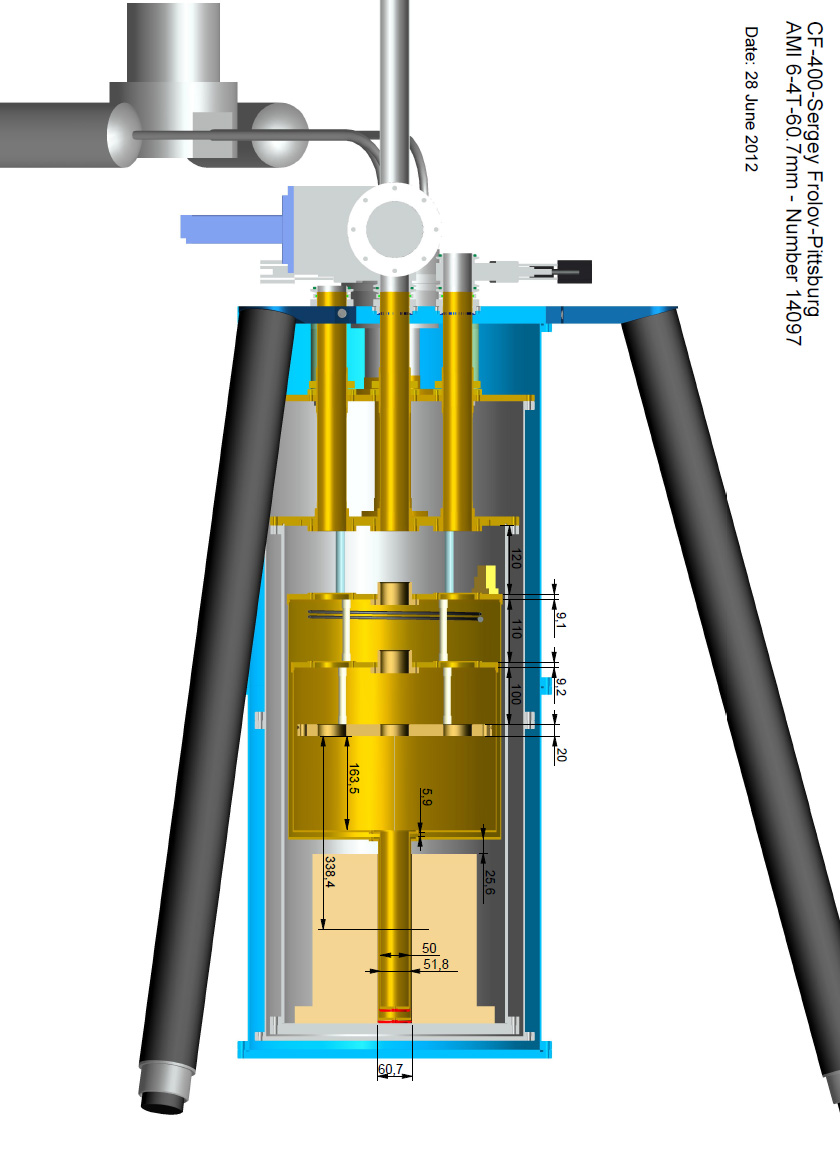
Each machine will have two ports for loading samples, so two experiments can be performed in each fridge at the same time! Leiden promise to begin assembling the first fridge in July. Today is July 1st, so lets put some pressure on them using the power of blogging.
In several years (maybe a hundred) everyone will forget about the Nobel prize. The highest honor in physics will be to appear on Big Bang Theory! Our Leiden colleagues have made it. On the white board to the right of Sheldon you can see a theoretical device they proposed for the interference of Majorana modes.
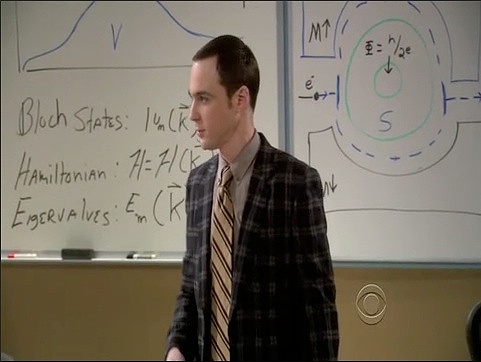
A paper by Anton Akhmerov, Johan Nilsson and Carlo Beenakker can be found here.
P.S. I don’t know what are ‘Eigervalves’.
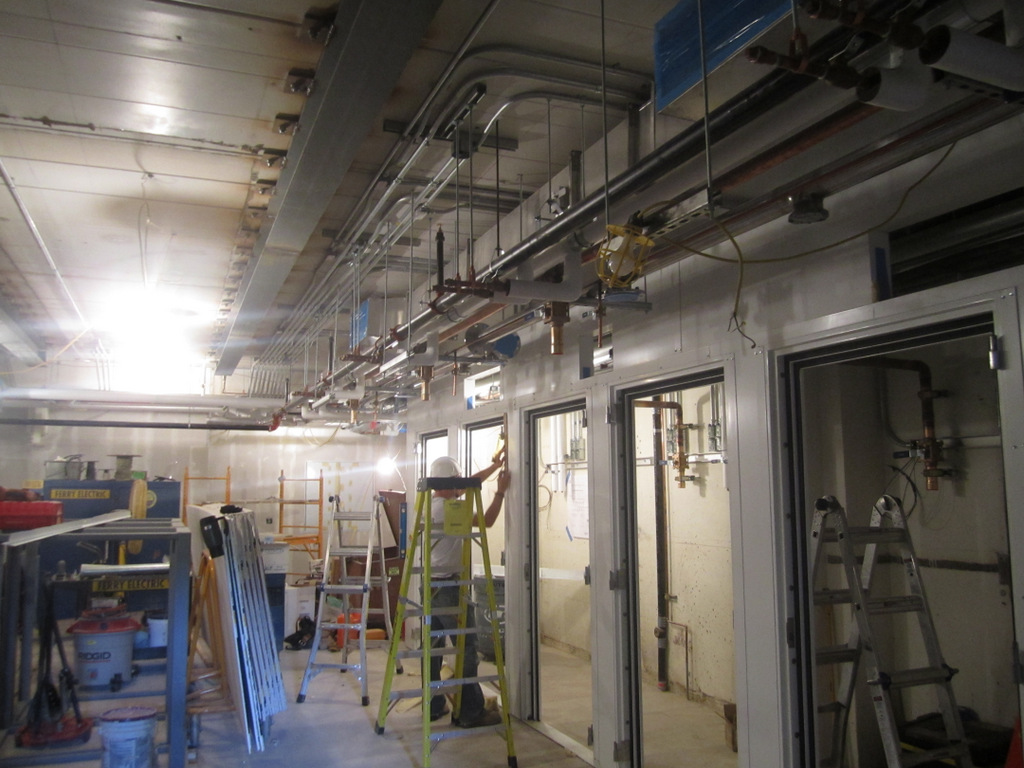
The construction has moved on to the acoustic room that will house pumps and compressors. This equipment creates a lot of noise and for that reason it should be isolated from the rest of the lab. You can see the walls made of special sound-proof material on the right. Fridges will be on the left and the pipes up by the ceiling will connect pumps to the fridges. The room has multiple doors, and each door will be sealed carefully along the perimeter.
People often associate Majorana with interesting plants. Well, there is a good reason for that – Majorana is also a plant. It is a spice, a type of oregano, and it tastes rather good.
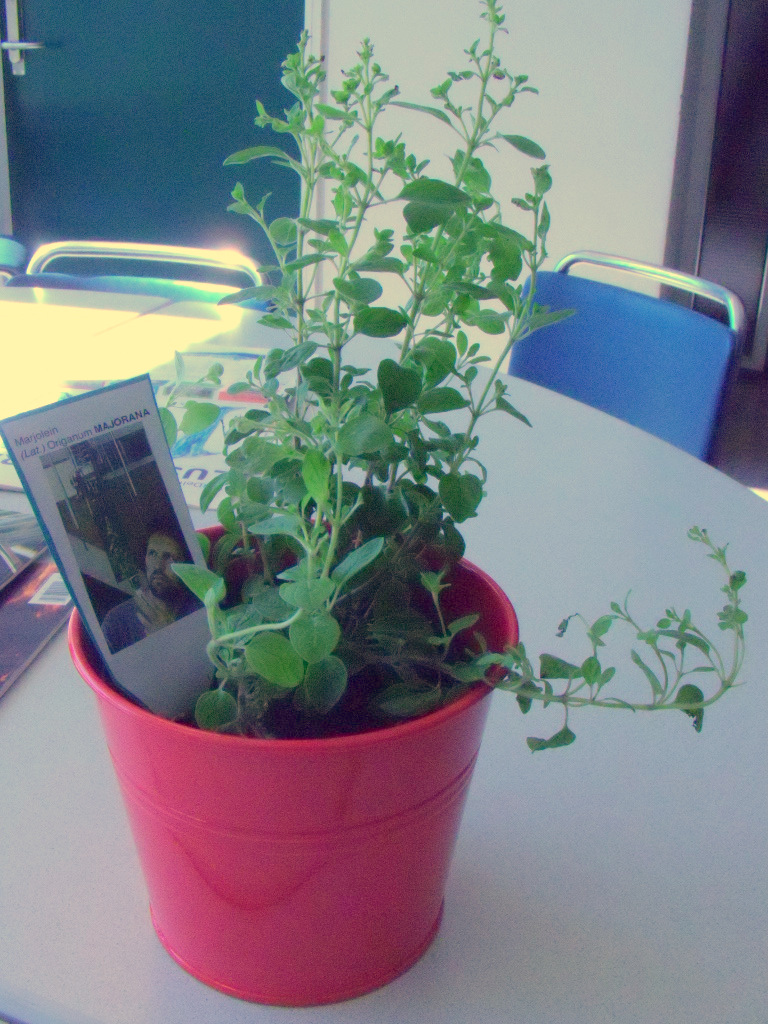
We got this plant today as a gift from our theory colleague Alina Hriscu working in Delft on quantum phase slips.

At Alinea, the U.S. #1 restaurant from Chicago, IL.
The new lab will receive two dilution refrigerators for reaching 10 millikelvin temperatures. These fridges are among the most sophisticated scientific instruments on Earth (always be precise, just in case!), and only a handful of shops will deliver one to you – and none of them will do it on time.
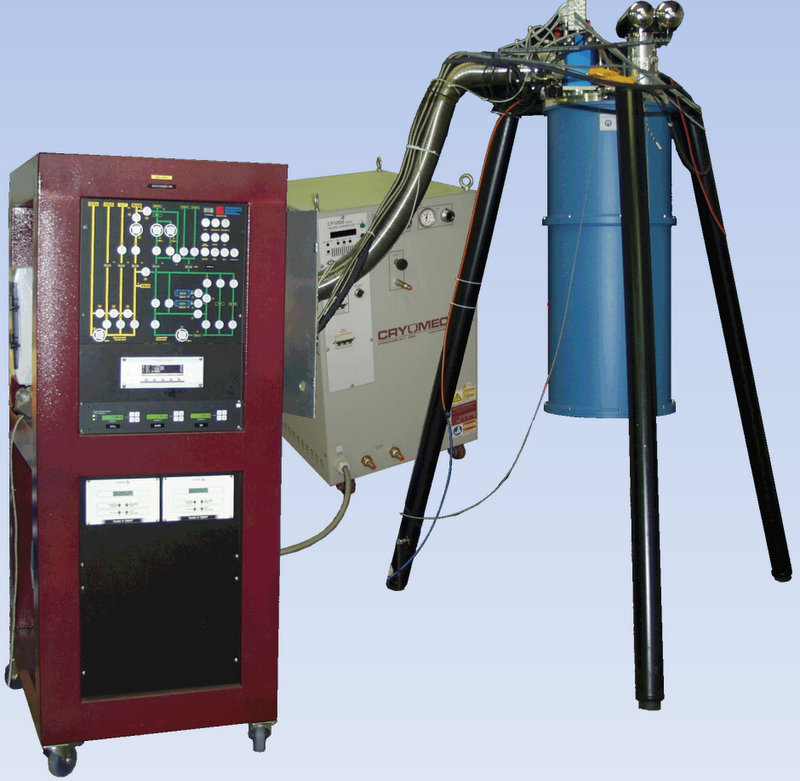
I am getting the first two fridges from Leiden Cryogenics, a company established by a low temperature physics pioneer Giorgio Frossati. The Leiden shop is just 25 minutes away by train from Delft, so I will have a chance to visit my fridges while they are being assembled over the summer.
These machines are of the new cryogen-free variety meaning they operate like your kitchen fridge but much colder. They do not need a new supply of liquid helium every few days, cutting out a major hassle and expense from their operation. The samples can be loaded into a cold fridge using a top-loading insert. Two separate experiments can be performed in one fridge at the same time. The fridges feature high field magnets, one of them a vector magnet with a rotating magnetic field.
Despite our best efforts it remains impossible to explain what a Majorana particle actually is. They have it much easier with the Higgs boson – it is simply the God particle. Of course, it is the crown jewel of the Standard model, and it is the reason why Everything is the way it is. Higgs is supposed to be super-massive, and they have to build tera-volt colliders to look for it.
Majorana particle is just the opposite. It has no mass, it has no charge, it has no energy, and no spin. It is as close to Nothing as anything can be. It is often called a fermion, but in fact it is only a half of a real fermion. Hard to imagine this, much like it is hard to clap with one hand.
If you are looking for a single word to label the Majorana fermion it must be able to describe the undescribable. Which happens to be the essence of Zen philosophy.
Leo interviewed by Dutch TV. LEGO blocks bridge the language gap for everyone. You can also see Kun and Vincent, our PhD students, in the audience.
Along with the Majorana paper we have released all data sets displayed in the paper in raw (sashimi-grade) form. The only kind of processing done to this data is to assign proper scaling on the axes.
Data sets can be downloaded from 3TU.Datacentrum: doi:10.4121/uuid:8bf81177-2f2b-49c2-aaf5-d36739873dd9
The data sets are in simple X-Y-Z matrix format. They are currently set up for a nifty standalone called Spyview, developed by Gary Steele and Oliver Dial. Spyview is the iPad of plotting. It has been designed by data-takers for data-takers to reach the natural ease of comprehension even for complex data sets. I especially enjoy the slider that adjusts gamma in color plots.
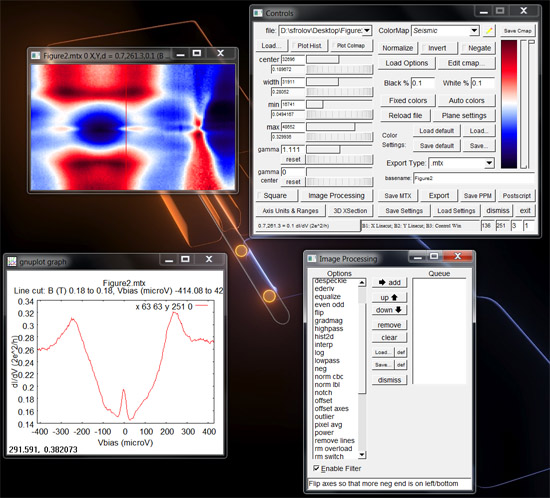
Spyview can be downloaded here: http://nsweb.tn.tudelft.nl/~gsteele/spyview/ . Just drag-and-drop mtx files we provided into the Spyview window.
I intend to release raw data for all future papers whenever possible. If you think for a second, it is rather silly to record data with a computer, then take a picture of this data, and submit the picture to the journal. Especially since the readers will most likely read the paper on their own computers. What we need is a new document format that combines pdf and Spyview. Imagine raw data sets being part of the paper. You can read the text and tweak the data set in each figure. Rotate them in 3D, produce line cuts, apply math to the data.
Looking forward, more data can be shared than those graphs presented in the paper. For example, the Majorana experiment accumulated 3000 data sets, only a couple dozen of which made it to the paper. Seeing more can be very useful for colleagues who want to think about the experiments. In the world of open science progress will happen faster.
Today our group has published the experimental evidence of Majorana particles in semiconductor nanowires. Here I explain our findings in the broadest possible context. What are the Majoranas, how to make them and what are they good for.
Physicists are in the business of figuring out the machinery that runs our world. When you zoom in deep enough you find that everything is made of tiny particles. We call them elementary particles, because they cannot be broken down into even smaller particles. They are the true building blocks of the Universe. As of 2012 we can be quite certain that we still do not know all the particles that make up our reality. For example, our most basic theory of matter, called the Standard Model, predicts the Higgs boson, which is still a missing tile in the puzzle. The discovery of the Higgs boson would explain why objects have mass. So Higgs is of profound importance in fundamental physics. Here is a more practical example of astronomical proportions: we know for sure that there is a lot of stuff in the Universe (70%) that is completely unidentified. We call it ‘dark matter’ because we have no clue what it is. But we are free to guess, and some physicists think that dark matter is zillions of mysterious Majorana fermions.
What are the Majorana fermions? The story begins with Paul Dirac, a British physicist who managed to combine in one equation two greatest developments of modern physics — Einstein’s Theory of Relativity and Quantum Mechanics. Dirac’s equation showed that along with matter there exists anti-matter. All properties of anti-matter are completely opposite to ordinary matter. It is as if you went through the looking glass with Lewis Carroll’sAlice. For example, an electron has a negative charge, but a positron has a positive charge, because it is the anti-particle of an electron. A young Italian theoretician Ettore Majorana took this idea and thought about it. In 1930’s he was able to prove that there can be a particle living right on the boundary between matter and anti-matter, on the surface of a looking-glass. A notion of a Majorana fermion was born, a particle that is also its own antiparticle.
Seventy five years passed, and Majorana fermions remained just an idea. Researchers tried to find them in large particle accelerators and in massive underground neutrino detectors. Then, a new way of thinking arrived. If we cannot catch a Majorana, perhaps we can build one? We would use other particles, for example electrons, and combine them into a quasi-particle. Here ‘quasi’ means that electrons would behave together like one particle, but it would not be an elementary particle. Theorists provided us with a simple recipe for how to cook a Majorana in the lab. You take a semiconductor and a superconductor, and connect them together. Then you cool this hybrid down to almost absolute zero temperature (-273 degrees C) and turn on the magnetic field. This provides just the right cocktail of interactions between electrons, and they collectively form Majoranas. If you follow the recipe, the Majorana quasiparticles would appear on the edges of a semiconductor.
In our lab in Delft we have gathered all the ingredients for the recipe. We started from indium antimonide nanowires grown at Eindhoven University of Technology. Nanowires are cylinders of semiconductor few millionths of a meter in length and a few millionths of a centimeter in diameter. We covered the nanowire with a superconducting niobium alloy, and cooled this nano-scale device in strong magnetic field. The next puzzle was how to tell if Majoranas were there. Normally physicists discover new particles in colliders, where beams of protons collide, and detectors analyze the scattered beams for traces of new particles. Our devices work in a similar way. In fact they are nano-colliders. We send a beam of electrons along the nanowire towards the Majorana fermion. At the same time we detect the current of electrons scattered off the Majorana fermion. As a signature of Majoranas, we observe a peak in the current at zero-energy — this is where the boundary between matter and anti-matter lies!
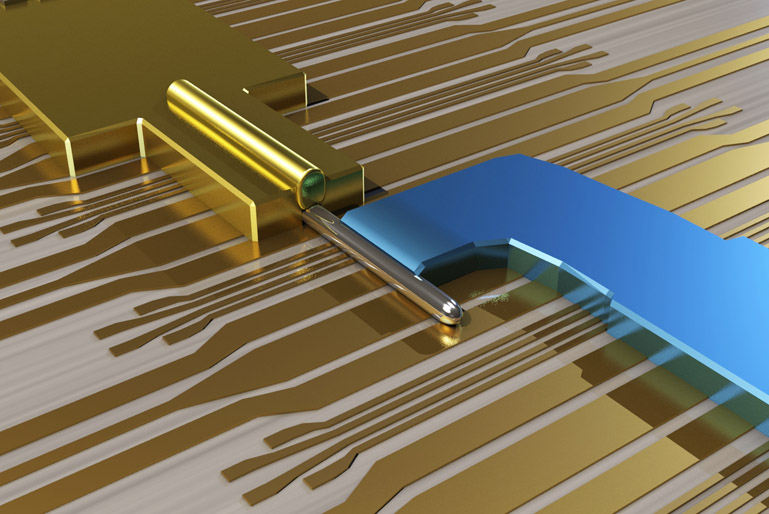
We have therefore found a way to obtain Majorana fermions, the objects predicted by Ettore Majorana using the Dirac’s equation. However, quasiparticles generated in our experiments are not elementary particles, because they are made of electrons. This means they are not the building blocks of the Universe. But, as it turns out, they can be the building blocks for a future generation of computers. In fact, Majorana quasiparticles can be used as quantum bits in a topological quantum computer, which is a fascinating new way of computing. Topological quantum computation will be performed by moving Majorana particles around each other in a quantum dance, which is nick-named ‘braiding’. A device that we had to build to generate and detect Majoranas is basically a transistor, the essential element in modern day computer chips. The next step will be to re-design this Majorana transistor into an electronic chip with multiple Majoranas, similar to the computer processors of today. Work on the braiding experiment has already started in Delft. We hope it will bring new fundamental physics knowledge, and that a new paradigm of quantum electronics will emerge for the benefit of society.
Paper available on Science Express , and on arxiv.org .

I am off to Vancouver, BC till April 24. I can be reached by email.
Ettore Majorana, a prominent italian theoretical physicist who mysteriously disappeared 70 years ago, has been found alive and in good health. To everyone’s surprise, all this time he was living in the Netherlands, in a small village of Pijnacker in South Holland. “We were totally amazed by our discovery, but there is no doubt.” said Dirk Naaktdijkloper, the leader of the private investigators squad from Delft. “We even performed a sanity DNA check, and it turned out positive”. Mr. Majorana explained the reason for his disappearance. “I was in love, she did not care for the equations, so I left them behind”.

Professor Majorana lead a quiet but good life. In the early 80’s he managed to secure a fortune by being one of the first investors into a small computer company called Microsoft.
UPDATE MAY 26 2012. The sophisticated technique used to track Mr. Majorana was recently leaked to the public:


 spin and coffee
You must be logged in to post a comment.