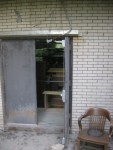
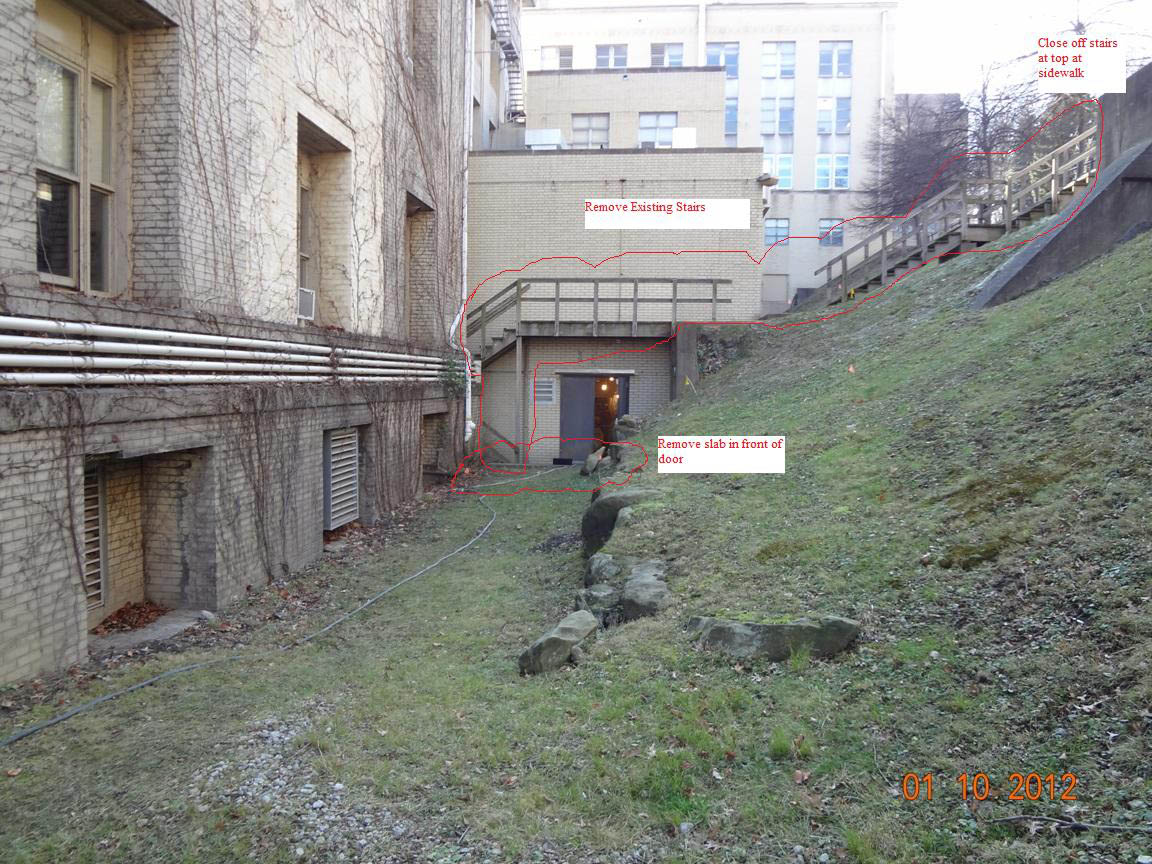
As part of my lab renovation there is also quite a lot of work to be done outside the lab. In this picture you see the door to the lab in the center. Above the door they used to have a wooden staircase. This will be replaced with a roof. Permanent stairs will lead all the way down to the lab from the right. A path going straight out of the lab will become a nice walkway. The doors will have glass in them, and a window will be made to the left of the door.
Category: Uncategorized
What an editor must feel
Helping out with lab construction
visiting my architects
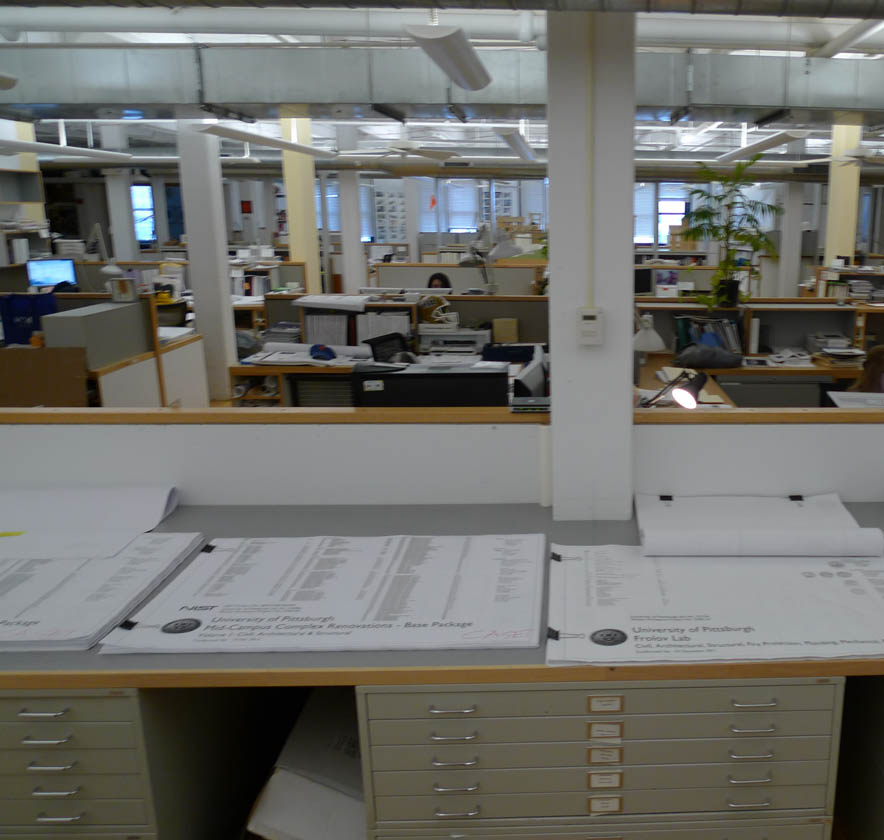
It is hard to imagine a luckier coincidence: the office of Wilson architects, a company that designed my lab, is just two blocks away from the Boston convention center, the site of the APS March meeting 2012. I got to meet the team of designers and see how they work. Thank you for taking me out to lunch and I will look forward to adding a Zen garden to the lab exterior!

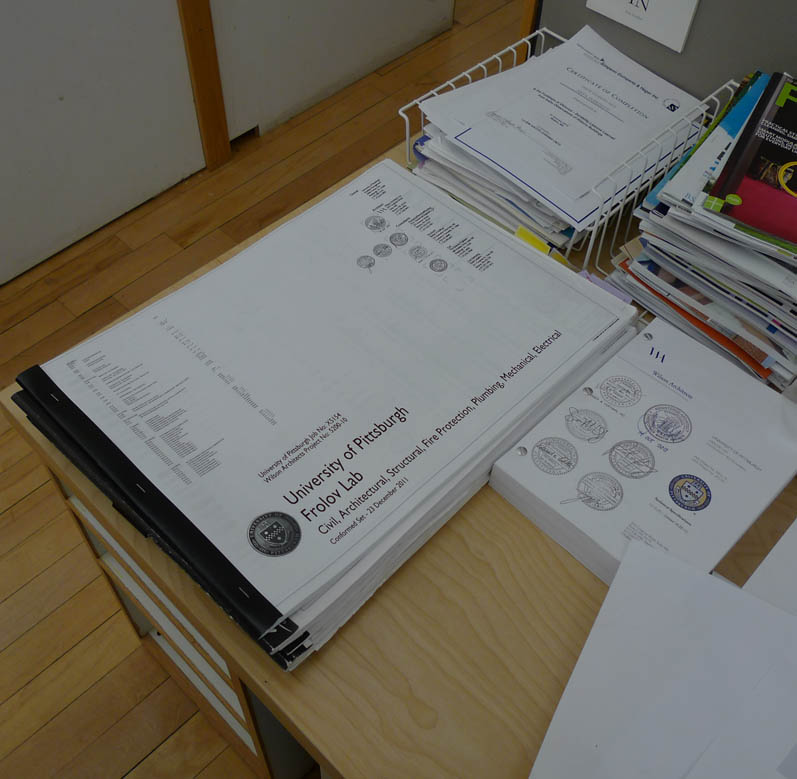
I was especially impressed with how extensive the final lab drawings were. They amount to several hefty binders. A vast amount of work! Especially compared to a simple sketch that I have provided them with.
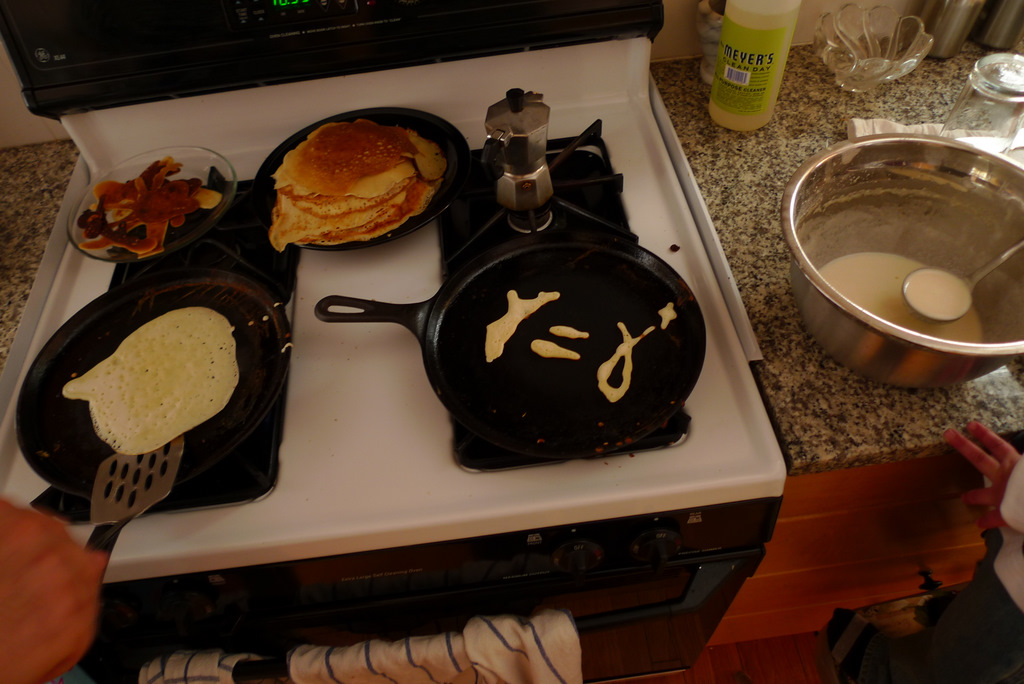
Pancakes
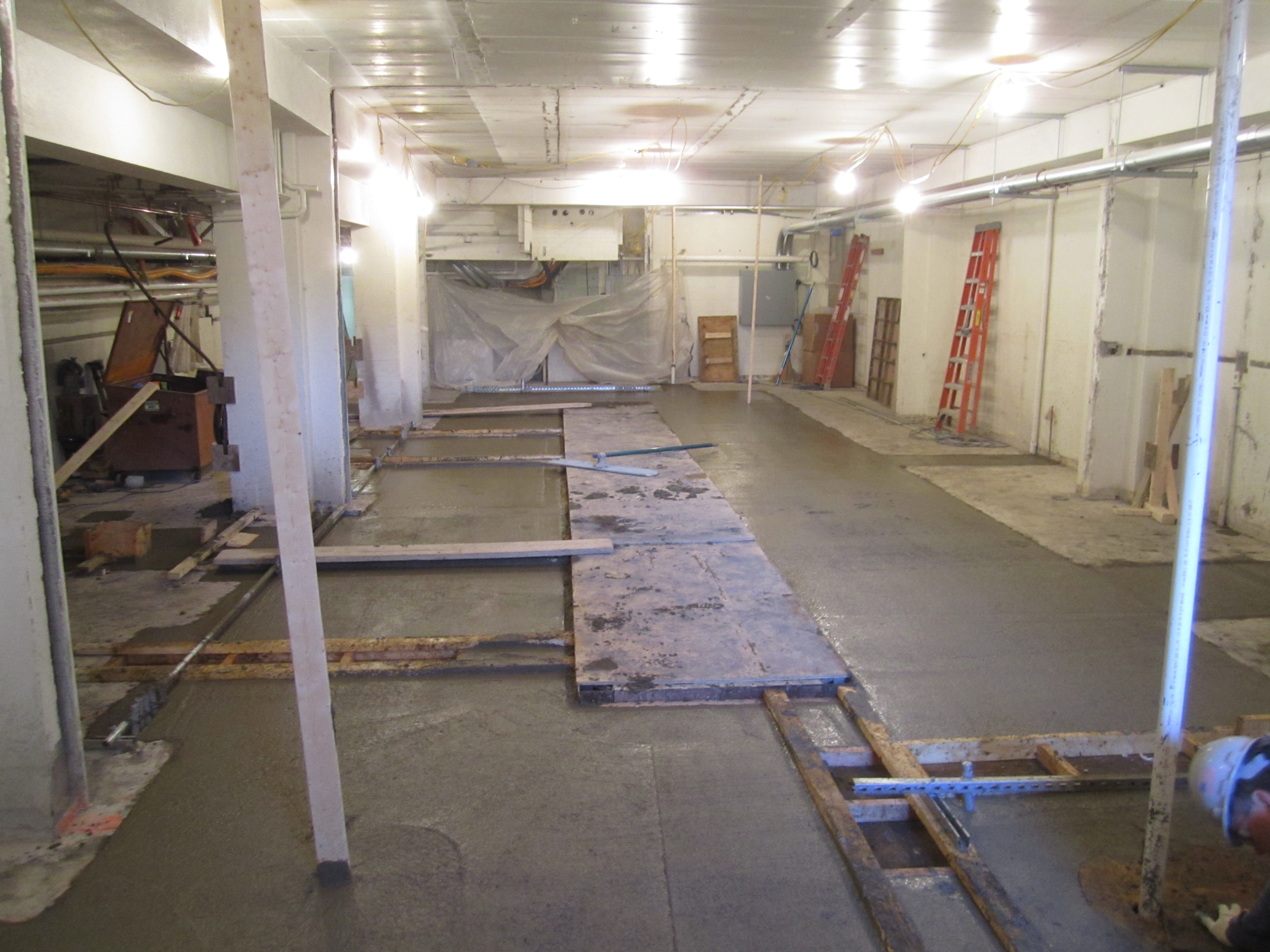
Concrete poured
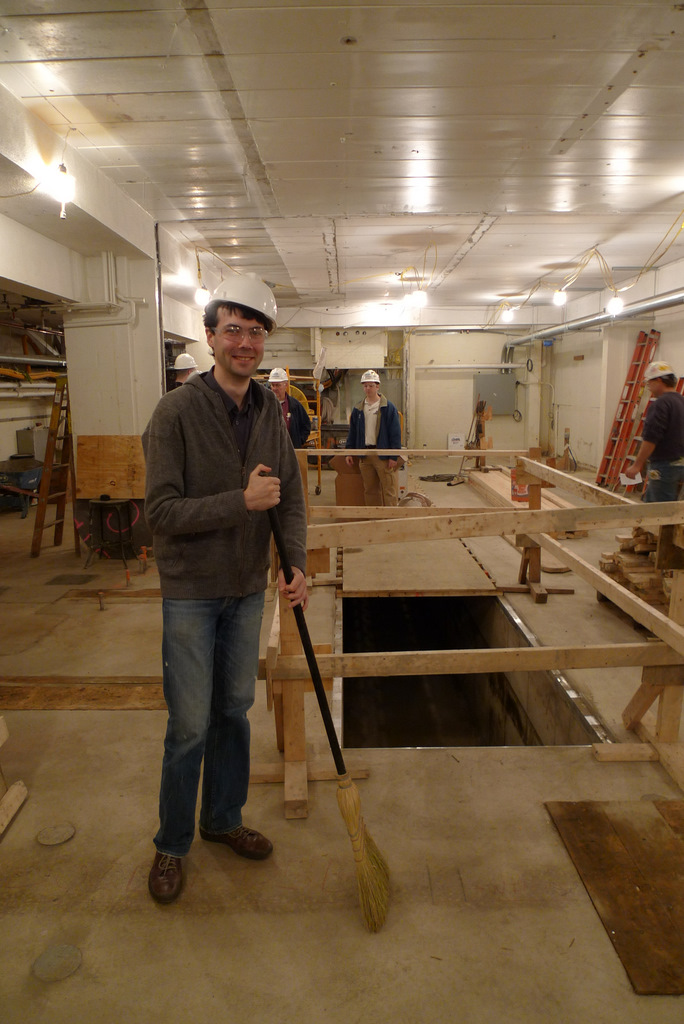
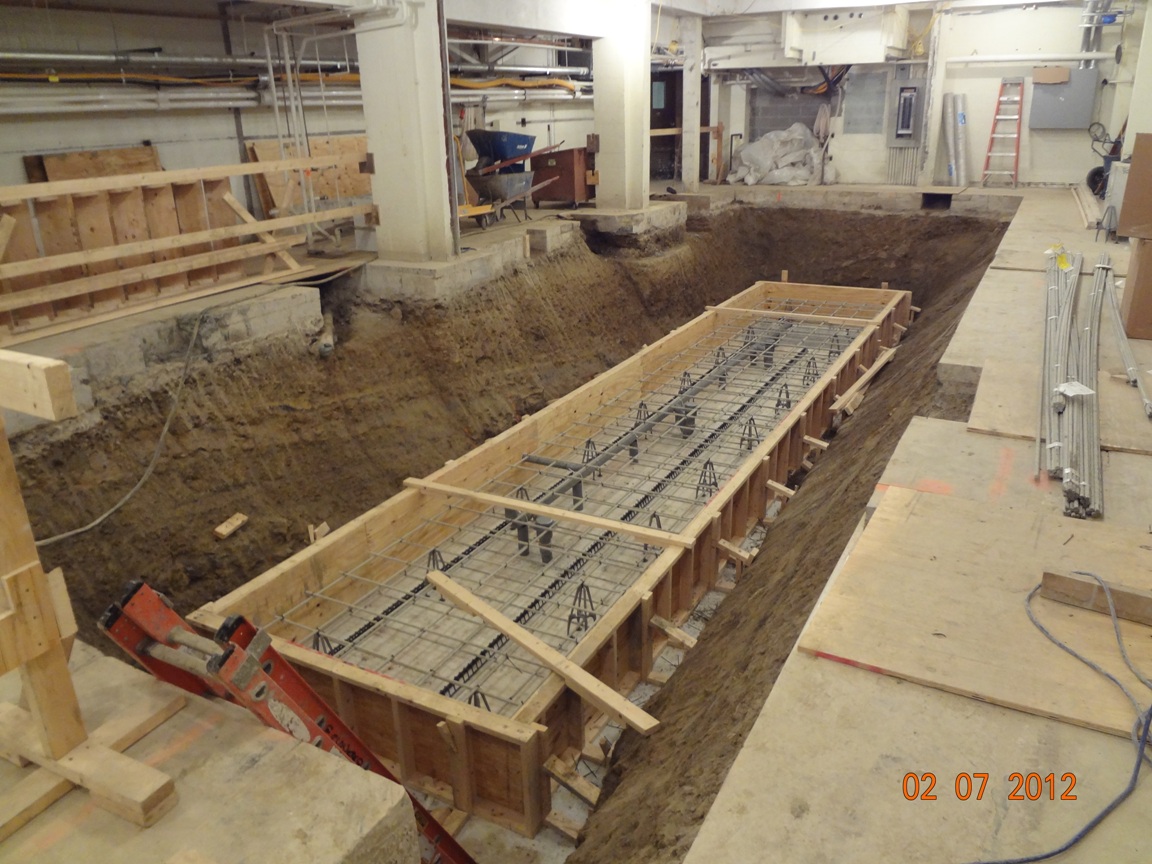
Last week the excavated floor was filled with massive amounts of concrete. The boards in the center cover the trench intended for dilution fridges.
This week I visited my lab and met great engineers from Mascaro Construction who are running the construction. In the same week I visited the office of Wilson Architects in Boston. Pictures to follow.
APS March meeting – Leo’s talk
On Monday, the first day of the March Meeting, Leo presented our newest data in the direction of generating and detecting Majorana fermions in semiconductor nanowires. The reception was quite overwhelming: the room was packed and just hours after the talk optimistic reports appeared in the news.
http://www.nature.com/news/quest-for-quirky-quantum-particles-may-have-struck-gold-1.10124
We received a lot of feedback from colleagues here in Boston, including several important insights into the possible meaning of the data. I am eager to get back to Delft where Kun and Vincent are continuing with “sanity check” experiments.
Coming to Pittsburgh
Next Friday I will get a chance to see how the construction is going with my own eyes! I will be in Pittsburgh to give an into talk for graduate students. On Thursday I will stop by Wilson Architects in Boston to meet the design team. Exciting week!
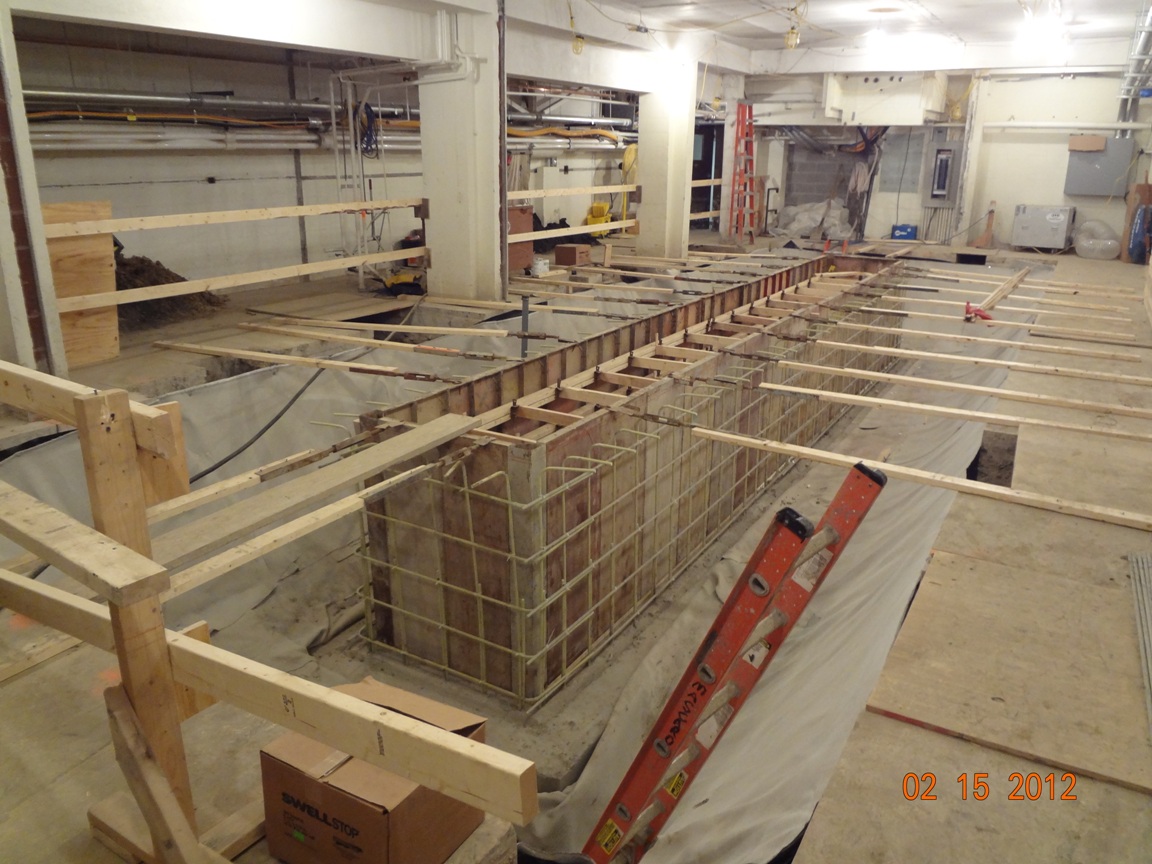
Here is a shot from last week, the trench is taking shape:
Shinto prayer
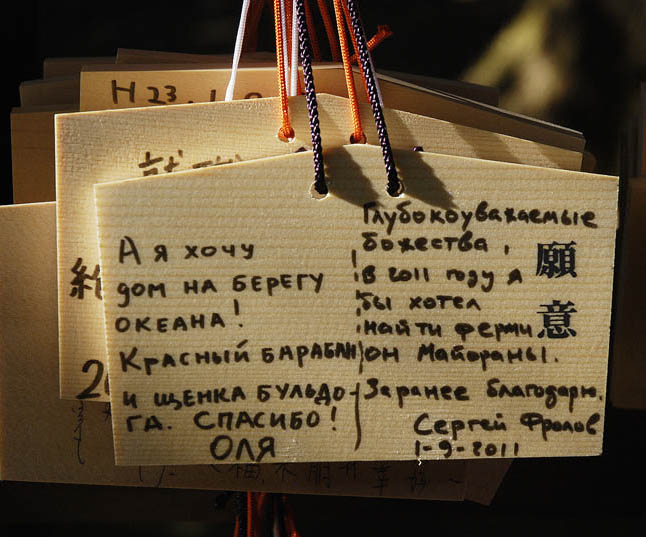
A year ago around the New Year I visited Meiji Jingu, one of the main shrines of Shinto religion in Tokyo. There I learned of a simple protocol for communicating with Shitno dieties: you write a message on a wooden plate and submit it by hanging with other prayers. You can make a promise for the upcoming year, or make a wish. I wrote “Deeply respected dieties, in 2011 I would like to find a Majorana fermion”.
Now, I must admit I did not take this affair too seriously. First of all, I was completely unaware that after hanging the prayer one must clap hands! Otherwise Gods don’t pay attention. Second, the left half of the plaque contains totally unserious requests from my wife. In my defense I did use Russian, my mother tongue, and naturally the language for expressing the deepest thoughts for me.
Curiously enough, the Gods of Shinto may have heard parts of the prayer. Or perhaps they are just joking.
Trench update
Lab construction is proceeding rapidly and smoothly. The inner core of the reactor has been completed. The graphite rods will be loaded as a next step. And then the space will be filled with cooling water.
Or, more likely, this is the basement the dilution fridge trench. It is much more sophisticated than what I have sketched. You can see a deeper pit and sinks. This structure will be covered by concrete and the trench that I requested for the fridges will sit above. I think this is a flood security system.
Many thanks to Wilson Architects for keeping me updated.
Jeremy Levy at TEDxPittsburgh
A funny and engaging presentation by a new colleague of mine at Pitt:
Jeremy is talking about how he got the idea to work on oxide nanoelectronics. I am rather intrigued by these materials, they definitely have potential in quantum spintronics and topological physics research.
Excavation
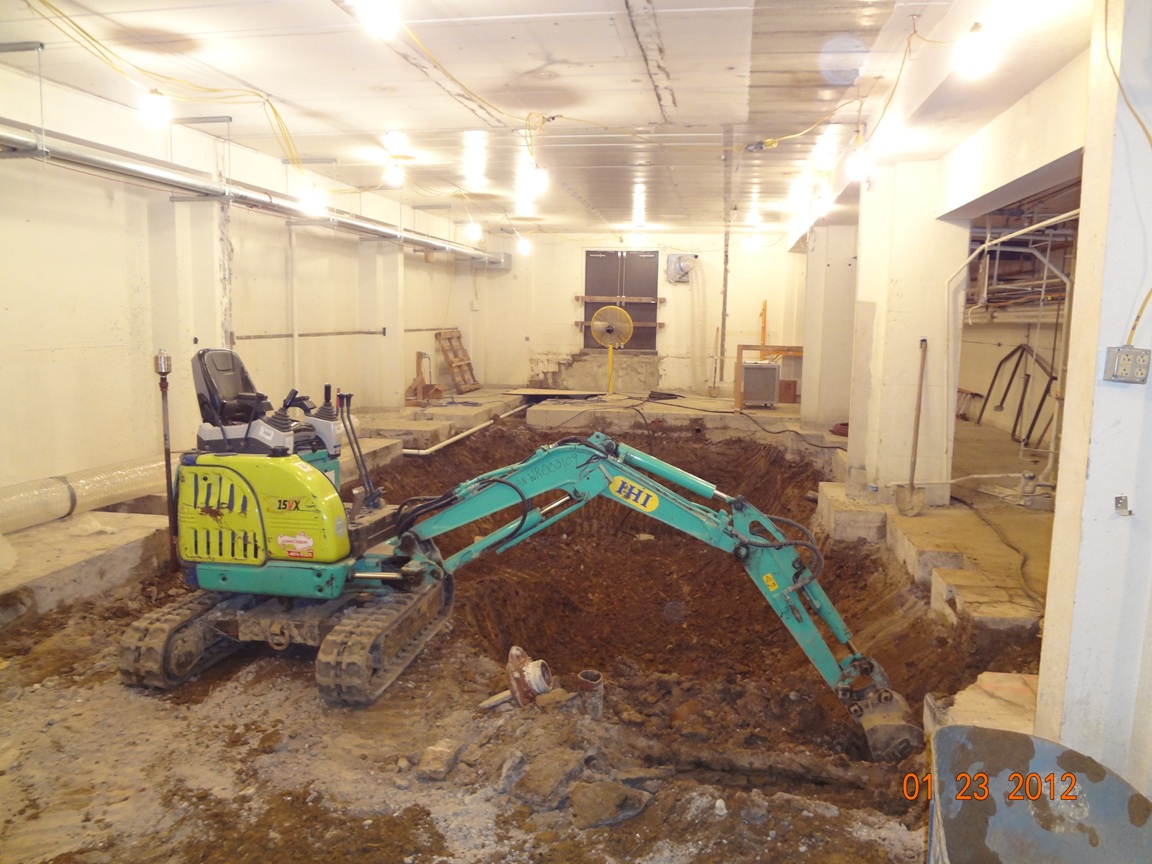
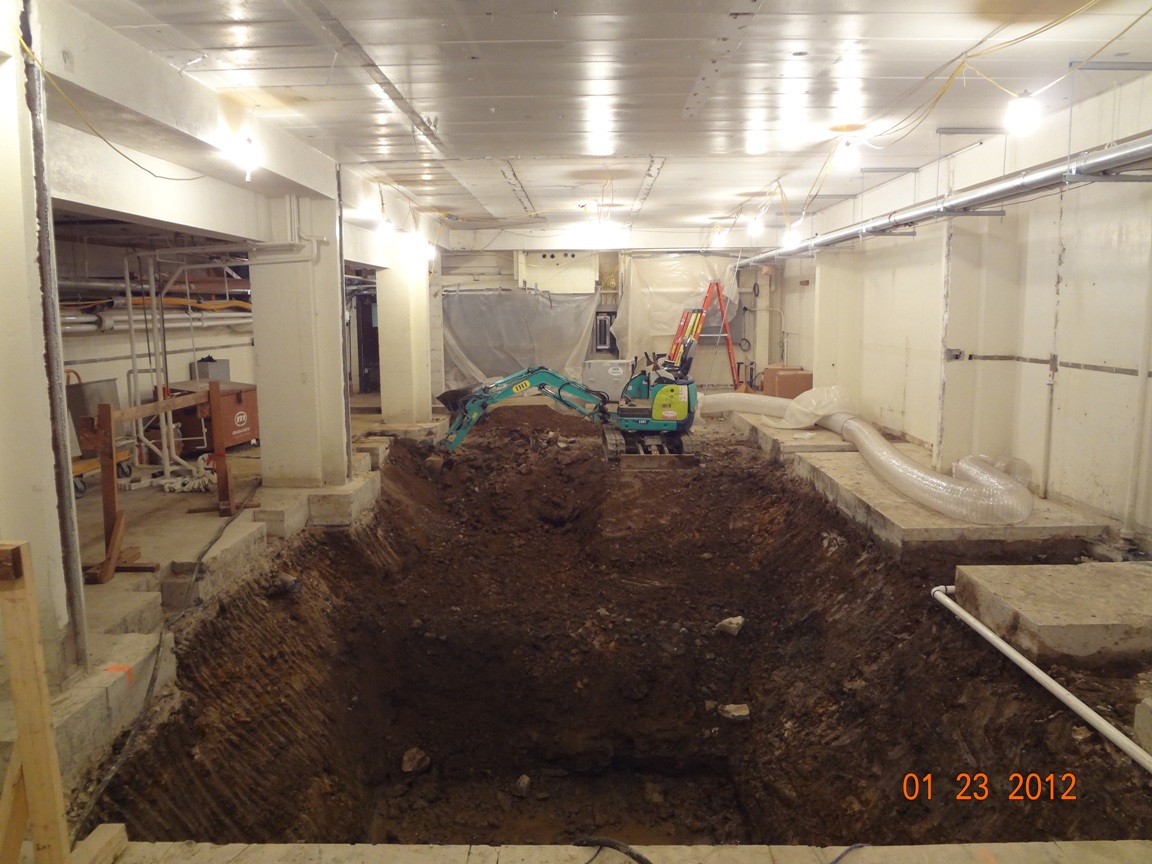
The construction in Pittsburgh is progressing rapidly! They are now digging out the trench for the dilution fridges, after drilling out the foundation. The trench will be 4 feet wide, but they are excavating a much larger area. The reason for that is the high field magnets that will be situated in the trench. The magnets can ‘quench’ if there are ferrous materials nearby, so the workers are removing steel posts from the foundation.
The next phase will be to form the trench by pouring concrete. Here is another snapshot of a mini-excavator.
Thanks for Wilson Architects for keeping me up to date with photos.
Spin-orbit interaction in semiconductor nanowires
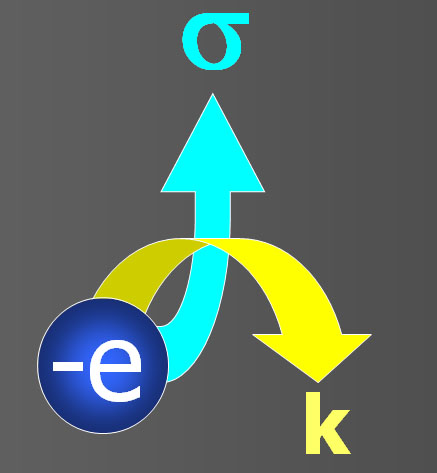
I have been studying spin-orbit interaction in semiconductors for the last six years. Looking back I realize that at some moment along the way… I fell in love with it. Mathematically speaking, spin-orbit interaction is nothing but an energy which is a product of spin and momentum. It is to this day remarkable to me that such a simple term in the Hamiltonian can have such profound consequences. On the one hand, it can be used to rotate spins by controlling the motion of electrons. On the other hand, spin itself can be used as a steering wheel to move electrons around.
For decades spin-orbit interaction was viewed as a nuisance, since its only known effect was to cause the loss of spin coherence in disordered systems. With the development of nanotechnology many creative ways were found to employ spin-orbit interaction in electronic devices. Most notoriously, it brought us the concept of a spin transistor, the spin Hall effect, topological insulators etc.
In our group we were able to define and manipulate spin-orbit quantum bits, which are carried by single electrons. Over the past several months we used spin-orbit qubits to measure the strength and the orientation of spin-orbit interaction in the host material – semiconductor nanowires. The paper on this is now posted in open access: http://arxiv.org/abs/1201.3707
The idea behind the measurement is very simple. Since spin-orbit interaction couples electron’s orbits and their spins, it results in the interaction between singlet and triplet levels in a two-electron system (an artificial helium). We detected singlet-triplet coupling of two spin-orbit qubits and mapped out the strength of this coupling for different orientations of magnetic field. Importantly, we have concluded that spin-orbit interaction in our nanowires is strong enough to create new fundamental quasiparticles – Majorana fermions – but this deserves a separate blog entry.
Demolition complete!
All the old walls inside the new lab space were cleared, now it is one big empty tidy room. The next step is to excavate a long trench down the middle. It is needed to give extra vertical space for dilution refrigeratoros.
The door at the end of the room opens to the street. It will become a glass door, and a long window will be cut out to the right of it. So we will have daylight! Below is a shot looking back from the door. Thanks to Wilson Architects for these images.
PRT
Rumor has it that the American Physical Society is about to unveil the latest in the family of Physical Review journals: PRT. It stands for ‘Physical Review Tweets’. The length of an article is limited to 140 characters.
“Before” pics
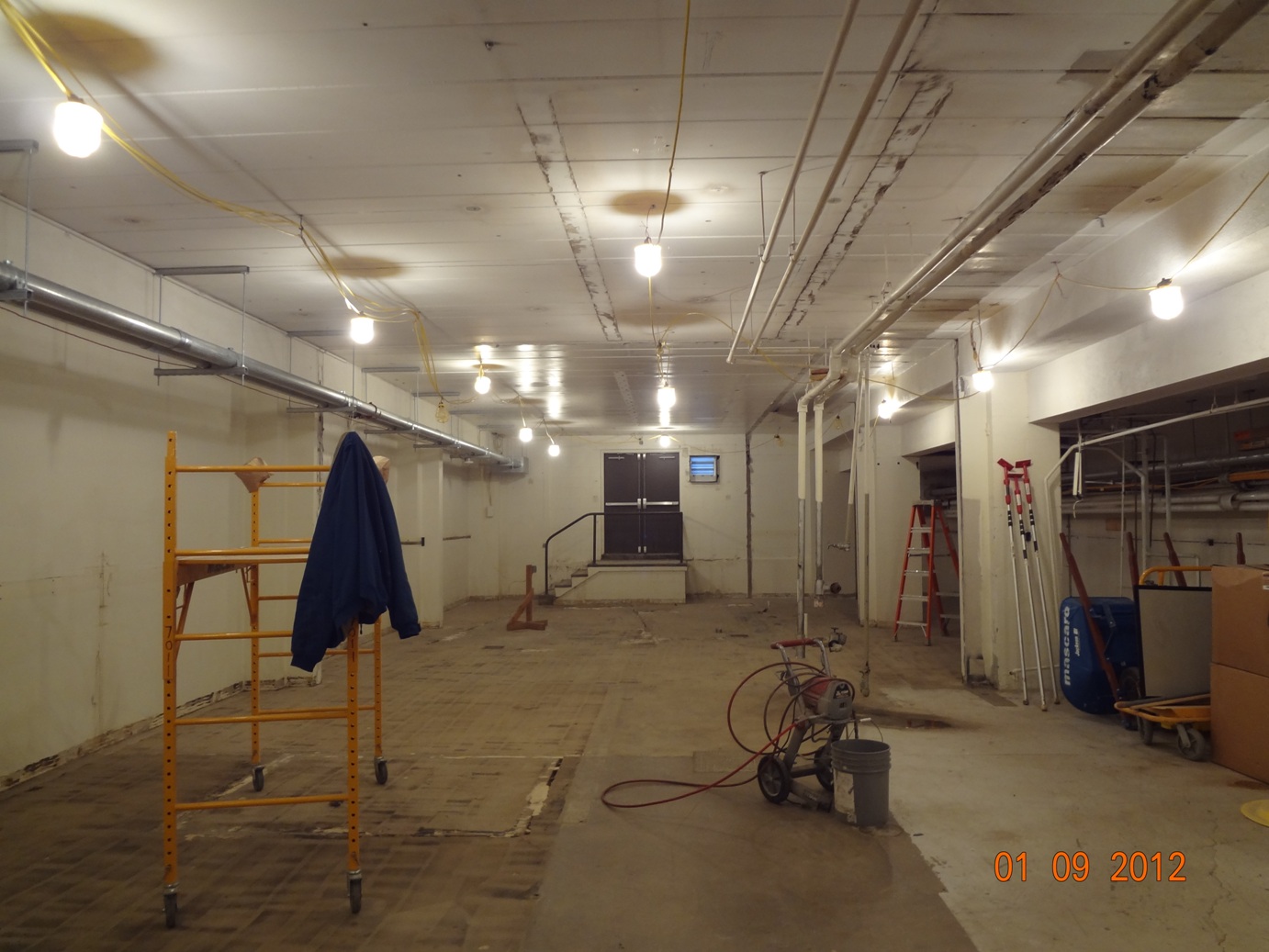
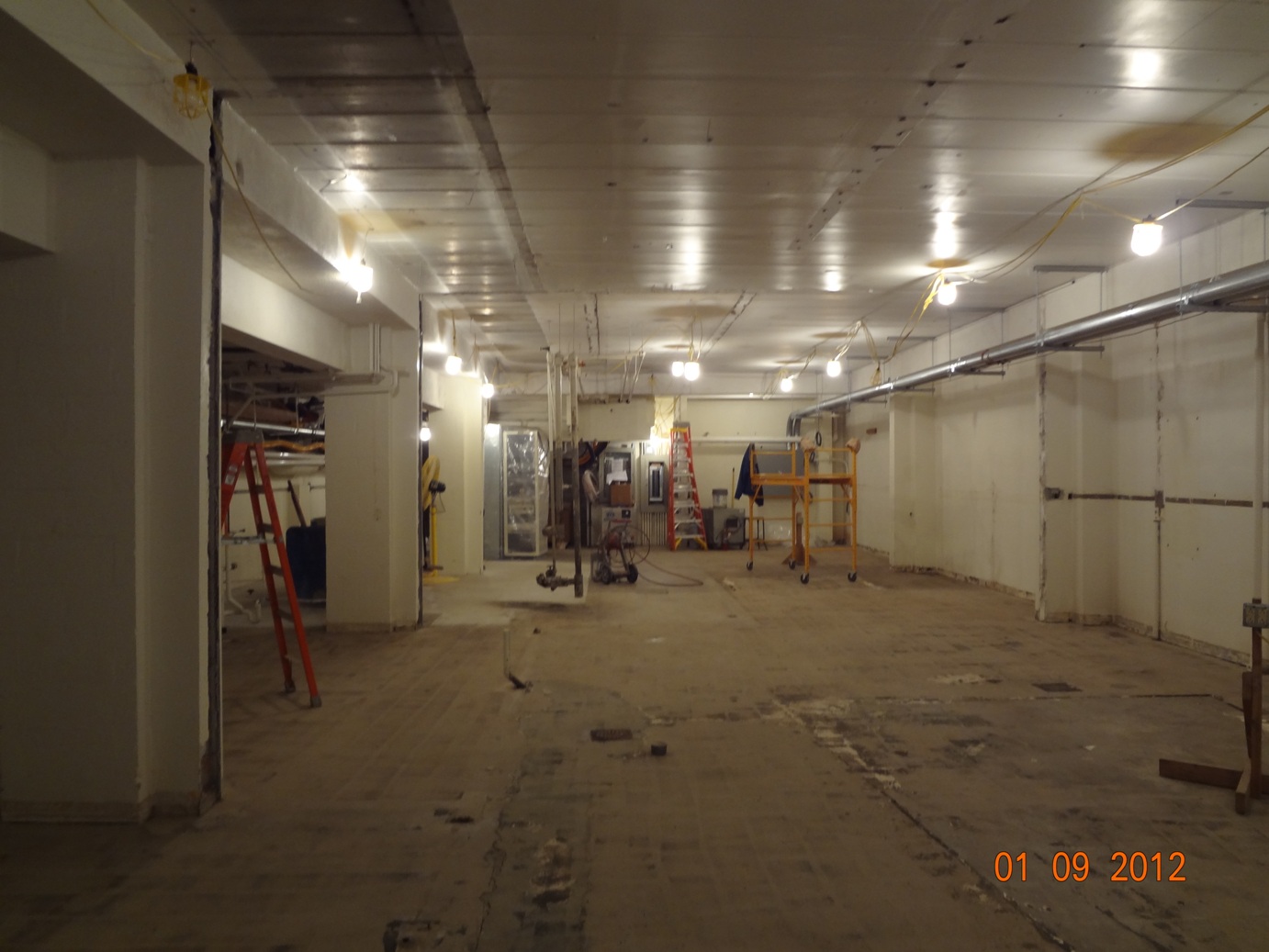
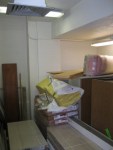
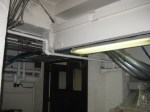
The basement space of the OEH building that is becoming my lab was not in use for a while. It was originally divided into several rooms that were slowly filling with unused furniture, old equipment etc. This is how the lab looked until December, when construction began. I am receiving regular photo-updates on the state of the lab, and I plan to share them here.
Thanks to Mat Romick and Wilson Architects for these images.
Lab layout
We worked on it over the summer. I was only present virtually, giving my feedback from Delft. I am very happy with the design, and frankly cannot wait to walk into this lab! Wilson Architects already had experience in low temperature lab design from working with researchers in my field at several universities. I want to thank their design team, as well as Pitt project managers and all the experts they invited. The technical drawings are highly detailed, since we nailed down the position of each power outlet and each pumping line. Here is a conceptual layout (you can click on the image to see it better):
Designer’s block
Many people know the pure terror of staring at a blank page before writing the first sentence. As I found out something similar happens when you need to create a new lab. A senior professor once told me that he still remembered the time of his job interview, when the department chair showed him a completely empty room and said: “this is your future lab”.
Well, I had it worse since my lab did not come empty: it was full of cabinets, furniture scraps and random items left behind by the campus IT department. My first task was to imagine how this space would look completely empty. A buddhist exercise. Oh, and I forgot to mention – it was up to me to tear down existing walls and put new ones where I wanted.
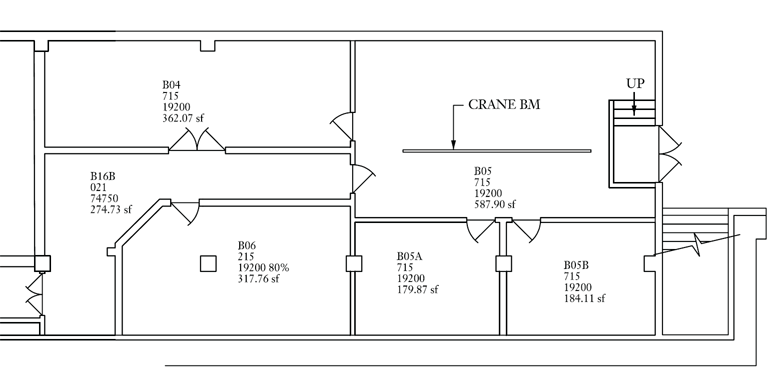
I started by taking the layout of the Old Engineering Hall basement corner:
And erasing all walls from it:
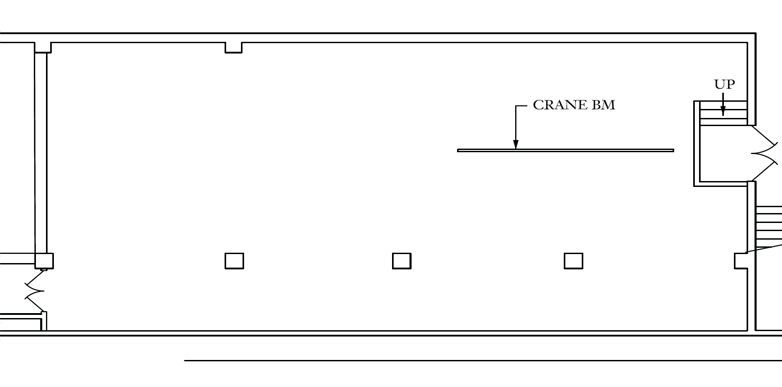
Now, at least in my computer, I was left with an empty space of 2000 square feet. Then I had an idea: why not ask my colleagues in Delft for suggestions. What would they do in my position? The first proposal came from a friend of mine who just became a professor himself.
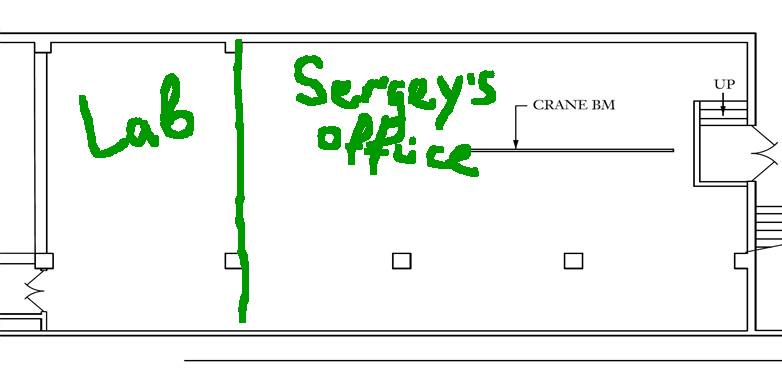
Apparently, they gave him a very small office… “Very well then”, I said, “and what about equipment?” Here the whole group contributed:
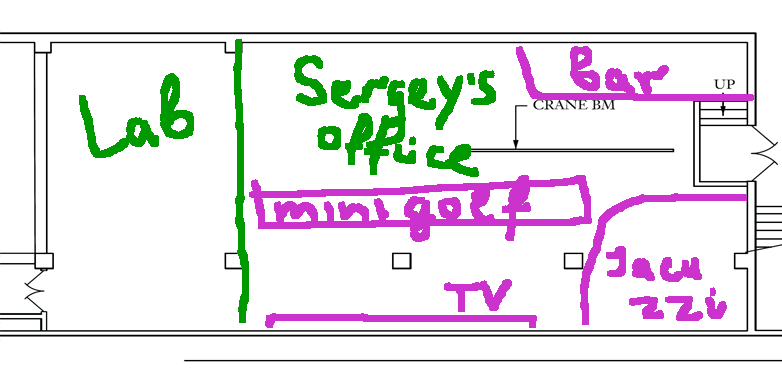
As you can see, I had my complete space figured out with very little effort! I only asked why nobody put a milli-Kelvin fridge in the lab, and the answer was that it would not be convenient – too far to run to the fridge form the jacuzzi for a beer.
Well, I promised them I’d think about this. I am still trying to get a quote for a 10 foot-long TV.
Leo at TEDxDelft
My mentor Leo Kouwenhoven spoke at TEDxDelft about bringing the quantum world to the human scale.I think he did a great job, especially for those who are curious about quantum mechanics.
First instrument shipped!
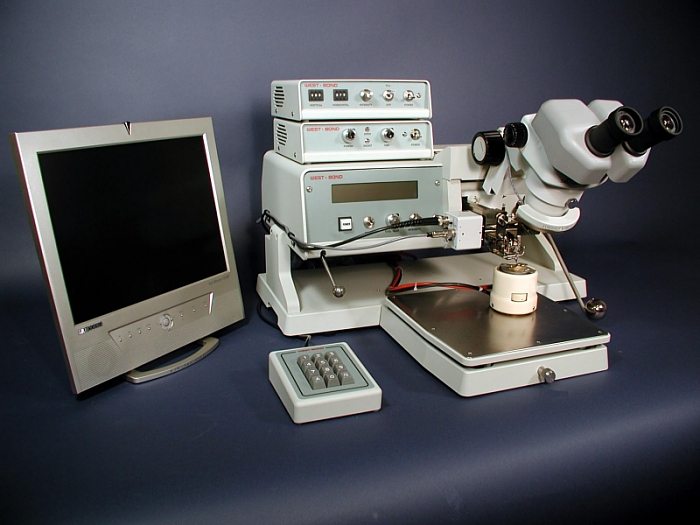
Pitt has a very well equipped nanofacility for cleanroom work and sample characterization. Still, several things are missing, including a wirebonder. I just learned that the bonder I ordered together with Levy Lab has been shipped from the factory. We got a semi-automatic model from Westbond:
This machine is a bridge between the world of nano-devices and the world of electrical cables – the ones you can take with your hands and plug into an amplifier. Wire-bonding is something in between sewing and soldering: you have to connect your nano-chip to the millimeter-scale socket with a golden thread slightly thinner than human hair.


You must be logged in to post a comment.